

Co-Teacher Newsletter Guide: Two Teachers One Message
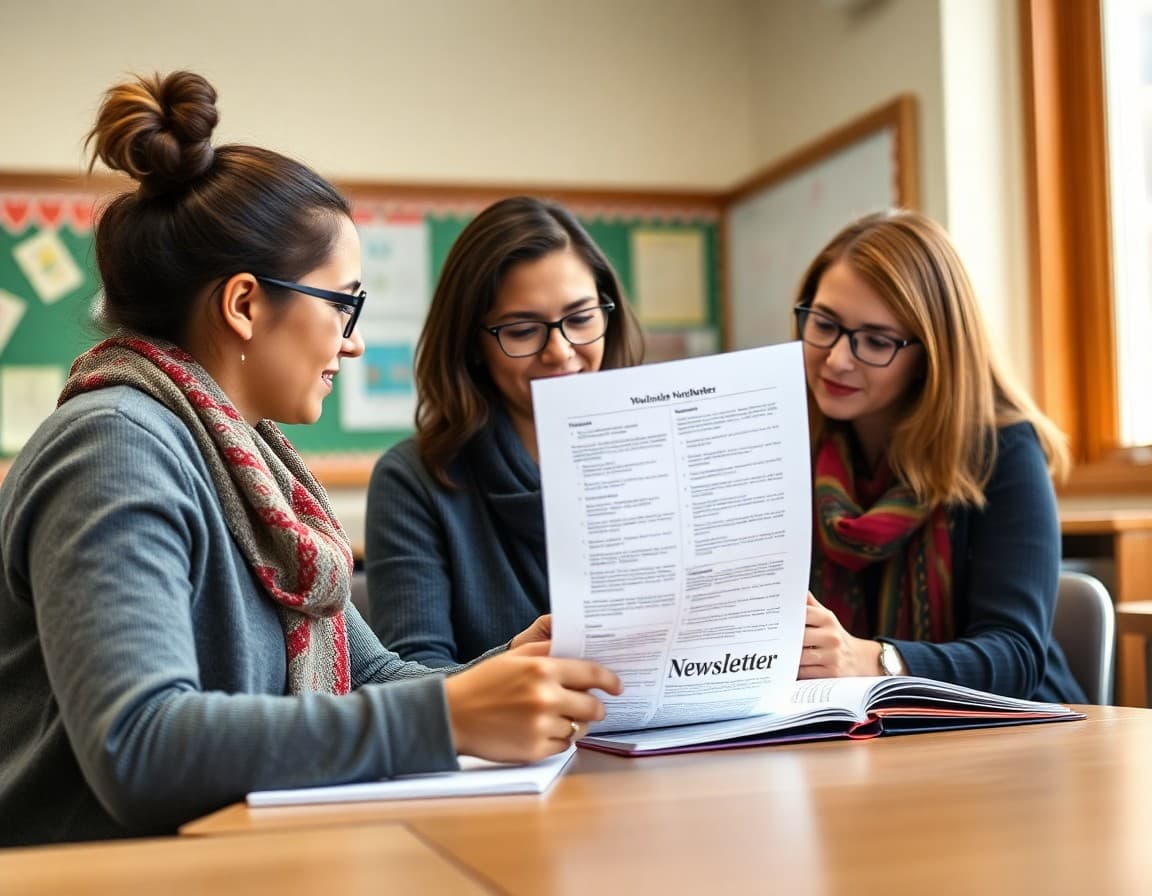
Co-teaching is one of the most visible partnerships in a school building and one of the most misunderstood by families. A well-run co-teaching newsletter makes the partnership visible, explains how it works, and gives families a clear point of contact for every type of question.
Why Co-Teaching Newsletters Need Extra Clarity
Families who see two teachers in a classroom make assumptions. Some assume one teacher is a paraprofessional. Some assume the second teacher only works with certain students. Some are confused about which teacher to contact and end up not contacting either. Your newsletter is the tool that corrects those assumptions before they create friction.
A clear co-teaching introduction newsletter that names both teachers, their credentials, and how their roles work together gives families accurate expectations from the start.
Introducing Both Teachers in the First Newsletter
Format the introduction in two equal sections. Each teacher writes their own bio paragraph of three to four sentences. Then include a shared paragraph that describes your co-teaching approach together.
Template: "[Teacher 1 Name] holds a [certification] in [grade/subject] and has been teaching for [X years]. [One personal detail or teaching focus.] [Teacher 2 Name] holds a [certification] in [grade/subject or special education] and brings [specific area of expertise] to our classroom. [One personal detail.] Together, we teach as a team. [Brief description of your co-teaching model.] Both of us are here for your child and either of us can be reached at the contact information below."
That introduction covers credentials, individual identity, and shared purpose in under 200 words.
Explaining Your Co-Teaching Model to Families
There are five common co-teaching models and most families have no idea which one applies to their child's classroom. Name your model in the first newsletter and explain what it looks like day to day.
One teach-one support: one teacher leads instruction while the other circulates and provides targeted support to students who need it. This is the most common model and the most often misidentified as "aide support."
Station teaching: students rotate through learning stations, and each teacher leads one or more stations.
Parallel teaching: the class is split into two equal groups and each teacher delivers the same instruction simultaneously.
Alternative teaching: one teacher works with the majority of the class while the other works with a small group needing pre-teaching, re-teaching, or enrichment.
Team teaching: both teachers lead the whole class together, alternating or tag-teaming instruction.
Name which of these you use and when. "We use a combination of team teaching during whole-class lessons and station teaching for small group work" is specific enough for families to understand what their child experiences each day.
Dividing Communication Responsibilities
Decide in advance which teacher handles which communications. General class news goes in the shared newsletter. Questions about a specific student's academic progress typically go to the general education teacher. Questions about IEP implementation, accommodations, or special education services go to the special education co-teacher. Make this division clear in your newsletter contact section.
"For general class questions: [email 1]. For questions about special education services, accommodations, or IEP-related concerns: [email 2]." That one-line breakdown prevents a lot of misdirected messages.
The Weekly Newsletter Writing Workflow
Establish your newsletter writing rotation before school starts. Build it into your planning time together. The teacher whose week it is drafts the newsletter by Thursday. The other teacher reviews it briefly and adds anything missing. You send it Friday afternoon or Monday morning. This workflow keeps the newsletter from becoming one teacher's unassigned obligation.
When Co-Teaching Dynamics Are Difficult
Co-teaching partnerships do not always run smoothly. If your working relationship is strained, your newsletter is not the place to signal that to families. Keep co-teaching newsletters professional and collaborative in tone regardless of what is happening behind the scenes. If the partnership changes or ends, a brief, neutral newsletter explaining the classroom transition is appropriate. No editorializing.
Get one newsletter idea every week.
Free. For teachers. No spam.
Frequently asked questions
Should a co-teaching newsletter come from both teachers or just one?
Send from both. A newsletter signed by both teachers in a co-taught classroom communicates a unified team and ensures families know who the second teacher is. Even if one teacher does most of the writing, include both names in the signature and both email addresses in the contact section. Families should never have to guess which teacher to contact or feel like one teacher is invisible.
How do co-teachers divide the work of writing a newsletter?
The most sustainable split is to rotate primary authorship. Teacher A writes the first two newsletters of each month, Teacher B writes the last two. Alternatively, divide by section: one teacher writes the curriculum update, the other writes the upcoming events and announcements. What does not work well is leaving it unassigned and hoping someone does it. Write the plan into your co-teaching agreement at the start of the year.
What should families know about how co-teaching works in the classroom?
Families often have misconceptions about what co-teaching looks like. Explain the model you use: one teach-one support, parallel teaching, station teaching, team teaching, or alternative teaching. Name what each teacher focuses on so families understand that the second teacher is not a classroom aide. This distinction matters for families of students with IEPs who may be confused about what the special education co-teacher's role is.
How do we introduce two new teachers in a co-taught classroom?
Include a brief bio paragraph for each teacher in your first newsletter. Keep each bio to three to four sentences: name, credentials, background, and one thing you are looking forward to this year. Following both with a shared paragraph about your co-teaching philosophy rounds out the introduction. Families who meet both teachers in the first newsletter start the year with clear expectations.
What happens to the newsletter if co-teaching ends mid-year due to a staffing change?
Send a brief newsletter explaining the change. Thank the departing co-teacher and describe the new classroom structure. Families should hear about staffing changes from you directly rather than through their children or the school grapevine. Daystage lets you update the sender information and newsletter header to reflect the current classroom setup without rebuilding from scratch.

Adi Ackerman
Author
Adi Ackerman is a former classroom teacher and curriculum writer with 8 years in K-8 schools. She writes about school communication, parent engagement, and what actually works in real classrooms.
More for New Teacher
Ready to send your first newsletter?
3 newsletters free. No credit card. First one ready in under 5 minutes.
Get started free