

May Newsletter Template: Closing Out the School Year Cleanly
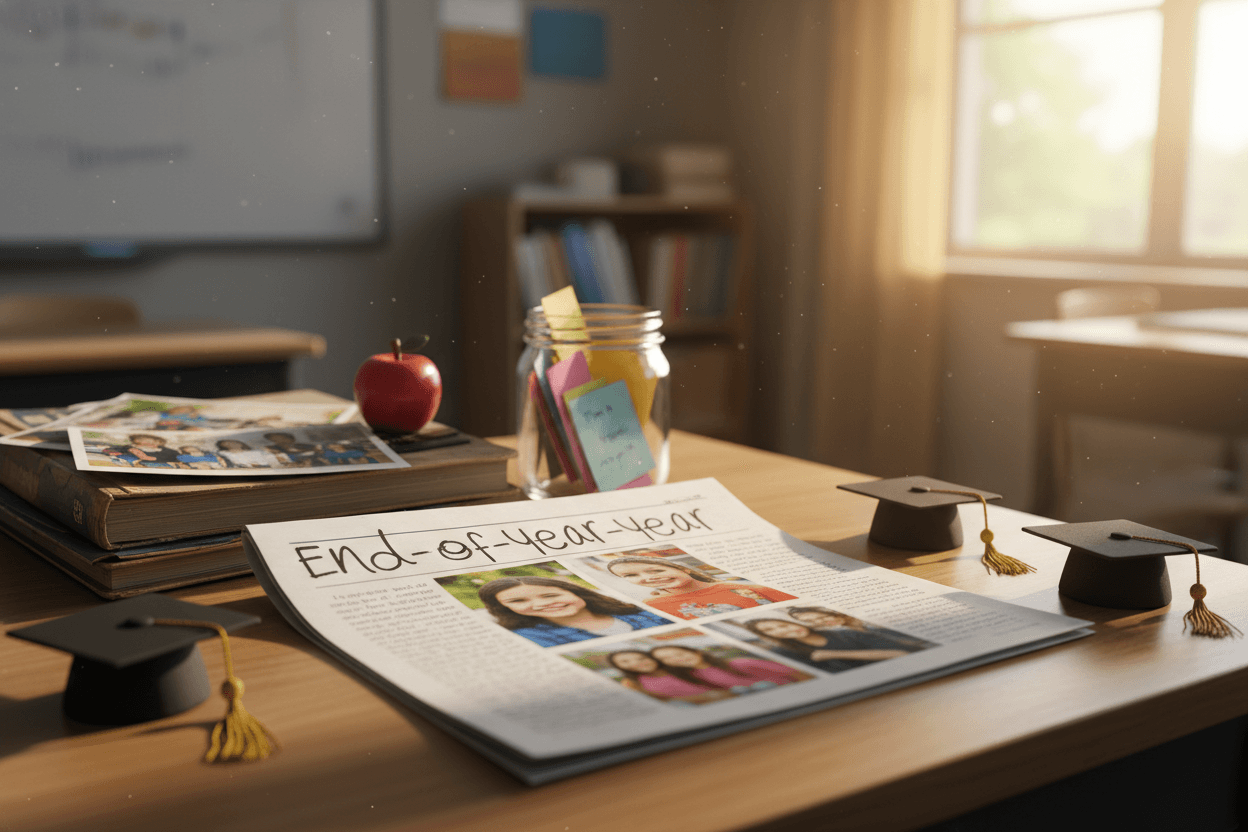
The May newsletter is the one parents save. Year-end newsletters get forwarded to grandparents, kept in scrapbooks, and referenced in August when the next year starts. It is the warmest newsletter of the year, but it is also the most logistically dense. Field day, the last day of school, report cards, summer programs, graduation, teacher transitions, lost-and-found, and the start of the next year all need to be covered. Here is how to do it without overwhelming the reader.
What the May newsletter has to do
Three jobs at once. Close the year warmly. Deliver final logistics clearly. Set up the family for summer and next fall. If you try to do only the warm close, parents will email you for logistics. If you only do logistics, the newsletter feels cold for May. Both, in the right proportions, is the goal.
The eight-section May structure
Use this order: principal year-end note, last day and dismissal logistics, end-of-year events (field day, awards, graduation), report card delivery, summer programming, staff transitions, a thank-you section that names specific moments from the year, and a contact block with summer office hours. The principal note sets the tone. The logistics earn the open. The thank-you section closes with feeling.
Template excerpt for last-day logistics
Here is the section to adapt:
Last Day of School: Friday, June 13. Dismissal is at 12:00 p.m. (no aftercare). Please arrange pickup accordingly. Drop-off remains at 7:50 a.m. that morning.
What to send in: a bag for your child to take home their work, art projects, and supplies. Anything left in lockers or cubbies after Friday will be donated.
Report Cards. Final report cards will be available in the parent portal Monday, June 16 at 5:00 p.m. Paper copies will be mailed home the same week. If you do not receive a report by Friday, June 20, contact the office.
Lost and Found. Items will be displayed in the front lobby Monday, June 9 through Wednesday, June 11. Anything unclaimed by Thursday will be donated.
Year-end events section
List events with dates, times, and what families need to bring. Field day, fifth-grade promotion, kindergarten celebration, the spring concert, awards assemblies. For each, one line about who attends and what to expect. Parents who try to attend everything appreciate the clarity. Parents who can attend only one or two need to know which matter most for their child.
Summer programming and the August preview
Two short paragraphs. First, what the school is running this summer (camps, lunch program, summer school, tutoring). Second, what is already on the calendar for August (back-to-school night, first day of school, supply pickup if applicable). Even if some August details are not final, give parents the dates that are. They are booking summer travel around these.
Staff transitions
Name teachers and staff who are leaving, retiring, or moving roles. Two or three sentences per person, written warmly but directly. "Mrs. Hernandez is retiring after 23 years teaching second grade. Her last day is June 13. We will miss her steadiness and her terrible jokes." That is more memorable than a paragraph of formal praise. Parents read those lines twice.
The thank-you section that lands
Pick three to five specific moments from the year. The day the third graders performed their writing for the school. The cafeteria team who handled the unexpected snow day with no notice. The parent volunteers who ran the book fair. Specific moments beat generic gratitude every time. Two sentences each. This is the section parents read twice and forward to other parents.
What to skip in the May newsletter
Skip the long farewell letter from the principal unless they are actually leaving. Skip the year-in-review photo gallery (link to a webpage instead). Skip the long summer-reading philosophy section (a list with five book titles is enough). The newsletter should feel like the close of a chapter, not a yearbook.
How Daystage helps with end-of-year newsletters
Daystage has a May template that handles the eight-section structure with logistics blocks, a clean staff transitions layout, and a thank-you section designed for specific moments. The visual rhythm is warmer than mid-year newsletters without becoming cluttered. Build it once, and next May you adjust the dates, refresh the thank-you moments, and you have a year-end send that feels right and works hard at the same time.
Get one newsletter idea every week.
Free. For teachers. No spam.
Frequently asked questions
When should the May newsletter go out?
Send it the first week of May. Families are juggling end-of-year events, summer camp deadlines, and graduation logistics. A newsletter that arrives mid-May is too late to help with planning. The first week gives parents three to four weeks of runway for everything that wraps up.
Should there be a separate last-day newsletter?
Yes, send a short one the week of the last day with final logistics: dismissal time, what to send in or pick up, lost-and-found pickup window, and report card delivery. Keep it under 300 words. The May newsletter handles the month. The last-day note handles the final 48 hours.
How do I handle staff goodbyes?
If teachers are leaving or retiring, name them with a short tribute (two to three sentences each). Include where they are going if it is appropriate. Avoid dramatic language. A clear, warm acknowledgment lands better than a long emotional farewell. Parents appreciate knowing who their child will not have next year.
What about summer programming and reading?
Include a section with summer programs the school is running (camps, tutoring, lunch programs), summer reading recommendations or required lists, and any back-to-school dates already set for August. Parents start booking summer plans in May. Give them what they need to plan around school commitments.
How does Daystage help with the end-of-year newsletter?
Daystage has a May template structured around the year-end close, with sections for last-day logistics, summer programs, staff transitions, and a warm sign-off block. The template lets you build a more visual newsletter than usual (one that earns the emotional weight of year-end without becoming chaotic). Daystage saves the version so next May you reuse the structure with fresh content.

Adi Ackerman
Author
Adi Ackerman is a former classroom teacher and curriculum writer with 8 years in K-8 schools. She writes about school communication, parent engagement, and what actually works in real classrooms.
More for Monthly Templates
Ready to send your first newsletter?
3 newsletters free. No credit card. First one ready in under 5 minutes.
Get started free