

6th Grade Science Unit Newsletter: How to Communicate What Students Are Learning and Why
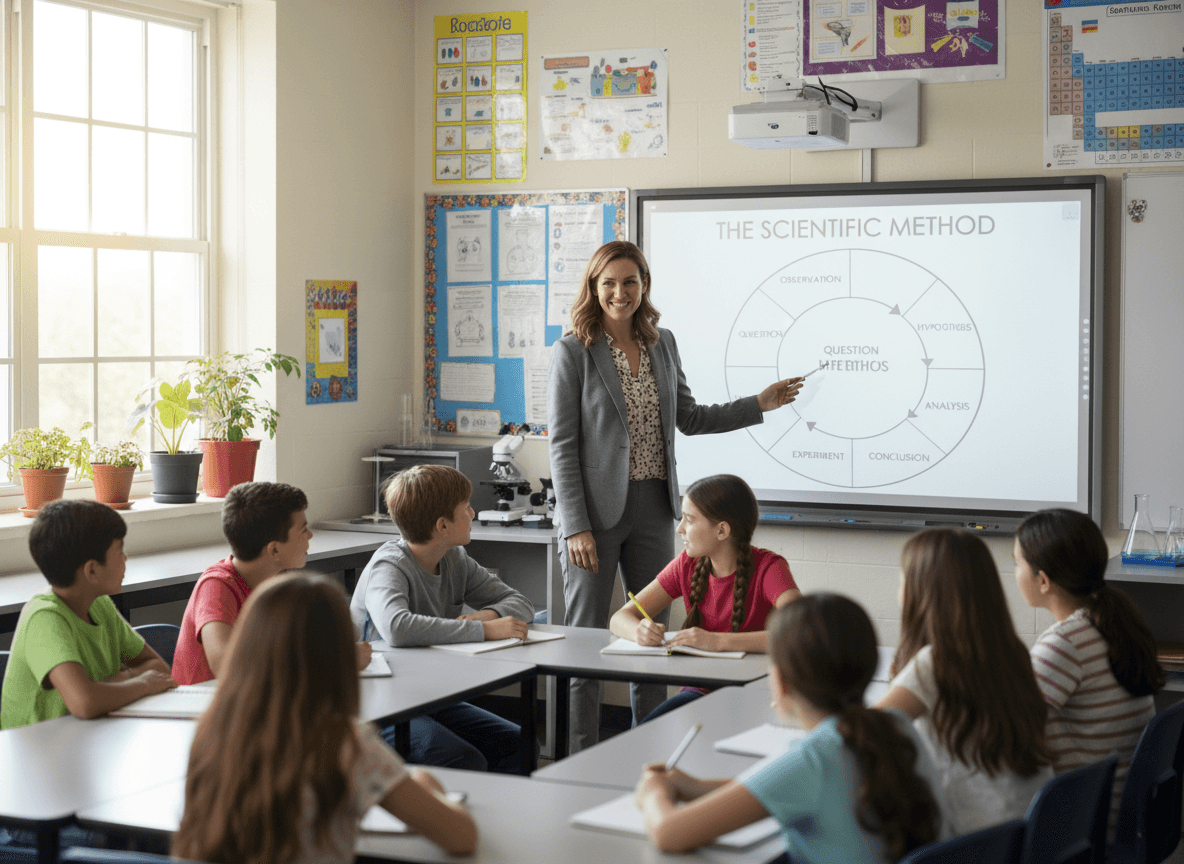
Science is one of the subjects parents of 6th graders often feel least equipped to talk about at home. The content has gotten more technical, the vocabulary is specific, and many parents are not sure whether their child is doing Earth Science, Life Science, or something else entirely depending on the district. A clear science unit newsletter bridges that gap. It gives families enough context to ask good questions and enough background to appreciate what their child is learning.
Writing a good science newsletter does not mean re-teaching the unit. It means sharing the big question, the key ideas, and the moments that made learning visible: the lab that clicked, the model that surprised everyone, the data that did not turn out the way anyone expected.
Start with the Big Question of the Unit
Every science unit has a central question that drives it. That question is the best starting point for a parent newsletter because it is memorable and gives families something to ask their child about.
For an Earth Science unit on plate tectonics, the question might be: "How does the movement of Earth's plates explain the location of mountains, earthquakes, and volcanoes?" For a Life Science unit on ecosystems: "How do living and non-living things in an ecosystem depend on each other?" Those questions are interesting enough that a parent might genuinely want to know the answer.
Frame the rest of your newsletter around the question rather than a list of vocabulary words or standards codes. Parents engage with meaning, not compliance.
Lab Safety: What Parents Need to Know
If your 6th graders are doing lab work (and they should be), tell parents about it proactively rather than waiting for a confused phone call about closed-toe shoes.
Your newsletter should mention that students have a lab safety agreement at the beginning of the year, what it covers in broad strokes, and what lab-day expectations look like. Closed-toe shoes, hair tied back, and no loose-sleeve clothing are common requirements that students often forget to mention at home until the morning of the lab.
Also explain what the consequence is for unsafe behavior during a lab. If students are removed from a lab activity, that is worth parents knowing so it does not come as a surprise on a progress report.
Explain the Scientific Method in Plain Terms
The scientific method is something most adults learned in school but often cannot quite recall. Your newsletter should explain how it works in your class and why it matters.
In 6th grade, the emphasis is on inquiry: students are learning to ask testable questions, design fair experiments, and draw conclusions based on evidence rather than assumptions. The method itself (observe, question, hypothesize, test, analyze, conclude) is less important than the habit of thinking it builds.
A short example helps: "Last week, students tested whether soil type affects how quickly water drains. They made predictions, collected data, and then revised their thinking based on what they found. That process of revision based on evidence is exactly what scientists do." Parents who see that example understand what the class is actually doing.
Describe What Students Are Currently Studying
This is the practical core of any unit newsletter. Tell parents where you are in the unit, what students are working on this week, and what is coming up.
A brief paragraph is enough: "We finished our introduction to rock types last week and are now moving into the rock cycle. Students will build physical models of the cycle this Thursday and present their models in small groups before we head into our first major assessment next week."
That kind of timeline helps parents know when to ask about upcoming tests, when to check on project progress, and whether a study session would be useful this week.
At-Home Science Connections
One of the most effective things a science newsletter can do is give parents conversation starters that are genuinely connected to the unit. Not worksheets to print at home. Just questions and observations that bring the content to life.
For a weather unit: "Ask your child to predict tomorrow's weather and explain their reasoning. Then check together the next day to see if they were right." For a cell biology unit: "Look at a strawberry under a phone microscope app together. Can you see individual cells?" For an astronomy unit: "Go outside on a clear night and try to spot one constellation. Ask your child how scientists know how old it is."
These invitations are optional and low-pressure, but they signal that science is not just something that happens at school. The more parents hear that message, the more they reinforce it at home.
Mention Upcoming Labs and Projects
Parents appreciate a heads-up about anything that requires preparation at home. If a project requires poster board, a shoe box, or a printed image, say so in the newsletter before the due date is three days away. If a lab requires a physical material students need to bring (a household item, a specific type of food), give families at least a week's notice.
Also mention any upcoming assessments so parents can support study habits. "Our unit test on the rock cycle is scheduled for [date]. Study guides will go home this Friday" is a short sentence that prevents a lot of panic.
Connect Science to Something in the News
A brief mention of a current event related to your unit makes science feel relevant instead of abstract. If you are studying plate tectonics and there was a recent earthquake in the news, mention it. If you are covering ecosystems and there is a local environmental story, connect it.
You do not need to editorialize. A simple sentence works: "You may have seen news about the recent volcanic activity in Iceland. We are currently studying how plate movement drives that kind of event. Ask your child to explain why it happens where it does." That one sentence gives a family a dinner table conversation and gives a student a chance to show what they know.
Get one newsletter idea every week.
Free. For teachers. No spam.
Frequently asked questions
What science do most 6th graders study?
It depends on the state and district. Many schools teach Earth Science in 6th grade, covering topics like plate tectonics, weather systems, the rock cycle, and astronomy. Others teach Life Science, which includes cells, ecosystems, and living systems. Some districts use an integrated Next Generation Science Standards approach that combines physical, life, and earth science concepts. Check your state framework to confirm what applies to your curriculum.
How do you explain the scientific method to parents who may have forgotten it?
Keep it practical. The scientific method in 6th grade science is a structured way of asking and answering questions: observe, ask a question, form a hypothesis, design an experiment, collect data, analyze results, and draw conclusions. You can tell parents that the emphasis is less on memorizing the steps and more on learning to think like a scientist: asking why, testing ideas, and revising conclusions based on evidence.
What should parents know about lab safety for 6th grade?
Many 6th graders are doing real lab work for the first time. Parents should know that students sign a lab safety agreement, that specific clothing (closed-toe shoes, hair pulled back, no loose sleeves) may be required on lab days, and that students who do not follow safety procedures may be removed from lab activities. Giving parents a heads-up about lab safety also helps when students ask why they cannot wear sandals on a particular day.
How do you communicate what students learned in a lab without re-teaching the whole lesson?
Focus on the question the lab was trying to answer rather than the procedure. 'We designed an experiment to test how different surfaces affect the rate of erosion' is more interesting and memorable than 'students used sand, rocks, and water trays.' The big question gives parents a hook for a real conversation with their child, which is far more valuable than a procedure summary.
What newsletter tool helps science teachers communicate units to 6th grade parents?
Daystage makes it easy to build a science unit newsletter with photos from the classroom, links to videos or resources, and a clean layout that reads well on a phone. Science teachers who want to include a lab photo or a diagram can upload images directly into the newsletter. For parents who have not thought about science since their own school days, a visual, readable update makes the subject feel accessible and interesting.

Adi Ackerman
Author
Adi Ackerman is a former classroom teacher and curriculum writer with 8 years in K-8 schools. She writes about school communication, parent engagement, and what actually works in real classrooms.
More for Middle School
Sixth Grade Newsletter Template: Welcoming Families to Middle School
Middle School · 7 min read
6th Grade Curriculum Overview Newsletter: What to Send Parents at the Start of the Year
Middle School · 7 min read
Sixth Grade Field Trip Newsletter: Pre-Trip and Post-Trip Communication for Families
Middle School · 7 min read
Ready to send your first newsletter?
3 newsletters free. No credit card. First one ready in under 5 minutes.
Get started free