
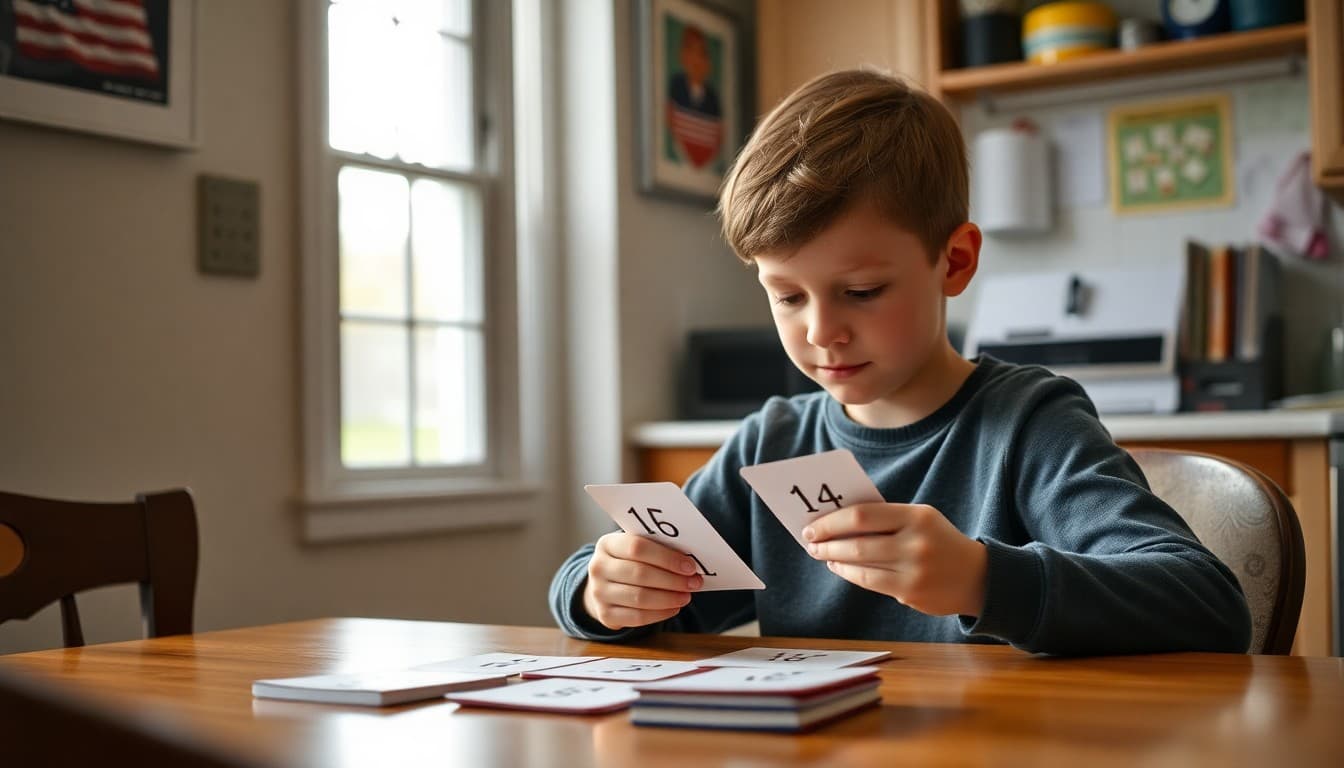
6th Grade Math Facts Newsletter: Home Practice Guide for Families
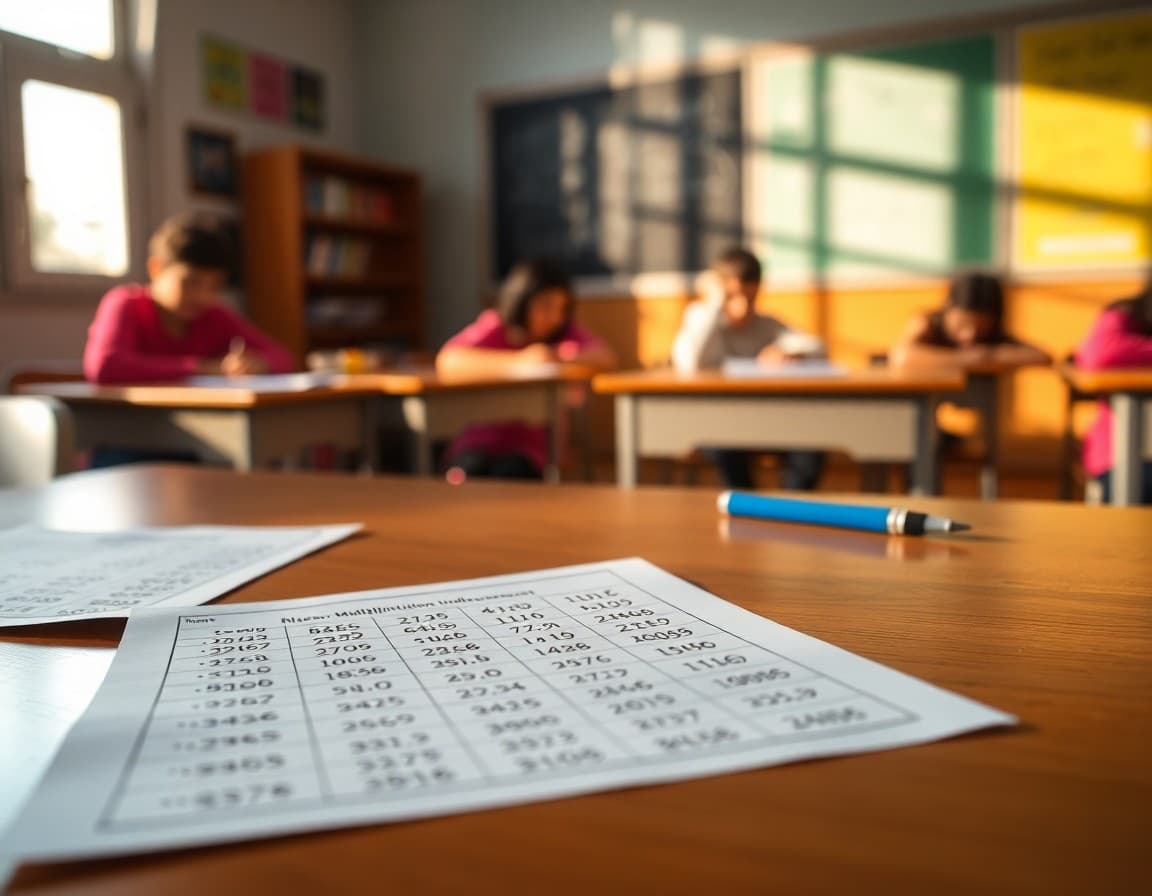
By the time students reach 6th grade, most teachers assume math facts are locked in. Often they are not. Students who still hesitate on 8x7 or 63 divided by 9 are at a real disadvantage in pre-algebra, fractions, and ratio work. A newsletter that helps families understand what to practice, how often, and why it matters can close that gap before it compounds.
Name the Specific Facts That Matter in 6th Grade
Your newsletter should be concrete. Tell families that the most critical facts for 6th grade success are multiplication through 12x12, the corresponding division facts, and common fraction-decimal equivalents like one-half equals 0.5 and one-quarter equals 0.25. Naming the specific targets is more useful than a general call to "review math."
Explain Why Fluency Is Different From Understanding
Parents sometimes conflate fact fluency with rote memorization and assume it is less important than conceptual understanding. Your newsletter can clarify that both matter. A student who understands division but cannot recall basic facts quickly will spend 80 percent of their cognitive effort on arithmetic during algebra problems. Fast, automatic recall leaves room for the reasoning that 6th grade math actually requires.
Give Families a Practice Schedule
Five to ten minutes per night, five days a week, is the recommendation worth putting in print. Families with structured routines have an easier time fitting this in than families who try to do it when they "have time." Suggest tacking it on before or after another regular habit, like right after dinner or during the commute using a flashcard app.
A Sample Weekly Practice Plan
Here is a format you can include in your newsletter:
"Monday: multiplication facts 6-9. Tuesday: division facts 6-9. Wednesday: mixed review timed drill (40 problems, 3 minutes). Thursday: fraction-decimal conversions. Friday: student picks their weakest fact family to review. Weekend: optional 5-minute review if motivation is there."
That structure takes the guesswork out of what to practice each night.
Recommend Specific Tools
Do not leave families to search the internet. List two or three specific tools: a free flashcard app you have tested, a printable fact sheet from your class page, or a specific game. When you make the recommendation concrete, families act on it. When you say "there are lots of apps out there," most families do nothing.
Address the Student Who Says They Already Know the Facts
Some students genuinely do. Others think they do because they can figure it out slowly. Suggest a simple test parents can run at home: call out 20 random multiplication facts and see how long it takes. If it takes more than 30 seconds, there is room to improve. That concrete benchmark gives families something to work toward instead of arguing over whether practice is necessary.
Connect Facts to Upcoming Units
Tell families which specific units are coming up where fact fluency will matter most. If students are heading into fraction operations, rapid recall of multiplication facts makes finding common denominators much faster. If ratios and proportions are next, the division facts are critical. This connection makes the practice feel purposeful rather than arbitrary.
Keep the Tone Encouraging
Some students have genuine math anxiety, and a newsletter that frames this as a deficiency will stress families out rather than motivate them. Frame fact practice as a tool that makes the exciting math of 6th grade easier to access. Short, daily practice is manageable for any student. That message will land better than framing it as catching up on something they should already know.
Get one newsletter idea every week.
Free. For teachers. No spam.
Frequently asked questions
Which math facts should 6th graders still be practicing?
By 6th grade, multiplication facts through 12x12 should be automatic. Division facts that correspond to those multiplication families are equally important. Students who still calculate 7x8 by skip-counting are slower at fraction work, ratio problems, and algebraic equations. Fluency with these facts is the foundation for 6th and 7th grade math.
How long should a 6th grader practice math facts each night?
Five to ten minutes of focused practice is more effective than 30 minutes of passive review. Short daily sessions build retrieval speed faster than long weekend catch-up sessions. Consistent short practice is the model worth communicating to families.
What are the best tools for practicing math facts at home?
Physical flashcards, apps like Math Antics or Prodigy, and timed drills on paper all work. The key is regular use. Apps have the advantage of tracking progress automatically, which can motivate students who like seeing their improvement over time. Paper drills are faster to set up and require no screen time.
How do I explain why math facts still matter in 6th grade?
In 6th grade, math shifts toward reasoning and multi-step problems. Students who spend working memory on basic calculations have less capacity for the actual concepts being taught. Automatic fact recall frees up their thinking for proportional reasoning, equations, and geometry, which is where the real learning happens.
Is there a tool for sending math practice newsletters to 6th grade families?
Daystage lets you build a math practice newsletter with embedded skill lists, practice tips, and links to resources families can use at home. You can update it each quarter as students move into new math units.

Adi Ackerman
Author
Adi Ackerman is a former classroom teacher and curriculum writer with 8 years in K-8 schools. She writes about school communication, parent engagement, and what actually works in real classrooms.
More for Middle School
Ready to send your first newsletter?
3 newsletters free. No credit card. First one ready in under 5 minutes.
Get started free