
6th Grade ELL Support Newsletter: How to Communicate with Families of English Language Learners
For families of 6th grade English Language Learners, the middle school transition adds a layer of complexity that other families do not face. Their child is navigating a new school structure, more demanding academic content, and an accelerating English language requirement, all at the same time. Parents who want to support their child often struggle to get clear information about what services are available, how progress is measured, and what they can do at home.
A well-written ELL support newsletter bridges that gap. It explains the service structure, describes the language demands their child faces, and gives families concrete ways to stay connected to their child's academic progress even if English is not the home language.
Explain What Changes at Middle School
Many families of ELL students have developed a working understanding of how English language support functioned in elementary school. Middle school often looks very different, and your first newsletter should name those changes directly.
In elementary school, ELL students often had more sheltered instruction, more individualized support, and a consistent relationship with one ELL teacher. In middle school, they may move between a pull-out English Language Development class, co-taught content classes, and independent general education classes, sometimes all in one day.
Explain the specific model your school uses: push-in (an ELL teacher supports students within the general education class), pull-out (students leave class for dedicated language instruction), or a combination. Tell parents when and where each type of service happens. Families who understand the structure can ask their child specific questions instead of wondering whether any support is happening at all.
Introduce the Language Proficiency Levels
Not all ELL students are at the same level, and the services they receive differ accordingly. Your newsletter should explain the proficiency level framework your state uses (WIDA is the most common) and where the students you serve fall on that scale.
For WIDA, a brief description of the six levels gives parents useful context: Level 1 students are just entering English, Level 3 students can communicate about familiar topics but struggle with academic language, and Level 5 students are approaching grade-level performance. Knowing their child's current level helps parents understand both where they are and what progress looks like.
Avoid jargon. Parents do not need to know the technical name of every WIDA performance indicator. They need to know: here is where your child is, here is where we want them to get, and here is what we are doing to help them get there.
Explain the WIDA ACCESS Assessment
Most families have received WIDA scores but do not fully understand what they mean. Your newsletter should demystify the assessment before scores arrive, and again when they do.
The WIDA ACCESS is given once a year and measures proficiency in four domains: listening, speaking, reading, and writing. Each domain is scored on a 1 to 6 scale. Scores inform service decisions, including the amount of ELD time a student receives each week.
Tell parents what to do when they receive scores: what the numbers mean, which domains are strongest, which need more support, and what a score means for their child's placement next year. Families who understand the assessment feel more like partners in the process.
Academic Language: Why Middle School Is Different
A common pattern in 6th grade: a student who seemed fluent in English based on conversations suddenly struggles with grade-level texts. This is not a regression. It is the gap between conversational English and academic English, and it is one of the most important things for families to understand.
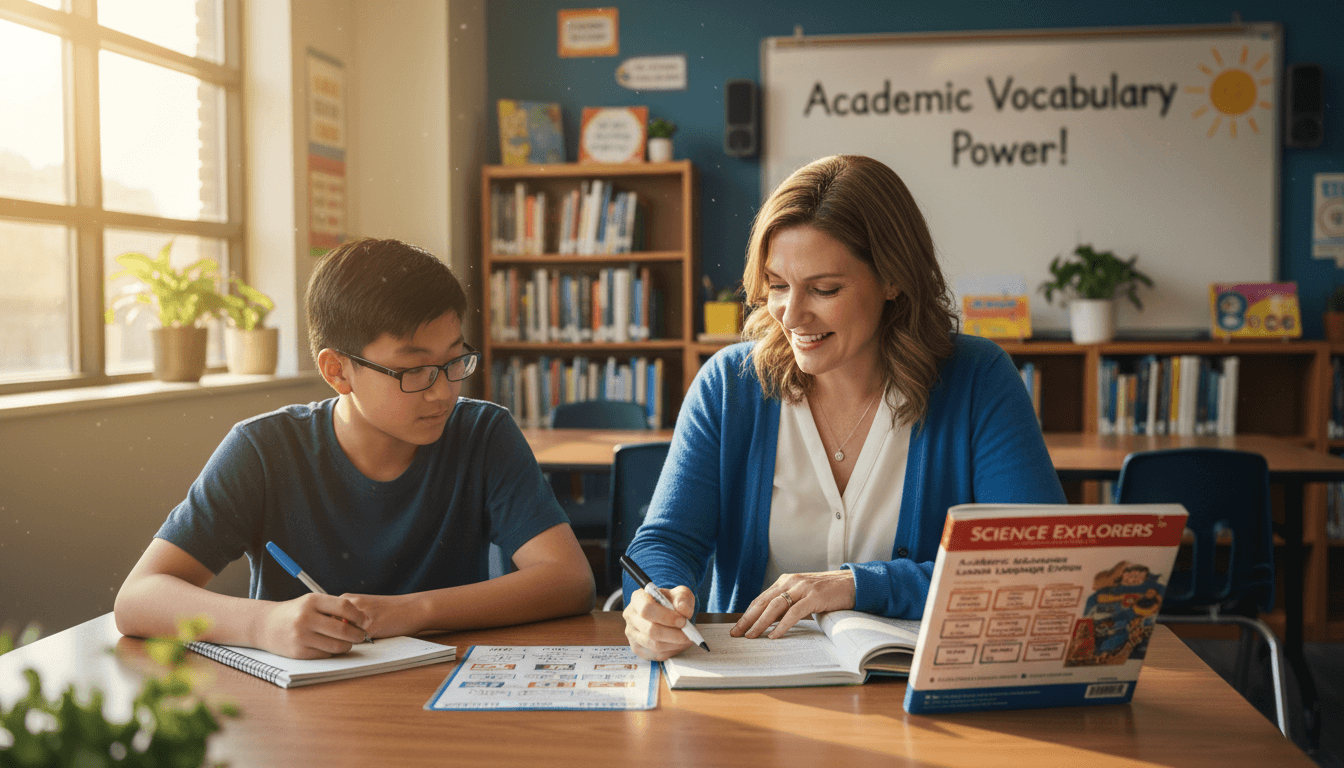
In elementary school, much of the academic content is supported by visuals, manipulatives, and discussion. In middle school, students are reading dense texts, writing formal paragraphs, and answering test questions that require precision with academic vocabulary. An ELL student who is Level 4 conversationally may be Level 2 in reading complex science texts.
Explain this to parents in concrete terms: "Your child may be very comfortable speaking English with friends but still find it challenging to read a social studies chapter or write a scientific explanation. That is completely normal at this stage, and it is exactly what we focus on in our ELD classes."
Communicating with Families in Their Home Language
This point goes beyond newsletter writing, but it starts here. If families of your ELL students primarily speak a language other than English, your newsletter needs to be accessible to them.
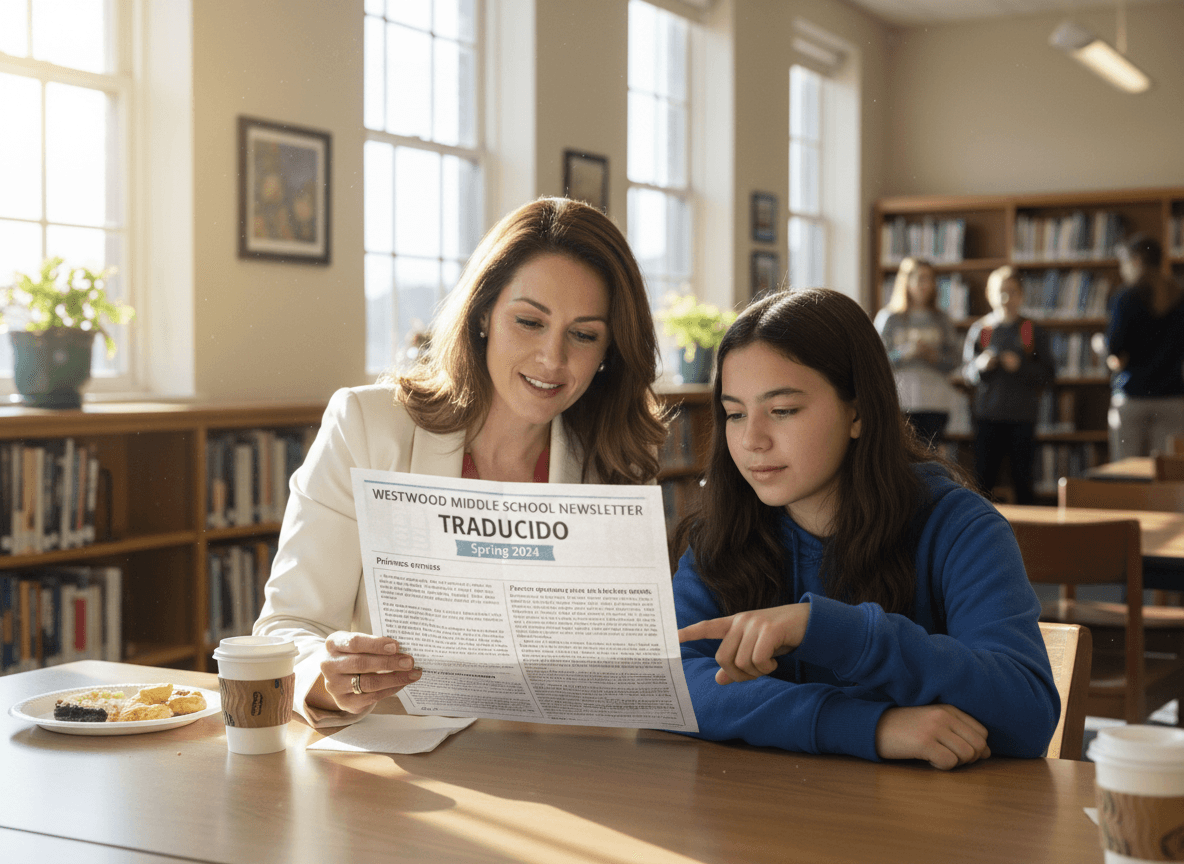
Work with your school's translation resources to provide a translated version of key communications. If full translation is not available for every newsletter, prioritize the highest-stakes information: service descriptions, assessment results, meeting notices, and progress updates.
Avoid asking students to translate communications for their parents. The practice is common and almost always inappropriate. A 6th grader translating an IEP meeting summary or a service change notice is in an impossible position, and the accuracy of the translation cannot be verified. If translation resources are limited, flag the need to your school leadership.
Home Language Support: What Families Can Do
One of the most important things you can tell families of ELL students is that maintaining and developing the home language supports English acquisition, not hinders it. Research on bilingual language development is clear on this, and many families have been given the opposite message.
Encourage families to read, discuss, and tell stories in the home language. A student who has rich vocabulary and strong literacy in their home language will transfer those skills to English more effectively than one who is trying to learn everything in a second language without a strong foundation in any language.
Give families specific, low-pressure ways to support learning at home regardless of their own English proficiency: "Ask your child to teach you a new English word they learned today. Ask them to explain what they read in their home language. Tell stories from your own culture and experiences. All of this builds the language and literacy skills that help in school."
Your Role and How to Reach You
Close every newsletter with a clear statement of who you are, what your role is, and how families can reach you. For families navigating a new school in a new language, knowing there is a specific, named person responsible for their child's language development is genuinely reassuring.
Include your name, your role (ELL teacher, ELD specialist, case manager, whatever your title is), your email, the best time to reach you, and whether you or the school can provide an interpreter for meetings. That information, included consistently in every newsletter, removes barriers for families who might otherwise hesitate to reach out.
Get one newsletter idea every week.
Free. For teachers. No spam.
Frequently asked questions
What ELL services change when a student moves from elementary to middle school?
The type and delivery of services often change significantly. In elementary school, ELL students may have received more sheltered instruction within a single classroom. In middle school, they are navigating multiple content-area teachers who each have different language demands. Pull-out or push-in English Language Development services may be restructured, and the case manager or ELL teacher changes. Families should expect a review of services during the transition to confirm the current level of support is appropriate.
What is the WIDA assessment and what should parents know about it?
WIDA ACCESS is an annual assessment used in many states to measure the English language proficiency of English Language Learners across four domains: listening, speaking, reading, and writing. Scores are reported on a scale from 1 to 6, where 6 represents proficiency comparable to a native English speaker. The results inform service decisions, including how many minutes of English Language Development support a student receives each week. Parents should receive their child's scores with an explanation of what each domain score means for academic performance.
How do you communicate with parents who have limited English proficiency?
Translation is not optional. Critical communications, including ELL service descriptions, assessment results, and meeting notices, must be provided in the family's home language under federal law. For newsletters and regular updates, work with your school's translation services, a bilingual staff member, or a translation tool to ensure key content is accessible. Avoid relying on students to translate communications to their own parents, as this is both inappropriate and unreliable.
What is academic language and why does it matter more in middle school?
Academic language is the formal vocabulary, sentence structures, and text types used in school settings, as opposed to conversational English. A student can be highly conversational in English but still struggle with academic language demands in content areas. In 6th grade, the academic language load increases sharply: science texts have dense technical vocabulary, social studies uses complex cause-and-effect sentence structures, and math word problems require reading precision. ELL students who seemed fluent in elementary school sometimes struggle in 6th grade for this reason.
What newsletter tool works well for communicating with families of 6th grade ELL students?
Daystage makes it straightforward to write and send newsletters that can be copied and translated for different language groups in your school community. Teachers can send clear, structured newsletters with consistent formatting that translators can work with easily. For ELL teachers who serve families across multiple home languages, having a reliable way to send professional-looking communications without building from scratch each time saves significant effort.

Adi Ackerman
Author
Adi Ackerman is a former classroom teacher and curriculum writer with 8 years in K-8 schools. She writes about school communication, parent engagement, and what actually works in real classrooms.
More for Middle School
Sixth Grade Newsletter Template: Welcoming Families to Middle School
Middle School · 7 min read
6th Grade Special Education Newsletter: How to Communicate with Parents Through the Middle School IEP Transition
Middle School · 7 min read
Sixth Grade Parent Communication Guide: What Families Need All Year Long
Middle School · 7 min read
Ready to send your first newsletter?
3 newsletters free. No credit card. First one ready in under 5 minutes.
Get started free