

7th Grade Social Studies Newsletter: How to Explain Your Current Unit to Parents
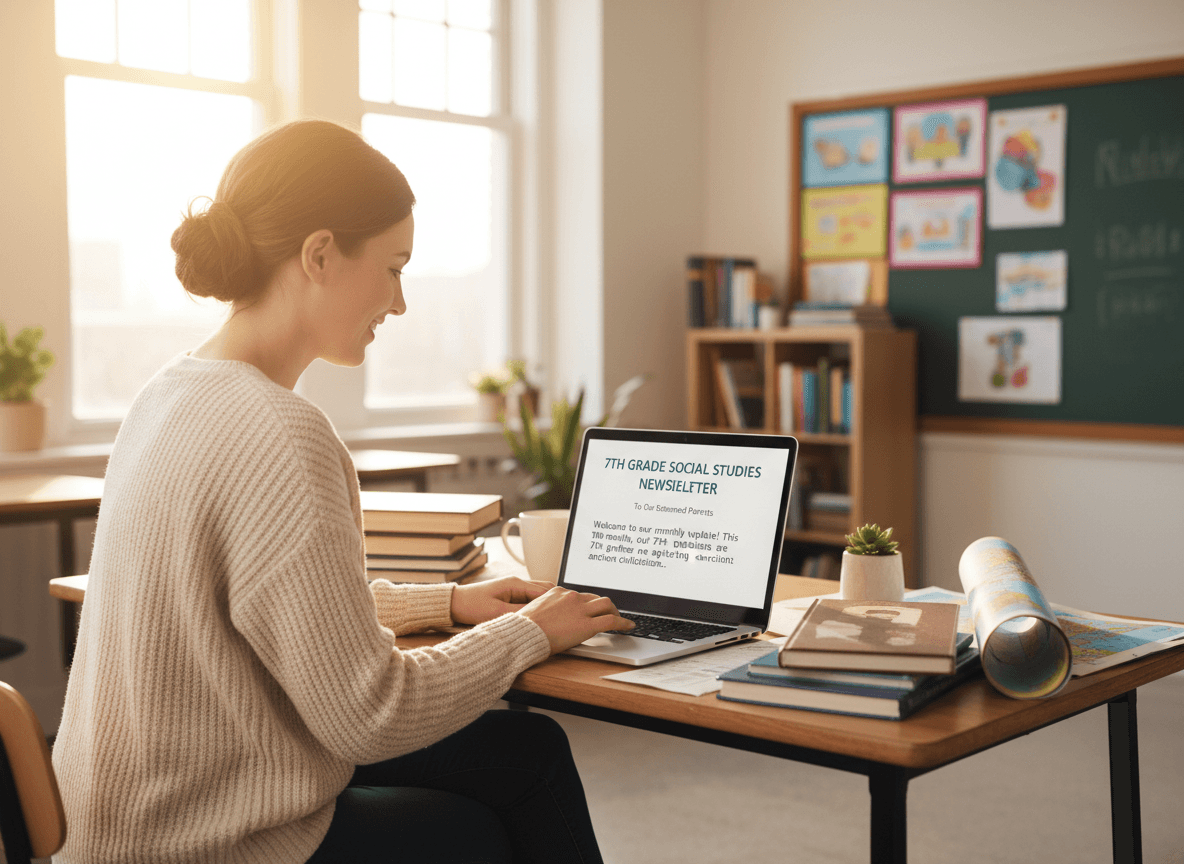
Social studies is one of the hardest subjects to communicate home. Math has homework problems parents can see. ELA has books with titles. But social studies units cover centuries of human history in a few weeks, and parents often have no idea what their child is actually working on until a test comes back.
A good 7th grade social studies newsletter changes that. It tells parents where you are in the curriculum, why that content matters, and what students are doing with it. Here is how to write one that actually works.
Start with the unit name and a one-sentence summary
Parents cannot support learning they cannot picture. Open every newsletter with a clear statement of your current unit. Not "we are studying history" but "we are in our Age of Exploration unit, which covers European expansion into the Americas, Africa, and Asia from the 1400s through the 1600s."
One sentence is enough. Parents are not looking for a syllabus. They want something they can use to start a conversation at dinner.
Name the sensitive content directly
Seventh grade social studies regularly touches difficult history: colonialism, slavery, religious persecution, conquest. Many teachers avoid mentioning this in newsletters to sidestep conflict. That usually backfires. When a student comes home talking about the Middle Passage and a parent has no context, the gap creates confusion and sometimes concern.
Write it plainly: "This unit includes the transatlantic slave trade. We are reading primary source accounts from enslaved people and examining the economic systems that sustained slavery. These conversations may come up at home." That kind of transparency builds trust faster than anything else you can do.
Explain the research skills students are building
In 7th grade, the skill-building inside social studies units matters as much as the content itself. Students are learning to read primary sources, identify perspective and bias, gather evidence, and write arguments. These are habits of mind, not just history facts.
Tell parents what that looks like in practice. "Students are working on document-based questions this month, which means they read three to five historical documents and write an argument using evidence from those texts. The biggest challenge right now is learning to quote and paraphrase sources correctly." That gives parents something to ask about and something to support.
Connect the unit to current events when it makes sense
One of the most powerful things you can do in a social studies newsletter is draw a line from what happened in 1492 or 1865 to what is happening right now. Not every unit has an obvious connection, and forced comparisons feel like a stretch. But when the link is genuine, name it.
"We are studying how propaganda worked in World War I, and students are also analyzing current news headlines using the same framework. The goal is to help them evaluate information critically, whether it is from 1917 or today." Parents notice that kind of intentionality.
Give parents one concrete thing to try at home
Most parents cannot help their child with a DBQ. But they can ask questions. Suggest one: "Ask your child to name one person from our current unit and tell you something that person did that mattered. If they can do that, they are on track." That is actionable and low-pressure.
You can also recommend a short documentary, a podcast episode, or a museum website if your school's content filter allows it. A two-minute video clip that covers the same content you are teaching is more useful to a parent than a list of vocabulary words.
Include a note about upcoming assessments
Parents of 7th graders are often caught off guard by test dates. Social studies assessments can feel harder to prepare for than math, because the content is dense and the study strategies are less obvious.
In your newsletter, give the test date and one sentence about what it covers. "Our unit test on the Renaissance is on November 14. Students should be able to explain at least three ways the period changed European art, politics, and religion." That framing helps families support studying without needing a study guide.
Keep the tone curious, not defensive
Social studies teachers sometimes write newsletters that feel like they are bracing for pushback, especially on sensitive units. Defensive framing signals that the material is controversial in a way that may not help.
Write from curiosity instead. "We are deep in one of my favorite units right now." "This period of history is complicated and worth understanding." That tone invites parents into the work rather than warning them off. Most parents appreciate a teacher who is excited about what they are teaching, even when the content is hard.
Close with how to reach you
Social studies questions from parents can be substantive. A parent who studied history differently than you are teaching it may have questions. A parent whose family was directly affected by the history you are covering may want to share that context.
End your newsletter with a clear invitation to connect: "If you have questions about our current unit or want to share something from your family's history that connects to what we are studying, I would love to hear from you." That one line opens a door that a lot of parents are waiting for someone to open.
Get one newsletter idea every week.
Free. For teachers. No spam.
Frequently asked questions
What topics are typically covered in 7th grade social studies?
It varies by state, but most 7th grade social studies courses cover one of these broad eras: the Medieval World and Renaissance, the Age of Exploration and early colonialism, or US History from colonization through the Civil War. Some states spiral through multiple periods in one year. Your newsletter should name the specific unit you are in so parents are not left guessing what their child is actually studying.
How do I address sensitive history topics like slavery or colonialism in a parent newsletter?
Be direct and brief. Tell parents what the unit covers, why it matters, and how you are approaching it in the classroom. For example: we are studying the transatlantic slave trade this month. We look at primary sources from multiple perspectives. If students have questions or reactions at home, that is a healthy sign the material is landing. Invite parents to reach out if they have concerns rather than leaving them to wonder.
How do I explain document-based questions (DBQs) to parents who have never heard the term?
Skip the acronym or define it in plain language: a document-based question is an assignment where students read primary sources and write an argument using evidence from those documents. That is it. Parents do not need to know the full AP history context behind the format. What they do need to know is whether their child needs help gathering evidence, structuring an argument, or citing sources.
Should I connect current events to the historical content in my newsletter?
Yes, when the connection is genuine and not forced. If students are studying propaganda in World War I and you are also discussing media literacy in current events, mention that link. Parents appreciate knowing their child is learning to think critically about the world right now, not just memorize dates. Keep it one sentence and move on.
What newsletter tool works best for middle school social studies teachers?
Daystage is built for exactly this kind of teacher communication. You can include images of primary sources, embed video links, add a current events section, and send directly to families from one place. The platform is designed for school use, so you do not need a separate email list or a third-party design tool. Many middle school teachers use it to keep families connected to unit content without spending extra time on formatting.

Adi Ackerman
Author
Adi Ackerman is a former classroom teacher and curriculum writer with 8 years in K-8 schools. She writes about school communication, parent engagement, and what actually works in real classrooms.
More for Middle School
Ready to send your first newsletter?
3 newsletters free. No credit card. First one ready in under 5 minutes.
Get started free