

7th Grade Parent Volunteer Newsletter: How to Keep Middle School Parents Involved
Parent involvement in middle school drops sharply compared to elementary, and 7th grade is often where it hits bottom. The reason is not complicated: 12 and 13 year olds do not want their parents at school. They are in the middle of establishing independence and building a social identity, and a visible parent presence can feel threatening to that project.
But parents still want to be involved. They want to know their child's school and they want to contribute. What they need is permission to do it in ways that do not embarrass their kid. Your newsletter is how you give them that permission, and how you give them specific ways to say yes.
Why 7th Grade Parent Involvement Matters More Than It Looks
Research consistently shows that parent involvement in middle school, even when it looks very different from elementary involvement, is associated with better academic outcomes and fewer behavioral problems. The key is that the involvement shifts from visible to structural. Parents who are connected to the school, who know the teacher and the curriculum, and who have a role to play are far better positioned to support their child at home.
A newsletter that invites parents in and gives them real roles to fill, even minor ones, is not just about getting help in the classroom. It is about maintaining a connection that benefits students even when neither the parent nor the student sees it directly.
Behind-the-Scenes Roles That Actually Work
The most successful volunteer roles for 7th grade parents are ones where parents contribute meaningfully without being in the room during the school day. Consider asking parents to: sort and organize project materials before a unit launches, prepare packets or resource folders at home, review and organize supply donations, coordinate logistics for a field trip or event, or manage communication with outside organizations you are working with.
These roles require time and effort and they make a real difference. They also do not put parents in direct contact with their child in front of classmates, which removes the main source of adolescent resistance.
Career Exploration and Academic Competition Roles
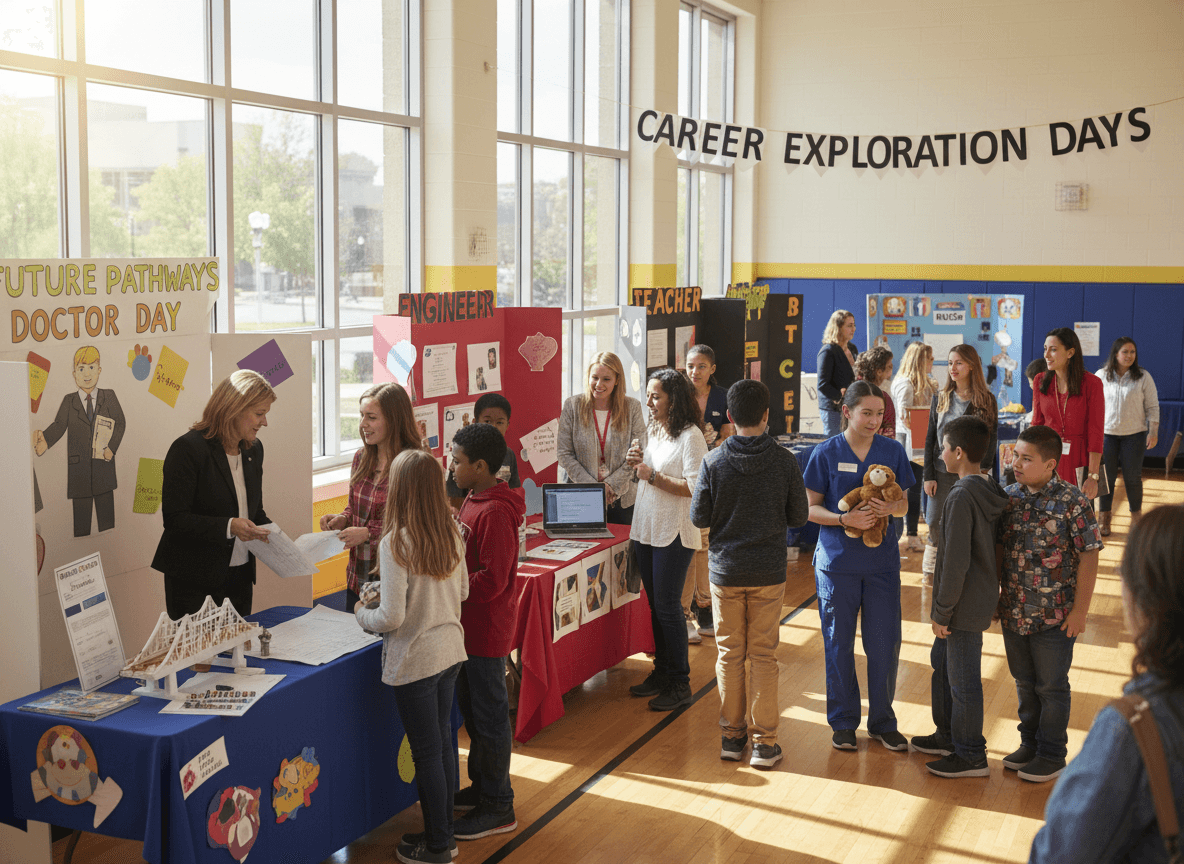
There are two categories of in-school volunteer roles that 7th graders tend to accept without complaint: career speakers and academic competition coaches. A parent who comes in as a working professional to talk about their job is seen as interesting and relevant rather than intrusive. A parent who coaches the math olympiad team or helps run the science bowl practice is there in an official capacity that students respect.
Recruit for both of these in your newsletter with specific asks. "We're looking for a parent who works in healthcare, engineering, law, or any STEM field to speak to our class for 25 minutes about their career path" is an easy ask that many parents will happily say yes to. "We need a parent with strong math skills to help run after-school prep sessions for the regional Math Olympiad" works the same way.
How to Phrase Volunteer Asks That Parents Actually Respond To
Vague asks get low response rates. "We always love parent volunteers" is easy to ignore. Specific asks with a time commitment attached are much more effective. In your newsletter, follow this structure: what you need, when it is needed, how long it will take, and how to sign up. Four sentences or fewer.
Also consider limiting the number of asks in a single newsletter. If you list five different ways to volunteer in one email, many parents will intend to respond to one of them and never get to it. One specific ask per newsletter, or at most two, produces better results.
What to Say When a Student Has Asked Their Parent Not to Come
You will encounter parents who tell you directly that their child does not want them at school. That is honest and worth acknowledging. Your newsletter can normalize the behind-the-scenes approach by framing it explicitly: "Some of our best volunteers never set foot in the classroom. If your student prefers some distance, there are meaningful ways to support the class from home."
This framing does two things. It removes the guilt from parents who have already been pushed away, and it opens a door for them to stay engaged in ways their kid might not even be aware of.
Building a Year-Long Volunteer Calendar
Rather than asking for volunteers reactively when you suddenly need them, build a basic volunteer calendar at the start of the year. Identify two or three moments per semester where parent support would be useful, and announce them early so families can plan.
Your newsletter can share this calendar in September and then remind parents as each opportunity approaches. Parents who are given advance notice are more likely to follow through than parents who are asked with a week's notice to drop everything and help.
Get one newsletter idea every week.
Free. For teachers. No spam.
Frequently asked questions
Why do parents of 7th graders disengage from school involvement?
The biggest factor is their kids. By 7th grade, most students actively do not want their parents visible at school. Parents pick up on that signal and many step back entirely to avoid embarrassing their child. Some also assume that middle school teachers do not want parent involvement the way elementary schools do. If you do not explicitly invite parents in, many will assume they are not needed.
What volunteer roles work well for 7th grade classrooms?
Behind-the-scenes roles are ideal. Grading objective assessments, organizing supply donations, coordinating a class event, or preparing materials for a project unit are all things parents can do without ever setting foot in the classroom during the school day. For parents who want more contact, career-day speakers, academic competition coaches, and reading mentors are visible roles that students tend to accept because they come with a clear purpose rather than a hovering presence.
How do I phrase volunteer asks so they do not feel overwhelming?
Estimate the time commitment honestly and be specific about what is involved. 'We need two parents to spend 90 minutes sorting supplies on October 14th' is a much easier ask than 'we're looking for volunteers to help with classroom support.' Specificity lowers the barrier to saying yes and eliminates the fear of committing to something open-ended.
How do I recruit career exploration speakers for 7th grade?
The easiest starting point is your parent community itself. Ask parents to respond to a short survey listing their profession and whether they would be willing to speak for 20 to 30 minutes. Then coordinate one or two speakers per semester. Students respond well to real working adults, especially when the speaker connects their career to content the class is actually studying.
How does Daystage help with parent volunteer communication in middle school?
Daystage makes it easy to send a targeted volunteer newsletter to parents with a clear call to action included. You can track who opened the message, which is useful when you need to follow up with parents who did not respond to a specific ask. Several 7th grade teachers use Daystage to send one focused volunteer request per semester rather than attaching asks to every classroom update.

Adi Ackerman
Author
Adi Ackerman is a former classroom teacher and curriculum writer with 8 years in K-8 schools. She writes about school communication, parent engagement, and what actually works in real classrooms.
More for Middle School
7th Grade Classroom Newsletter Ideas: What to Send Parents of Middle Schoolers All Year
Middle School · 7 min read
7th Grade Curriculum Overview Newsletter: What Your Child Will Learn in Seventh Grade
Middle School · 7 min read
7th Grade Behavior Newsletter to Parents: How to Navigate the Most Challenging Middle School Year
Middle School · 7 min read
Ready to send your first newsletter?
3 newsletters free. No credit card. First one ready in under 5 minutes.
Get started free