
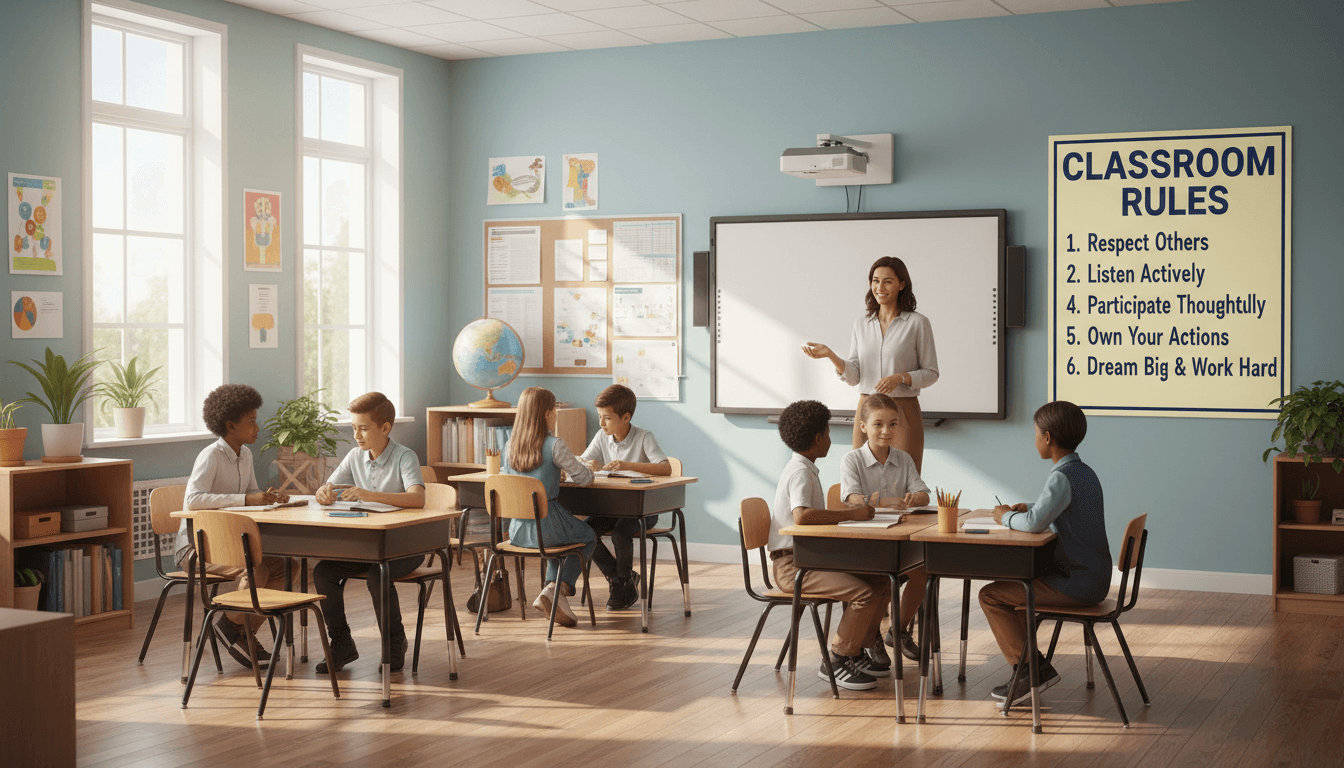
7th Grade Classroom Rules Newsletter: Setting Clear Expectations for Seventh Graders and Their Parents

Classroom rules mean something different in 7th grade than they did three years ago. In elementary school, teachers spend significant time teaching rules explicitly and reinforcing them daily. By 7th grade, students are expected to internalize expectations faster, adapt to each teacher's norms, and accept consequences without a warning sequence.
Parents need to know this shift has happened. When families understand what the expectations are and why they exist, they are better positioned to reinforce them at home and less likely to push back when a consequence is applied. Your classroom rules newsletter is where you set that foundation.
How Expectations Scale from 6th to 7th Grade
Sixth grade teachers typically provide a lot of scaffolding: reminders, gentle corrections, and second chances built into the structure. In 7th grade, that scaffolding decreases deliberately. Students are expected to arrive prepared, manage their own deadlines, and ask for help before a problem becomes a crisis.
This transition catches some students off guard, and it catches some parents off guard too. A direct note in your newsletter explaining that 7th grade expectations are intentionally higher, and why that is good for students even when it is uncomfortable, prepares families for what they are going to encounter.
Phone and Social Media Policy
At 12 and 13 years old, phones are a major classroom management challenge. Most research on adolescent attention shows that the presence of a phone on a desk, even face down and silent, reduces cognitive performance. Social media notifications add another layer of distraction.
Your newsletter should state the phone policy clearly: where phones should be during class, what happens when the policy is not followed, and what the process is if a parent needs to reach a student during the school day. Many parents have genuine concerns about emergency contact, and addressing that directly in the newsletter prevents it from becoming a complaint about the policy.
Avoid hedging language here. "We ask students to try to keep phones put away" is not a policy. "Phones must be stored in backpacks during class time" is a policy. Parents of 7th graders respond better to clarity than to requests.
Consequences: What They Are and What They Are Not
Many parents approach classroom consequences with anxiety, either worried that their child will be penalized for a minor mistake or hoping the teacher will come down hard on anyone who disrupts the class. Your newsletter can calibrate both of those expectations.
Explain that consequences in your classroom are consistent, calm, and tied to specific behaviors rather than moods. Explain the progression: what happens the first time a rule is broken, what changes if the pattern continues, and when parents are contacted directly. That transparency builds trust with families who might otherwise assume rules are applied arbitrarily.
What the Team Approach Means in Practice
Middle school works best when teachers, parents, and students are operating from the same playbook. When a student knows that the same expectations apply at school and at home, and that both the teacher and the parent will respond consistently to the same behaviors, the incentive to test limits drops significantly.
In your newsletter, name this explicitly. Tell parents what you need from them: to review the rules with their child, to respond to behavior incidents with conversation rather than negotiation, and to contact you before assuming their child's account of an event is complete. That is not asking them to distrust their child. It is asking them to seek the full picture.
What Happens When a Rule Is Broken
Describe the process clearly. If you contact parents when a consequence is applied, say so. If you contact parents only when a pattern emerges, say that instead. Parents who are surprised by a call home about a consequence they did not know was coming will be frustrated, even if the consequence was appropriate.
Include a note on what parents should do when they are contacted: have a conversation with their child about what happened, follow through with any agreed plan, and check in with you if the behavior continues. Keep the action items specific and achievable.
Keeping Rules Positive Without Being Vague
A common mistake in classroom rules newsletters is framing everything positively in ways that strip out the actual information. "We believe in treating everyone with respect" tells parents nothing useful. "Students are expected to listen without interrupting during direct instruction and address disagreements with peers privately" tells parents exactly what the standard looks like.
You can be positive in tone and specific in content at the same time. That combination, warm but clear, is what parents of 7th graders respond to best.
Get one newsletter idea every week.
Free. For teachers. No spam.
Frequently asked questions
How are classroom expectations different in 7th grade compared to 6th grade?
In 7th grade, expectations for student independence increase across the board. Students are expected to manage their own materials, track their own deadlines, and advocate for themselves when they need help rather than waiting for a teacher to notice. The rules themselves may look similar on paper, but the enforcement shifts: teachers in 7th grade are less likely to provide reminders and more likely to apply consequences directly. Parents should know this transition is intentional and important.
How do I explain the phone policy to 7th grade parents?
Be direct about what the policy is and why. If phones must be stored away during class, explain that research on adolescent attention consistently shows that even the visible presence of a phone reduces focus and retention. Acknowledge that many parents use their child's phone to reach them during the day, and explain the school's procedure for emergency contact. Most parents support strict phone policies when they understand the reasoning.
How do I explain consequences without sounding legalistic in a newsletter?
Focus on the purpose rather than the mechanics. Instead of listing a step-by-step consequence ladder, explain what you are trying to build: a classroom where everyone can learn without constant disruption. Mention that consequences are consistent and applied without escalating emotion, and that the goal is always to get the student back on track quickly rather than to punish at length. That framing lands better with parents than a formal discipline matrix.
What should parents do when their child breaks a classroom rule?
The most useful response is to have a direct conversation with the student, not to email the teacher asking for the consequence to be reversed. Parents who contact teachers asking for leniency after their child has broken a rule undermine the consistency that makes classroom management work. Your newsletter can address this directly by explaining that when parents and teachers respond consistently, students learn faster and test boundaries less.
How does Daystage help teachers communicate classroom rules to 7th grade parents?
Daystage makes it easy to send a formatted, professional-looking rules newsletter without it looking like a legal document. You can structure the newsletter with clear headers for each expectation area and send it to all families at once. Some 7th grade teachers attach a brief acknowledgment form at the bottom asking parents to confirm they received and reviewed the rules, and Daystage makes tracking that straightforward.

Adi Ackerman
Author
Adi Ackerman is a former classroom teacher and curriculum writer with 8 years in K-8 schools. She writes about school communication, parent engagement, and what actually works in real classrooms.
More for Middle School
7th Grade Behavior Newsletter to Parents: How to Navigate the Most Challenging Middle School Year
Middle School · 7 min read
7th Grade Homework Policy Newsletter: What Parents Should Know About Seventh Grade Assignments
Middle School · 6 min read
7th Grade Classroom Newsletter Ideas: What to Send Parents of Middle Schoolers All Year
Middle School · 7 min read
Ready to send your first newsletter?
3 newsletters free. No credit card. First one ready in under 5 minutes.
Get started free