
November Newsletter Ideas for 6th Grade Teachers: What to Send This Month

By November, the sixth grade honeymoon is over. The excitement of middle school has collided with the reality of six subjects, six sets of expectations, and a grading system that is less forgiving than elementary school. First quarter grades have arrived or are about to. Some students are thriving. Others are showing the first signs that the transition is harder than they expected. Your November newsletter is the right tool to help families understand where they are and what to do about it.
First quarter grades: how to read them
Many 6th grade families receive a first quarter grade report and do not know whether to celebrate or worry. A B in your class might mean very different things than a B in PE. Your newsletter is the place to explain what your grades actually measure. Cover the weight of homework versus tests, whether participation factors in, and what a first quarter grade tells you about a student's current trajectory. Families who understand the system are far better equipped to support their students than families who are guessing.
What the adjustment period looks like at this stage
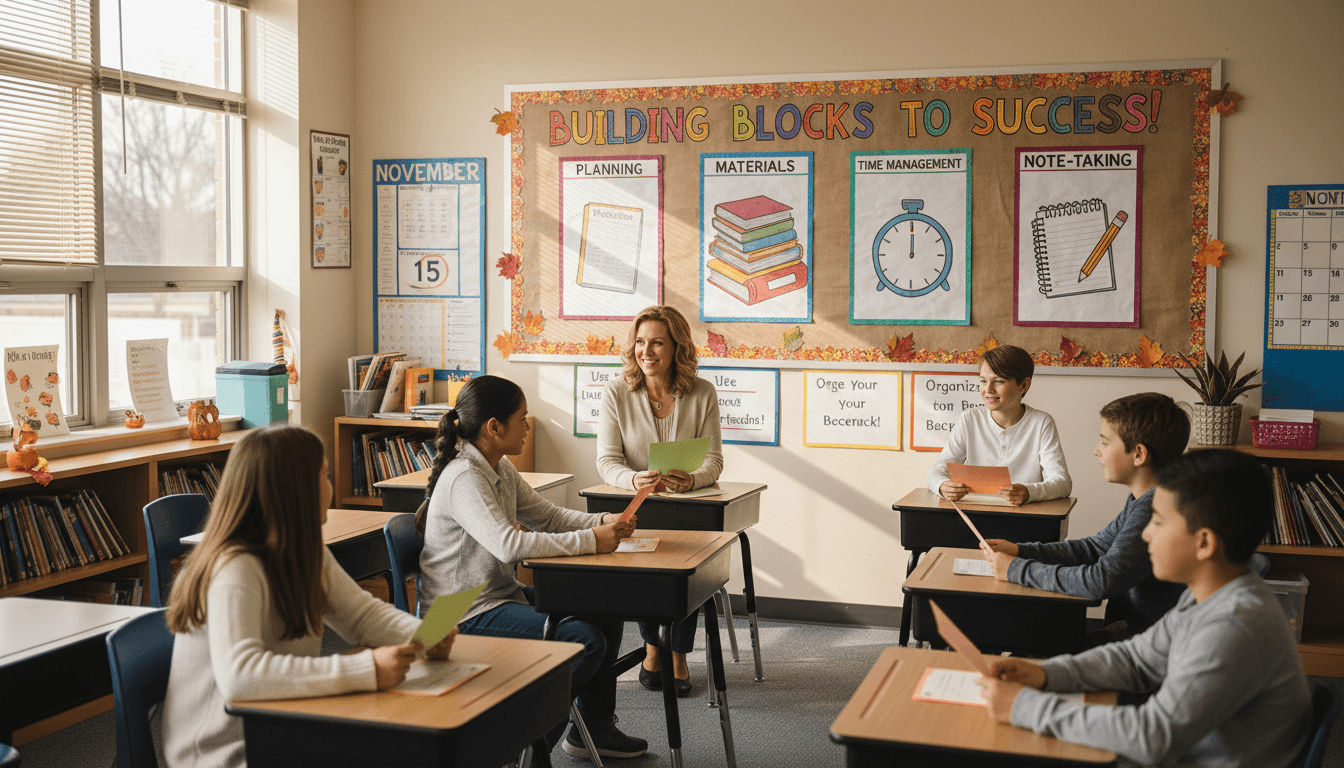
Three months into sixth grade, most students have settled into the logistics of middle school: they know their locker, they know their schedule, they know most of their teachers. But academic habits take longer to form. Students who had strong elementary school grades without much effort are often discovering for the first time that effort is required. Let families know this is a normal and expected part of the transition, not a sign that something is wrong.
Organization skills check-in
November is a good time to ask families to check in on a few specific organizational habits. Is the binder or folder system working, or has it collapsed into a pile? Is the student using a planner or agenda, or are assignments being tracked from memory? Is homework getting done in a consistent location and time slot? One or two specific habits that families can observe and reinforce at home are more useful than a general reminder to stay organized.
What is coming in the second quarter
Give families a brief preview of what the next six weeks look like in your class. Any major projects or assessments before winter break? Topics or skills that will require sustained effort? If you know that a particular unit tends to be challenging for students coming out of elementary school, flag it now so families can be watching and supportive before it becomes a problem.
Thanksgiving break and the school calendar
Include exact break dates, any work due before break, and any assignments that will be given over break if applicable. Be direct about your expectations. If you do not assign work over Thanksgiving break, say so. Families appreciate clarity. If you do assign something, tell them specifically what it is and when it is due.
How to support a 6th grader who is struggling
Some students are going to hit November and be genuinely behind. Address this directly. What should a parent do if their student is struggling? How do they reach you, and how quickly will you respond? Is there a tutoring resource or after-school support option? Families who know the steps are less likely to panic and more likely to act.
November dates at a glance
First quarter grade distribution date if not yet past, Thanksgiving break start and end, any parent-teacher conferences, and any school events families should know about. A clean, accurate dates list at the end of your newsletter is the part that gets forwarded to the other parent or photographed and put on the fridge.
November is when sixth grade gets real for a lot of families. A newsletter that meets that reality with specific, useful guidance is one that builds the kind of trust that carries through the rest of the year.
Get one newsletter idea every week.
Free. For teachers. No spam.
Frequently asked questions
What should a 6th grade teacher include in a November newsletter?
November in 6th grade is the first real academic checkpoint. First quarter grades are out or just arriving, Thanksgiving break is weeks away, and many students are showing the first signs of organizational fatigue. Your newsletter should address how students are tracking academically, what organizational habits are helping or hurting, what Thanksgiving break means for the school calendar, and what parents can do at home to support students who are still adjusting to the multi-teacher environment.
How should I discuss first quarter grades in my November newsletter?
Address grades as information, not verdicts. Many 6th graders receive their first middling grade in November and neither they nor their parents know how to calibrate it. Explain what your grading system measures, what a first quarter grade typically reflects, and what a student can do in the second quarter to build on strengths and address gaps. Normalize the adjustment. A first quarter that is lower than expected does not define the year.
When should I send my November 6th grade newsletter?
Send it in the first week of November, before Thanksgiving break planning takes over family attention. If your school releases first quarter grades in October, your early November newsletter can follow up on what those grades mean and what comes next. A second note the week before Thanksgiving break with schedule information is also useful.
How do I address organization issues in a 6th grade November newsletter without sounding critical?
Frame organization as a skill being learned, not a character flaw. Most 6th graders are managing multiple homework deadlines across six subjects for the first time. Binders get messy. Things get lost. Describe one or two specific habits that tend to help at this stage, like a daily agenda check or a Friday folder cleanout, and invite families to try them at home. That is useful without being judgmental.
What newsletter tool works best for middle school teachers?
Daystage helps middle school teachers send professional newsletters without wrestling with email formatting. For 6th grade teachers who need to communicate both academic updates and organizational guidance in the same email, Daystage's section-based layout makes it easy to separate topics clearly. It lands in family inboxes as a full email, which means parents actually read it instead of clicking past a link.

Adi Ackerman
Author
Adi Ackerman is a former classroom teacher and curriculum writer with 8 years in K-8 schools. She writes about school communication, parent engagement, and what actually works in real classrooms.
More for Middle School
Ready to send your first newsletter?
3 newsletters free. No credit card. First one ready in under 5 minutes.
Get started free