
How to Communicate PBIS and Behavior Expectations in Your Middle School Newsletter
Positive Behavioral Interventions and Supports (PBIS) frameworks are effective when the whole school community understands them. The problem at most middle schools is that families receive a behavior matrix at the start of the year and then hear nothing more about PBIS until their child gets a referral or a consequence.
Consistent newsletter communication about PBIS and behavior expectations keeps families informed, creates alignment between school and home, and builds the kind of family understanding that makes the system work better for students.
Why families often do not understand PBIS
PBIS is a systems-level approach that takes time to explain well. Most schools introduce it in a one-page handout at the start of the year or in a paragraph on the school website. Families who read it once and never see it reinforced rarely internalize how it works or why it matters.
The consequences of that gap are real. When a student gets a behavior consequence they did not expect, families often respond with confusion or frustration. They do not understand the tier system, why certain behaviors trigger specific responses, or how the school distinguishes between a warning and a referral. That confusion makes difficult conversations harder and erodes trust in the system.
Regular newsletter communication does not eliminate those conversations. But it gives families enough background knowledge to have them productively.
When to address PBIS in the newsletter
PBIS does not need to be the primary topic of every newsletter. It fits naturally in a few specific contexts:
- Start of year: A full newsletter issue dedicated to explaining how your school's PBIS system works, what the expectations are at each tier, and how families can reinforce those expectations at home
- After a school-wide behavior trend: If there has been a notable pattern of a particular behavior, such as vaping, phone policy violations, or hallway behavior, a newsletter that addresses it directly is more effective than letting families hear about it secondhand
- Before a high-stress period: Testing season, the week before a long break, and the last weeks of the school year are all times when behavior incidents tend to spike. A proactive newsletter note before those periods sets context
- When positive behavior data is available: If your school tracks PBIS rewards, recognition data, or behavior improvement trends, sharing that information in a newsletter builds family confidence in the system
How to explain PBIS clearly in a newsletter
PBIS jargon does not translate well to a family newsletter. Words like "universal tier," "targeted intervention," and "behavior matrix" mean something to educators but can feel clinical or alarming to parents who are encountering them without context.
Write the PBIS explanation in plain language. An approach that works:
Start with the why. "Our school uses a consistent behavior framework so that every student knows exactly what is expected and what happens when those expectations are not met. We call this PBIS."
Describe the three-tier structure simply. "Most of our work is at the school-wide level: clear expectations that apply to every student in every classroom and hallway. When a student needs more support, we have small group check-ins and specific plans to help them get back on track. For the very few students who need individualized support, we work with families directly to build a plan together."
Name the school-wide expectations in your own words. Most PBIS frameworks use three to five simple values. Describe each one with a concrete example of what it looks like in your school.
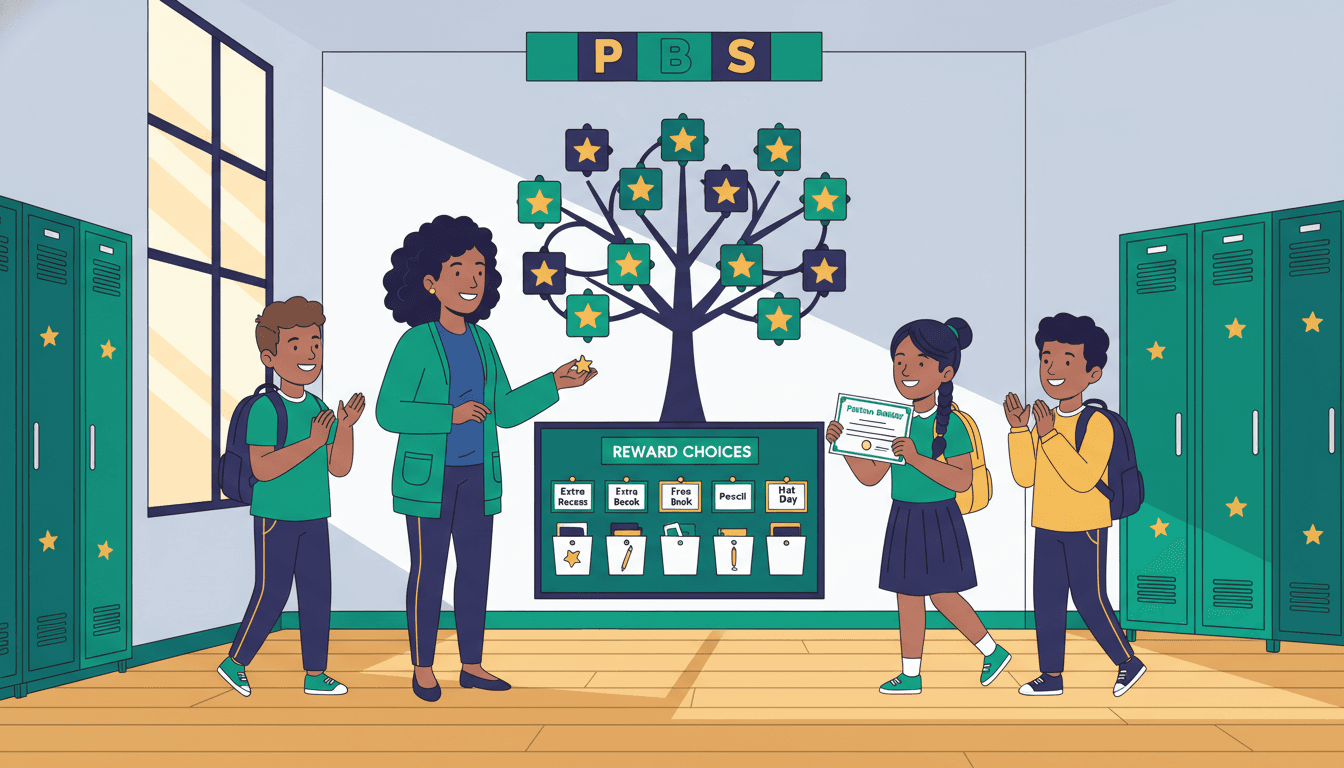
Explain the recognition system. Many families do not know their child is earning rewards through PBIS. Telling them what to look for, and how to celebrate it at home, turns the system from a consequence machine into something more balanced.
Communicating specific behavior expectations without sounding punitive
One of the risks of PBIS communication in newsletters is that it reads like a list of rules and consequences that is issued to families when teachers are frustrated with student behavior. That tone creates resistance, not alignment.
A few principles help:
Lead with what students are doing right. "Our 7th graders have had a strong start to the semester with our Be Responsible expectation. We are seeing a lot of students returning borrowed materials promptly and advocating for themselves when they need help." This sets a positive frame before you address anything that needs reinforcement.
Address specific behavior trends without naming or shaming. "We want families to know we are addressing an increase in phone use during instructional time this week. We have reminded students of our phone policy and what the expectations are. If your student mentioned a conversation they had with a teacher or administrator about this, here is the context." Direct and informative, not threatening.
Explain consequences in terms of learning, not punishment. Middle school PBIS frameworks are supposed to teach behavior, not just punish it. If your newsletter describes consequences in learning-centered terms, families are more likely to see the system as supportive rather than adversarial.
What families can do to reinforce PBIS at home
One of the most valuable things a PBIS-focused newsletter can include is a concrete action for families. Not a vague "support positive behavior at home," but something specific:
"Ask your student to name our school's three behavior expectations and give you one example of each." This reinforces the school values without creating a drilling session, and it gives families a conversation starter that works at 12-13 years old.
"If your student earned a PBIS reward this week, ask them what they did to earn it. We want families to celebrate those moments alongside us." Pulling the recognition system into the home environment makes it more meaningful for students.
Using Daystage for PBIS communication
Daystage is used by middle school administrators and counselors who need to communicate about school-wide systems like PBIS in a professional, readable format. The block editor makes it easy to structure a PBIS explainer newsletter with clear sections, pull quotes from the behavior framework, and send to the entire school parent list or a specific grade level.
Archived newsletters mean families who join mid-year or who missed an earlier PBIS communication can access the background without you resending it.
Consistency builds understanding
Families who receive one PBIS newsletter at the start of the year and nothing else for ten months will not understand or support the system by the time a behavior issue arises. Families who see PBIS referenced consistently, positively, and specifically throughout the year develop a genuine understanding of how it works and what their child is learning from it.
That understanding does not prevent every difficult conversation. But it makes those conversations start from a foundation of shared language rather than misunderstanding.
Get one newsletter idea every week.
Free. For teachers. No spam.
Frequently asked questions
When should middle school teachers address PBIS in their newsletters?
Address PBIS directly at least four times per year: at the start of the year in a full issue dedicated to explaining how the system works, after any school-wide behavior trend that families are likely to hear about from other sources, before high-stress periods like testing season and the weeks before long breaks when behavior incidents typically spike, and when positive behavior data is available to share.
What should a middle school PBIS newsletter include?
Explain the three-tier structure in plain language, name the school-wide expectations with concrete examples of what each looks like in your building, and describe the recognition system so families know what their child may be earning and how to celebrate it at home. Most families received a behavior matrix in September and nothing since. A newsletter that makes the system feel real and ongoing, rather than a forgotten handout, builds the family alignment that makes PBIS work.
How should middle school teachers communicate PBIS expectations without sounding punitive?
Lead with the recognition system before the consequence structure. Position PBIS as a school-wide commitment to clarity and fairness, not as a rules-and-punishments announcement issued when staff are frustrated. Write from the assumption that most students are meeting expectations most of the time, and frame the communication as context for the community rather than a warning to noncompliant families.
What challenges do middle school teachers face when communicating PBIS and behavior expectations?
The core challenge is that most families receive PBIS information once at the start of the year and then only encounter it again when their child receives a consequence. That gap creates confusion and resistance precisely at the moments when family cooperation matters most. Jargon is also a problem. Terms like universal tier and behavior matrix mean something to educators but feel clinical or alarming to parents encountering them without context.
Is there a tool that helps middle school staff send consistent PBIS communication throughout the year?
Daystage makes it practical to include a brief PBIS or behavior update as a recurring section in your regular newsletter, so the system stays visible to families without requiring a separate communication effort every time there is something worth noting.

Adi Ackerman
Author
Adi Ackerman is a former classroom teacher and curriculum writer with 8 years in K-8 schools. She writes about school communication, parent engagement, and what actually works in real classrooms.
More for Middle School
Middle School Progress Report Newsletter: Helping Families Interpret the First Quarter
Middle School · 6 min read
5th to 6th Grade Transition Newsletter: How to Prepare Families for Middle School
Middle School · 7 min read
Middle School Budget Communication Newsletter: Keeping Families Informed About School Funding
Middle School · 5 min read
Ready to send your first newsletter?
3 newsletters free. No credit card. First one ready in under 5 minutes.
Get started free