
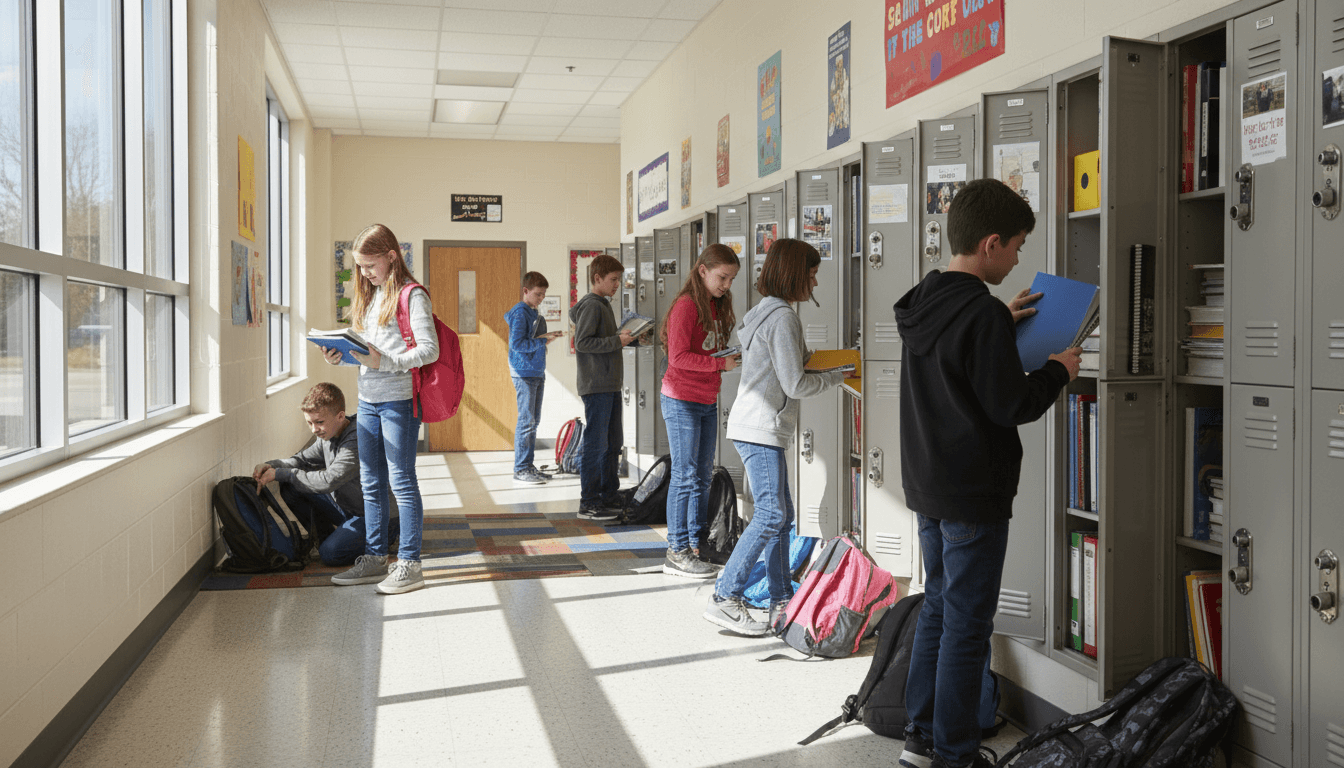
Middle School Locker Newsletter: How to Communicate Locker Policies and Tips to Families

Lockers are one of the first things middle schoolers encounter that elementary school did not prepare them for. The combination, the organization, the policy rules, and the logistics of getting from one class to another without being late are all new skills, and most students figure them out by trial and error unless someone explains them clearly.
A locker newsletter sent to families at the start of the year short-circuits a lot of that trial and error. It also ensures that parents understand the rules so they can help rather than inadvertently encourage violations.
Start With the Basics: What Students Need to Know
Begin the newsletter by covering the fundamentals. Where are lockers located in the building? How are locker assignments communicated? How does a student get help if they forget their combination on day one?
Many schools send locker assignments home before school starts or post them on the first day. If your school does something specific, explain it here so families know where to look and what to expect. Parents often get calls from students who have forgotten their locker number before the first week is over, and knowing where to find that information saves everyone time.
The Policy: What Is and Is Not Allowed
Cover the rules in plain language. Common policy areas worth including:
What students may keep in their lockers. Books, personal items, school supplies. Most schools permit a reasonable level of personal decoration inside the locker door. Say whether magnets, mirrors, small shelves, and photos are allowed.
What is not allowed. Food that will attract pests, items that are banned from school grounds (weapons, drugs, paraphernalia), valuables that should not be left unattended, and any items prohibited by your school's code of conduct.
Locker sharing. Most schools prohibit sharing locker combinations. Explain that briefly and give the practical reason: if something goes missing, both students are involved and neither can easily account for it.
Locker searches. A brief, factual note that lockers are school property subject to administrative search is appropriate and legally required in many districts to be communicated to families.
Combinations and Forgotten Locks
Forgotten locker combinations are one of the most common disruptions in the first weeks of middle school. Tell families the procedure upfront: who students should go to, what identification they need, and whether the combination can be looked up by a parent calling the office.
If students bring their own combination locks, explain whether that is permitted and, if so, the requirement to register the combination with the office. That single detail prevents a lot of late-afternoon frustration.
Organization Tips That Actually Work
The most useful part of a locker newsletter is often the organizational advice, especially for students transitioning from elementary school who have never managed their own storage space before. Practical, specific tips go further than general encouragement.
Suggest keeping a copy of the class schedule taped inside the locker door. A small magnetic shelf divides the vertical space and doubles the usable storage. Color-coded folders or binders by subject make it easy to grab the right materials quickly. A weekly Sunday evening locker clean-out prevents the slow accumulation of old papers and forgotten lunches that turns every locker into a recycling bin by October.
For families who want to help, note that most school supply stores sell small magnetic locker organizers, hooks, and mirrors. These are entirely optional but helpful for students who want a more personalized setup.
Timing and Locker Use During the Day
Explain when students are expected to use their lockers. Most middle schools have designated passing periods during which locker access is appropriate. Let families know how long passing periods are so they understand why students should not try to visit their locker between every class.
If your school has a specific policy about locker use before school, at lunch, or after school, include it. These are the times when conflicts and congestion most often occur, and knowing the expectations in advance helps.
Reporting Problems
Tell families what to do if a locker is damaged, stuck, or vandalized. Who is the right person to contact? What is the process for getting a locker repaired or replaced? If a student believes something was taken from their locker, what should they do and to whom should they report it?
Families feel more confident when they know there is a clear process for things going wrong. It also sets realistic expectations: lockers are not vaults, and valuable items are better kept at home.
Making Locker Use a Success From Day One
Close the newsletter by framing locker use as one of the first organizational challenges of middle school, and one that students can genuinely master with a little intentional setup. Families who know that it is a learnable skill rather than an innate ability are in a better position to support their student through the first few weeks.
A locker that works smoothly is a small but real part of a student's daily confidence. When they can get to class on time with the right materials, the day starts better. That is worth communicating clearly.
Get one newsletter idea every week.
Free. For teachers. No spam.
Frequently asked questions
What should a middle school locker policy newsletter include?
Cover the basic rules around locker use (what students may and may not keep inside), the consequences for policy violations, how locker assignments work, what to do if a locker combination is forgotten or the locker is damaged, and practical tips for staying organized. Including organization tips alongside the policy is what makes the newsletter genuinely useful rather than just a list of rules.
When should schools send a locker newsletter to families?
Send it before school starts or during the first week. New middle school students, especially 6th graders transitioning from elementary school, often struggle with lockers simply because no one has explained the logistics. A brief newsletter early in the year prevents a lot of the chaos that otherwise shows up in week two when students are late to class because they cannot remember their combination.
How do I explain the locker search policy without alarming families?
Be matter-of-fact about it. Lockers are school property and subject to inspection. State that clearly without dwelling on it or making it sound like the default expectation is misbehavior. A sentence like 'Lockers are school property and may be inspected by administration when there is a safety concern or reasonable suspicion of a policy violation' is accurate and non-alarmist.
What locker organization tips are most useful for middle schoolers?
The most practical tips are: keep your schedule in the locker door, use a shelf divider or small bin to separate top and bottom, only keep what you need for the current day to avoid overstuffing, clean out the locker weekly before things pile up, and do not share your combination. For new middle school students especially, walking through a simple organizational system helps much more than a general instruction to 'be organized.'
What newsletter platform works well for communicating middle school locker information?
Daystage is a good fit for this kind of practical school communication. You can include a clear formatted section for the policy rules, a visual tip list, and any photos of well-organized locker setups. Because it delivers as email, families can easily find it again in September when their student forgets the combination for the third time.

Adi Ackerman
Author
Adi Ackerman is a former classroom teacher and curriculum writer with 8 years in K-8 schools. She writes about school communication, parent engagement, and what actually works in real classrooms.
More for Middle School
Middle School Schedule Newsletter: Communicating the Class Schedule and Changes to Families
Middle School · 5 min read
8th Grade Classroom Rules Newsletter: Setting Expectations for the Final Middle School Year
Middle School · 6 min read
Eighth Grade Back to School Newsletter: Setting Expectations for 8th Grade Families
Middle School · 7 min read
Ready to send your first newsletter?
3 newsletters free. No credit card. First one ready in under 5 minutes.
Get started free