
March Newsletter Ideas for 6th Grade Teachers: What to Send This Month
March is one of the most logistically busy months of the 6th grade year. Spring standardized testing is either arriving or already underway. Women's History Month brings curriculum that benefits from parent context at home. Spring break is on the horizon, which means student focus is already starting to drift. And somewhere in the middle of all of that, third quarter work still needs to get done. Your March newsletter is the communication that keeps families oriented when the calendar is pulling in multiple directions.
Spring testing: what families need to know
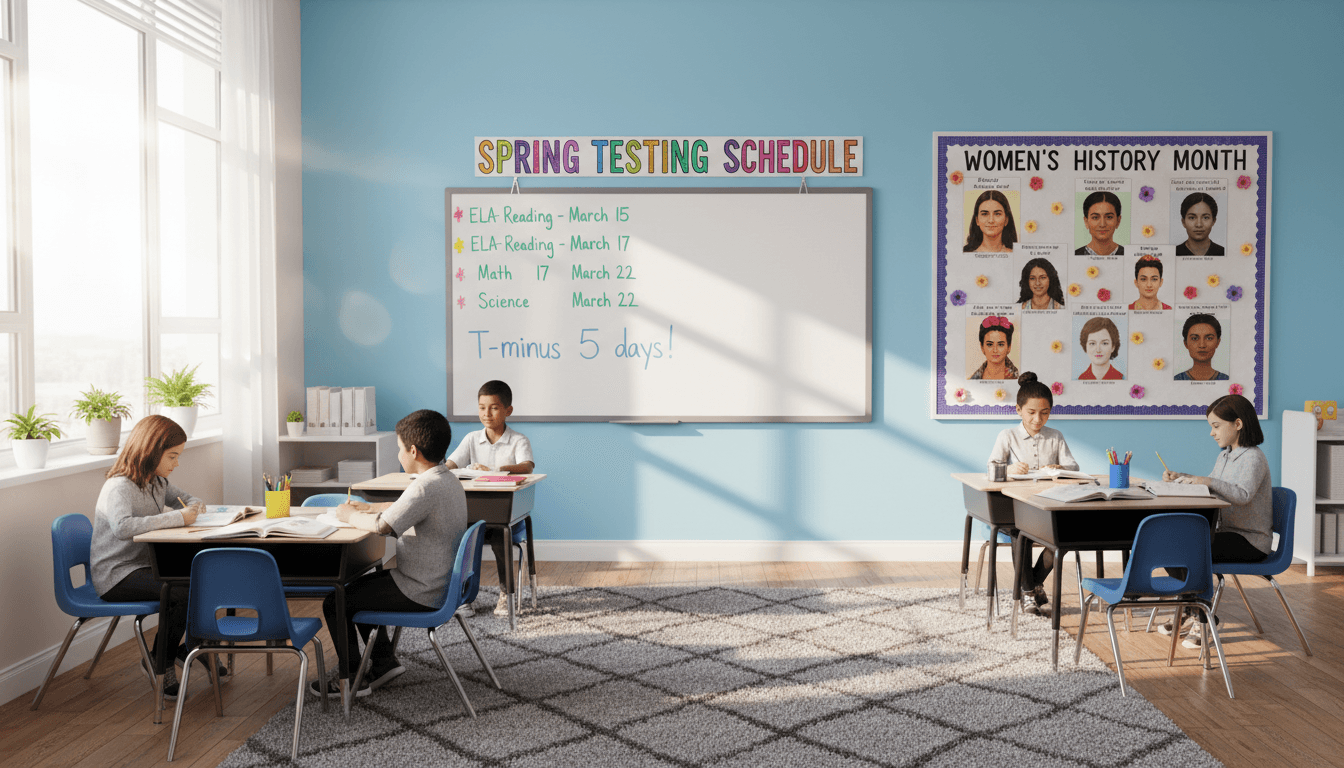
For many sixth graders, spring state testing is a new experience in terms of format and environment. Even students who tested in elementary school will find the middle school context different. Your newsletter should cover the testing window clearly: which subjects, which dates, and how long sessions typically run. Include a practical note about preparation, what students should eat for breakfast, how much sleep helps, what to bring and what to leave at home, and what happens if a student is absent during a testing day. Families who receive this information in March have time to prepare rather than scrambling the week of.
Women's History Month in your classroom
March is Women's History Month, and your newsletter is the right place to tell families what students are studying and creating. Name the historical figures or themes your class is exploring. If students are working on a biography project, a timeline, an analytical essay, or a creative piece, describe the assignment and the skills it develops. Sixth grade is often the first time students engage with women's history as a distinct curricular focus. Parents who understand the learning goals are better conversation partners when students are working on the assignment at home.
Second semester organizational habits check-in
March is a good time to revisit organizational expectations with families. By mid-year, some sixth graders have developed strong independent habits. Others are still relying on reminders in ways that will not serve them in seventh grade. Share what you are observing as a class. Describe what strong organizational practice looks like in your subject area and name one or two things families can check at home to support their student. A binder check, a homework planner review, or a conversation about the student's system for tracking assignments can make a meaningful difference in the final quarter.
Academic standing before spring break
Be direct about where the class stands heading into spring break. What does the grade distribution look like? Are there common patterns of missing work or struggling areas? What can students do in the next two to three weeks to improve their standing before the break? Sixth grade families appreciate academic honesty from teachers. A newsletter that gives them real context in March, rather than a surprise at the end of the quarter, gives families time to act.
Spring break expectations
Most families appreciate a teacher who is honest about spring break expectations. Name any assignments due shortly after returning, any material students should review before post-break testing, and any projects that are in progress and need continued work. Be reasonable about the expectations you set. Students who return from spring break completely disconnected from academic content often struggle more than students who did a small amount of work during the break. A clear, modest expectation prevents the chaos of the return week.
Looking ahead to the final quarter
Give families a preview of what is left in the year. Name the major units and projects still ahead. If there are any assessments or presentations that will have a significant impact on final grades, introduce that context now. Sixth graders who know what is coming tend to feel less overwhelmed by it. Parents who understand the road ahead are better equipped to support their students through the final stretch.
March dates and spring break calendar
Close with a clean list of what families need to track. Testing dates, any project deadlines, the spring break window, and the date school resumes. If there are any school events in March, include those too. A well-organized dates section is the most practical part of any monthly newsletter and the one families refer back to most often.
Sixth grade March is demanding for students and teachers alike. A newsletter that gives families honest information about testing, curriculum, and expectations heading into spring break is one of the most useful communications you can send. The families who feel informed in March show up as more engaged partners in April and May when the final push begins.
Get one newsletter idea every week.
Free. For teachers. No spam.
Frequently asked questions
What should a 6th grade teacher include in a March newsletter?
March is a transitional month for sixth graders. Spring standardized testing is either approaching or already underway, spring break creates a natural disruption in academic momentum, and Women's History Month offers meaningful curriculum opportunities. Your newsletter should address all three: give families the testing schedule and what students can do to prepare, explain your Women's History Month projects, and set expectations for academic engagement around the spring break window.
How should I explain spring testing to 6th grade families?
Keep the framing calm and informational. Many sixth graders are taking state standardized tests for the first time in a middle school setting, and the environment and format may be different from what they experienced in elementary school. Describe the testing window, what subjects are covered, how long sessions typically run, and what students should bring or avoid bringing. A practical note about sleep and morning routines in the days before testing is also appreciated by families.
What Women's History Month content works in a 6th grade March newsletter?
Name the specific figures or themes students are studying and describe what students are creating or presenting. Sixth graders respond well to biography-based projects, timeline activities, and creative writing connected to historical women. If your class is doing a specific assignment, describe the learning goals behind it. Parents who understand why students are doing the work engage more meaningfully when it comes home.
How do I address spring break academic expectations in a 6th grade newsletter?
Be direct and reasonable. Most families appreciate a teacher who acknowledges that spring break is a real break while also flagging any assignments due shortly after returning. If students have reading to complete, a project to finish, or material to review before post-break testing, name it clearly. A brief expectation-setting note prevents the rushed emails you would otherwise receive the night before school resumes.
What newsletter tool works best for middle school teachers?
Daystage helps middle school teachers send organized newsletters without spending time on layout or design. For 6th grade teachers who need to communicate testing schedules, Women's History Month curriculum, and spring break expectations in a single send, Daystage's block-based editor keeps each section readable and well-organized. Newsletters arrive directly in parent inboxes as fully rendered emails, no app required.

Adi Ackerman
Author
Adi Ackerman is a former classroom teacher and curriculum writer with 8 years in K-8 schools. She writes about school communication, parent engagement, and what actually works in real classrooms.
More for Middle School
Eighth Grade Newsletter Examples: Templates and Real Examples That Work
Middle School · 7 min read
Eighth Grade Newsletter Ideas: Topics That Keep Families Engaged All Year
Middle School · 7 min read
Eighth Grade ELA Newsletter: What to Tell Families About Reading and Writing in 8th Grade
Middle School · 7 min read
Ready to send your first newsletter?
3 newsletters free. No credit card. First one ready in under 5 minutes.
Get started free