
February Newsletter Ideas for 6th Grade Teachers: What to Send This Month
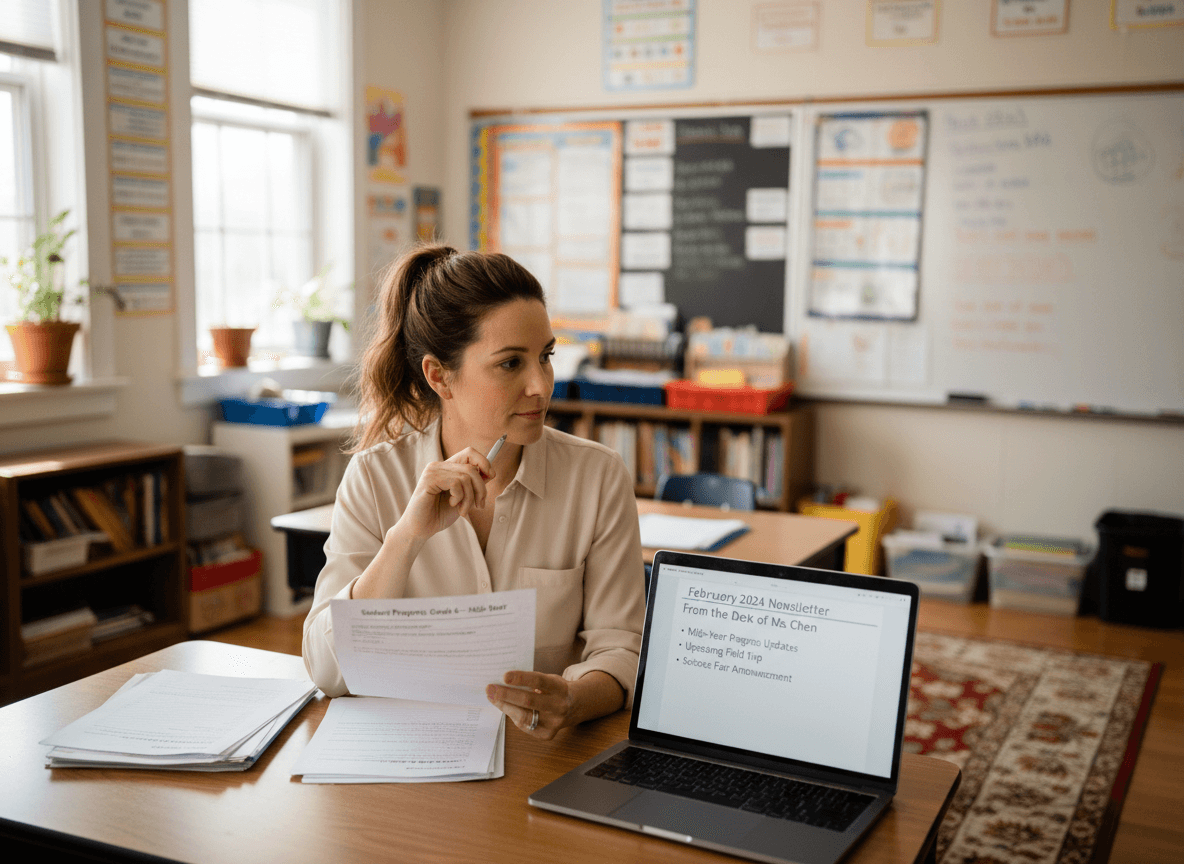
February is the halfway point of sixth grade, and it is a month that deserves more attention than most teachers give it. The post-winter-break energy has faded. The end-of-year is still months away. Students who were riding the novelty of middle school in September are now in the routine, for better or worse. Some have built solid habits. Others have been coasting on organizational systems that are starting to crack. Your February newsletter is the right tool to take stock, name what is working, and set the direction for the second half of the year.
Mid-year check-in: where students are
February is a natural moment for an honest mid-year reflection. What patterns are you seeing across your class? Where are students consistently strong? Where are they consistently struggling? You do not need to share individual student data in a newsletter. But a paragraph describing what the class as a whole is doing well and where the common challenges are gives families a context they cannot get from a grade alone. Families who understand what is happening at the class level have a much better frame for interpreting their own student's experience.
Organizational skills: the halfway point audit
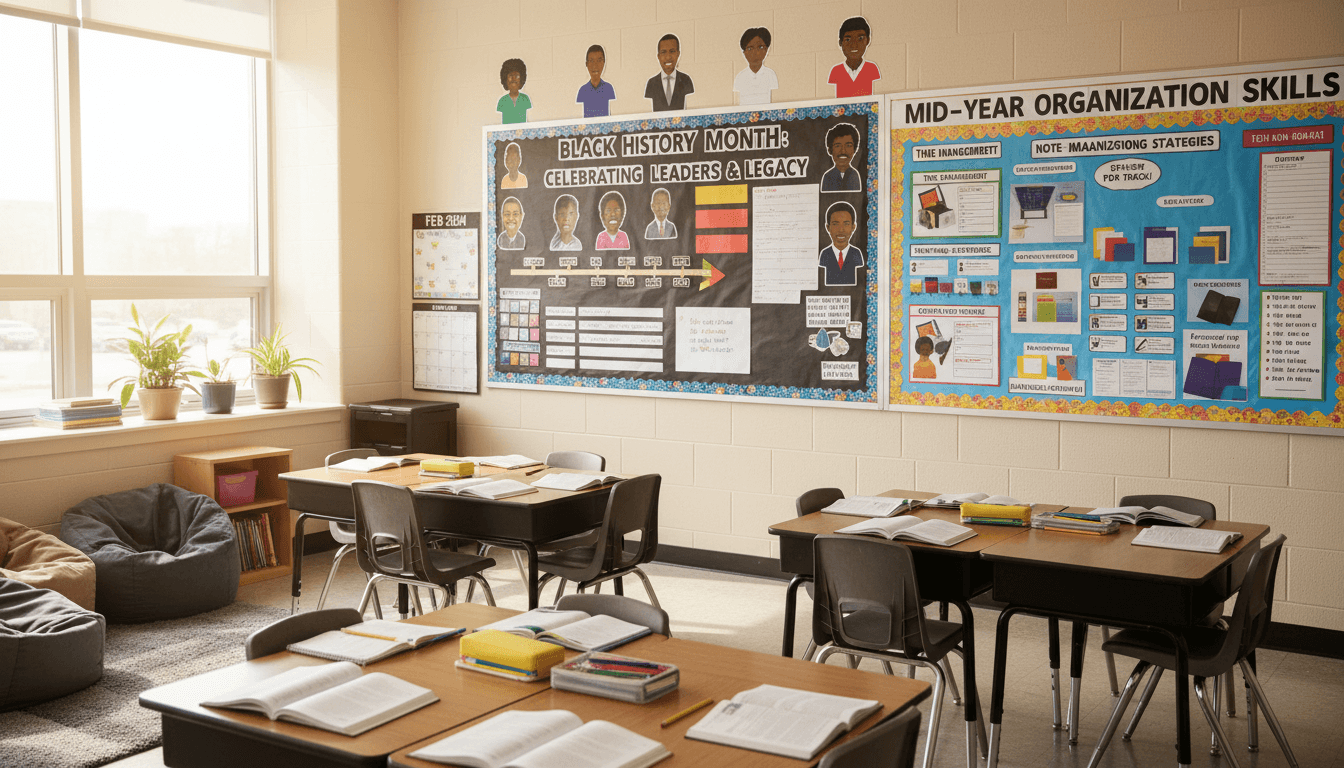
Ask families to do a quick check on the organizational systems their student set up in August. Is the binder or folder still in working order, or has it become a pile? Is the planner or agenda being used, or has the student shifted to keeping everything in their head? Is homework being done in a consistent location and routine, or has that routine broken down? A brief checklist in your February newsletter gives families something specific to look at and act on. Organizational habits that are not corrected in February become academic problems by April.
Black History Month in your classroom
Describe what your class is studying or doing for Black History Month. Name the specific texts, historical figures, projects, or discussions you are facilitating. Families who know what their students are working on can continue the conversation at home and reinforce what is being learned in class. Specificity matters here. A newsletter that says "we are celebrating Black History Month" is less useful than one that says "we are reading a biography of Katherine Johnson and students are writing their own narrative of a figure they chose from a provided list."
Valentine's Day expectations
Middle school Valentine's Day is socially different from elementary school. The card exchanges that were universal in fourth grade are not universal in sixth. Tell families clearly what your class is or is not doing: whether there is any kind of exchange, what the expectations are, and any school-wide guidelines about candy, gifts, or public displays of affection. A direct, brief statement removes the ambiguity that generates individual emails in the first two weeks of February.
The second half of 6th grade: what to focus on
February through June is the half of sixth grade where students either solidify the habits they built in the fall or finish the year in the same disorganized place they found themselves in November. Tell families what the most important things are to watch for and support in the months ahead. Any major projects coming up? Any skills your class will be building in the spring that require sustained effort? Families who know what is ahead can prepare for it. Families who find out in April cannot.
Second semester pacing and upcoming units
Give a brief preview of the major topics or units in your class through the end of the year. What will students be studying in March? Are there field trips, guest speakers, or special projects in the spring semester? Any standardized assessments that families should be aware of? A short preview section in your February newsletter sets expectations and gives families a reason to stay engaged with the newsletter throughout the spring.
February dates at a glance
Valentine's Day, Presidents Day break if applicable, any benchmark testing dates, report card or progress report dates, and any school events in February. Keep the list accurate. A clean, correct dates list at the end of a February newsletter is the part that families reference most. If a date changes, send a quick follow-up. Families who can plan around accurate dates trust you more over the rest of the year.
February in sixth grade is a month where a little attention from families goes a long way. A newsletter that gives them specific, actionable information about academics, organization, and what is coming in the spring turns a quiet month into a productive one. That is worth the time it takes to write it well.
Get one newsletter idea every week.
Free. For teachers. No spam.
Frequently asked questions
What should a 6th grade teacher include in a February newsletter?
February is the true midpoint of the 6th grade year and a valuable moment to take stock. Your newsletter should cover how students are tracking at the halfway point, whether organizational habits are holding up, what Black History Month learning looks like in your class, Valentine's Day classroom expectations, and what families should focus on in the second half of the year to make sure their students finish sixth grade on solid footing.
How do I address mid-year academic progress in a 6th grade February newsletter?
Focus on patterns and habits rather than individual grades. What are you seeing across your class in terms of homework completion, study habits, and preparation for assessments? What do the students who are thriving have in common? What are the habits that are holding back students who are struggling? This kind of pattern-level insight gives families actionable information without singling out any student.
Should I address Valentine's Day in a 6th grade February newsletter?
Yes, briefly. Middle school Valentine's Day can be socially loaded in ways elementary school was not. A sentence or two about what your class does or does not do for Valentine's Day, whether card exchanges are happening, and any school-wide expectations removes ambiguity and prevents families from making assumptions. If your school has specific guidelines, summarize them.
How should I describe Black History Month in a February teacher newsletter?
Describe what students are actually doing in your class for Black History Month: specific authors being read, historical figures being studied, projects being worked on, guest speakers if any. Specific content is far more meaningful than a general statement that your class is observing the month. Families who know what their students are learning can extend the conversation at home.
What newsletter tool works best for middle school teachers?
Daystage helps middle school teachers send February newsletters that feel organized and easy to read even when covering multiple topics. For 6th grade teachers managing mid-year check-ins, cultural observances, and upcoming events all in the same email, Daystage's block layout makes it simple to keep each section clear and distinct. It sends directly to parent inboxes as a full email, which is especially useful for families still learning how to engage with middle school communication.

Adi Ackerman
Author
Adi Ackerman is a former classroom teacher and curriculum writer with 8 years in K-8 schools. She writes about school communication, parent engagement, and what actually works in real classrooms.
More for Middle School
Eighth Grade Newsletter Ideas: Topics That Keep Families Engaged All Year
Middle School · 7 min read
Eighth Grade ELA Newsletter: What to Tell Families About Reading and Writing in 8th Grade
Middle School · 7 min read
Eighth Grade Newsletter Examples: Templates and Real Examples That Work
Middle School · 7 min read
Ready to send your first newsletter?
3 newsletters free. No credit card. First one ready in under 5 minutes.
Get started free