
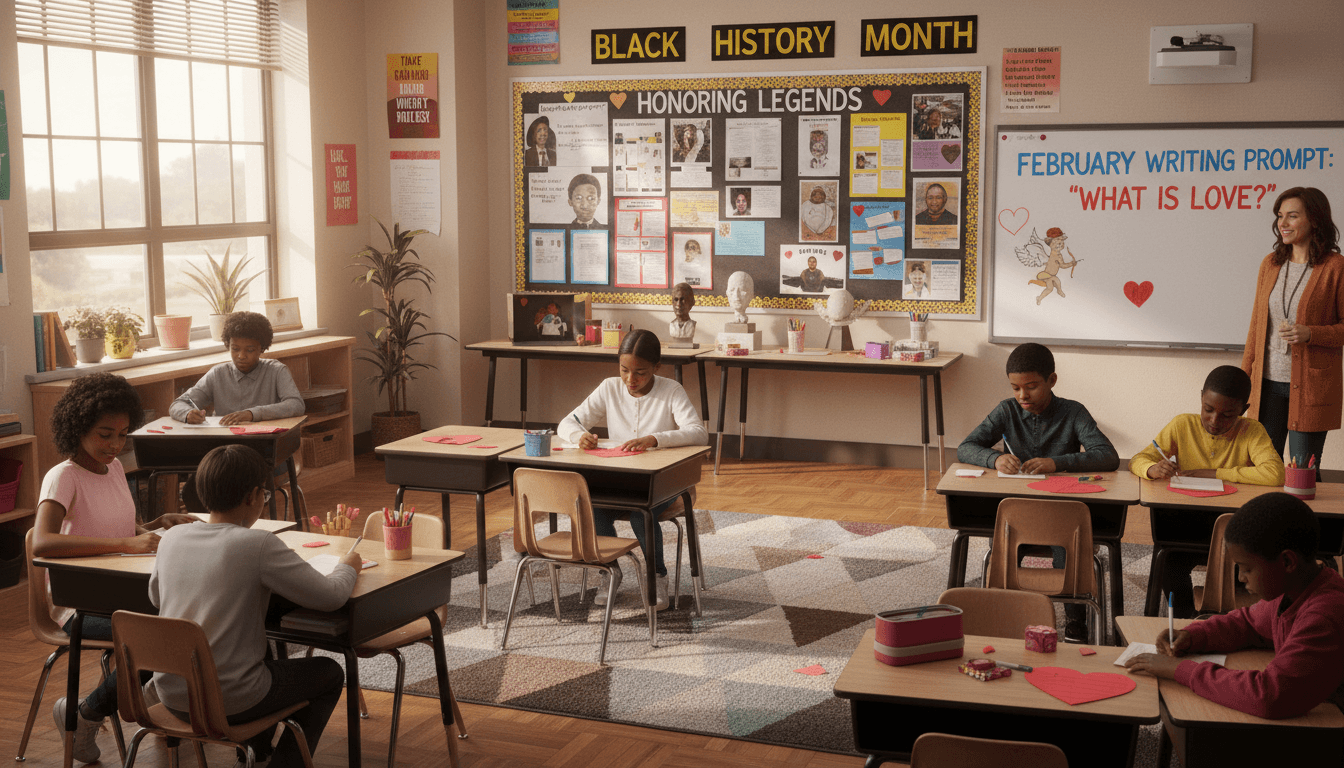
February Middle School Parent Newsletter Template: What to Include This Month

February is the most content-dense month of the second semester. Black History Month projects and curriculum are underway. Valentine's Day breaks up the week. Winter sports seasons are in full swing. And somewhere in the background, families are starting to hear whispers about spring testing. A clear, well-organized February newsletter helps families track all of it and stay connected to what their student is doing and what is coming next.
Sample February newsletter structure
Here is a structure that works for most middle school teachers sending a February parent newsletter. Adapt it based on your grade level and what is most relevant this month:
Opening: One or two sentences acknowledging where the class is in the school year and what February brings. Keep it brief and direct.
Black History Month curriculum: What students are studying, the project or assignment format, the timeline, and any at-home resources or conversations families can support.
Academic check-in: How the class is tracking through the second semester. Any patterns you are seeing in student work. Two or three specific things families can reinforce at home.
Valentine's Day and classroom activities: What is planned, what students need to bring if anything, and how the day is being structured.
Winter sports and extracurriculars: Schedules, eligibility reminders, and any upcoming events families should know about.
Spring testing preview: A first mention of upcoming state testing, subjects and approximate dates, and how to support students now.
February and March dates: All key dates families need to calendar in the coming four to six weeks.
Black History Month: connecting families to what students are learning
Your February newsletter should explain Black History Month curriculum in specific, accessible terms. Name the project or unit, the texts or primary sources being used, and the learning goals. Explain the format of the deliverable: is it a research presentation, a written response, an artistic project, or a combination? Give the timeline and any requirements families need to support at home. Middle school students who discuss their Black History Month projects at home, and whose families understand the context of the work, tend to produce more thoughtful outcomes. Your newsletter is how you give families that context.
Academic check-in for second semester
February is six weeks into second semester, which is enough time to see clear patterns. Name two or three observations from your classroom: what students are doing well, where the consistent gaps are, and what specific habits families can reinforce. Avoid vague encouragement. Instead, tell families what consistent effort looks like in your class this month, what successful students are doing differently from struggling ones, and what one change at home would have the most impact. Specific guidance in February gives families time to act before the pressure of spring testing begins.
Valentine's Day in middle school
Keep this section brief and practical. If there is a classroom activity, exchange, or celebration, name it, state whether students need to bring anything, and explain the format. Middle school students navigate Valentine's Day with varying degrees of ease, and a simple, matter-of-fact mention from you helps families prepare their student without making the day a bigger deal than it needs to be. If your class is doing a writing activity, literary analysis, or cross-curricular project connected to the day, a brief explanation helps families understand it is academic content, not just a celebration.
Winter sports and activity schedules
Include updates on any winter sports seasons still underway: game schedules, any upcoming home events, and relevant eligibility reminders. If spring sports tryouts or signups are approaching, give families advance notice. Middle school students who are involved in sports and activities tend to be more organized and engaged academically than those who are not. Families who know the schedule in advance can plan transportation, homework schedules, and recovery time around games and practices.
Spring testing: the early heads-up that matters
February is the right time for a first mention of spring state testing. Tell families which subjects will be assessed, the approximate testing window, and what the testing environment looks like for your grade level. Give one or two concrete suggestions for how families can support preparation in the next few weeks. The families who receive early, calm, specific information about testing prepare their students more effectively than the ones who first hear about it with two weeks' notice. A brief paragraph in February prevents a lot of last-minute anxiety in March and April.
Supporting student well-being in February
February can be a difficult month emotionally for middle schoolers. Shorter days, mid-semester pressure, and social dynamics that intensify around Valentine's Day all converge. A brief note in your newsletter acknowledging the emotional climate and suggesting how families can check in with their student goes a long way. Name specific signs of mid-semester burnout to watch for and what families can do if they notice them. Teachers who communicate about the whole student, not just academics, build more trust with families.
February and March dates to calendar
Close with a complete list: project or assignment due dates, any scheduled assessments, Valentine's Day activity details, winter sports schedule highlights, any spring sports tryout or registration dates, parent-teacher conference dates if applicable, school calendar exceptions, and any upcoming testing information nights or family events. A clean dates section at the end of a February newsletter is what families save and refer back to through the month.
February newsletters that are specific, well-organized, and warm without being generic are the ones families actually read and remember. The families who feel connected and informed in February are the ones who show up engaged for the more pressured months ahead. Your newsletter is worth the time.
Get one newsletter idea every week.
Free. For teachers. No spam.
Frequently asked questions
What should a middle school teacher include in a February newsletter to parents?
February is a full month. Black History Month projects and curriculum, Valentine's Day activities, winter sports schedules, and the first mentions of spring testing all belong in a February newsletter. Families also benefit from a second semester academic check-in this month, especially if midterm grades raised concerns in January. Your February newsletter is the bridge between the fresh start of January and the more pressured final stretch that begins in March.
How should I explain Black History Month curriculum in a February parent newsletter?
Be specific about what students are doing and why. Name the projects, texts, or units your class is working on. Explain the learning goals in plain language and what the assessment or deliverable looks like. If there are any materials families can explore at home, include them. Families who understand the content and purpose of Black History Month curriculum are better equipped to have meaningful conversations with their students about what they are learning and why it matters.
Should a February newsletter mention upcoming state testing?
Yes. February is the right time for a first mention of any spring state testing windows. Tell families when testing is scheduled, what subjects are being assessed, and what the testing environment looks like. Even if testing is still six to eight weeks away, families appreciate early notice so they can plan schedules and support their student's preparation. A brief, factual mention in February prevents the scrambled communication that happens when testing is announced with only two weeks' notice.
How do I handle Valentine's Day activities in a middle school newsletter?
Keep it brief and practical. If there is a class activity, exchange, or celebration, name it and tell families what, if anything, their student needs to bring. Middle school students have a wide range of feelings about Valentine's Day, from enthusiasm to self-consciousness, and a simple, matter-of-fact mention in the newsletter helps families prepare their student for whatever the day involves without over-emphasizing it.
What newsletter tool works best for sending a February parent newsletter?
Daystage is designed for middle school teachers who need to communicate clearly with families without spending a lot of time on formatting. For a February newsletter covering Black History Month curriculum, testing calendars, winter sports updates, and academic check-ins, the block-based editor keeps everything readable and well-organized. Newsletters go directly to parent inboxes as formatted emails, so families receive everything in one place and can refer back to it throughout the month.

Adi Ackerman
Author
Adi Ackerman is a former classroom teacher and curriculum writer with 8 years in K-8 schools. She writes about school communication, parent engagement, and what actually works in real classrooms.
More for Middle School
January Middle School Parent Newsletter Template: What to Include This Month
Middle School · 7 min read
March Middle School Parent Newsletter Template: What to Include This Month
Middle School · 7 min read
Seventh Grade Newsletter Template: Communication in the Middle of Middle School
Middle School · 7 min read
Ready to send your first newsletter?
3 newsletters free. No credit card. First one ready in under 5 minutes.
Get started free