

Weekly Math Newsletter: A Five-Minute Template
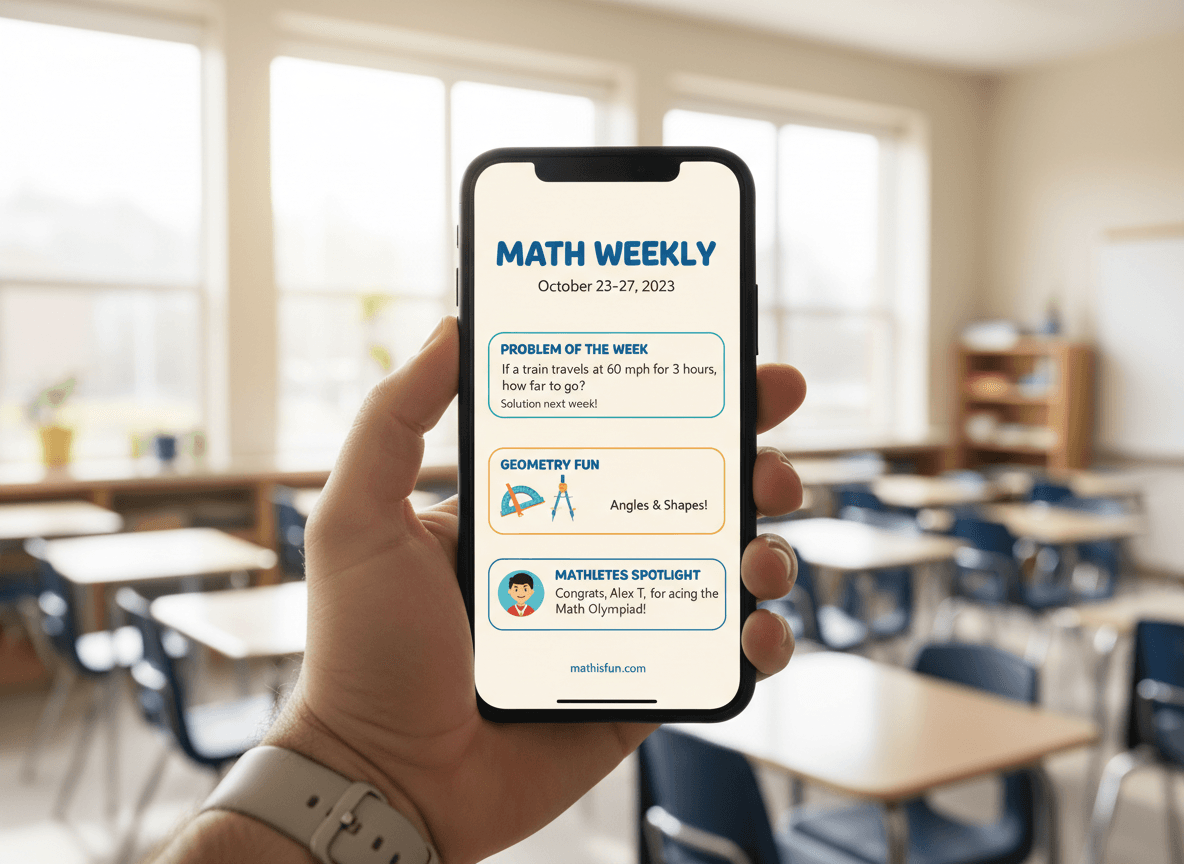
The weekly math newsletter that survives the whole school year is the short one. Not the comprehensive one. Not the polished one. The one that takes five minutes on a Sunday and gets sent every single week. Here is the template I have used for four years, plus the things I cut to keep it under five minutes.
The four blanks that do all the work
Every weekly newsletter has the same four blanks. One: what we are working on this week (in plain English, no jargon). Two: one thing parents will see on the homework page and what to do if they do not recognize it. Three: a one-line heads-up about an upcoming test, project, or schedule shift. Four: a reminder that parents can reply with questions. That is the entire structure. Everything else is decoration.
The five-minute template, as I send it
Subject: "Math this week: {topic} (test on Friday)"
Body:
"Hi families,
This week we are {what kids are doing, in motion}. On the homework, you will see {one strategy or representation}. If it looks different from how you learned it, ask your child to walk you through it. They are probably right.
Heads up: {test, project, supplies needed, schedule shift}.
Reply with any questions. I usually answer within a day.
Ms. K."
That whole template is six short paragraphs. It fits on one phone screen. It takes five minutes to fill.
The heads-up line is the only line that has to land
Parents skim the newsletter and search for the heads-up line. Make it obvious. Put a small flag in the subject line: "(test on Friday)", "(field trip Tuesday)", "(no school Monday)". A flagged subject line gets opened. A flagged subject line plus a clear heads-up paragraph means parents arrive at conferences without the "I had no idea about the project" conversation.
What I leave out every week
No standards codes. No district curriculum name. No vocabulary lists in bullet form. No long explanations of pedagogy. No please-read-with-your-child reminders. None of those land in a weekly note. The weekly note is for two things: what is happening this week, and what is coming up next. Everything else belongs in a different kind of communication.
A real Sunday-night example
Here is one from a Sunday in October last year, written in seven minutes. "Hi families, this week we are working with two-digit subtraction with regrouping. On the homework, you will see kids cross out a ten and trade it for ten ones. That is the regrouping move. If your kid is using a different strategy (counting up, for example), that is also correct. Heads up: short quiz Friday on subtraction within 100. Reply with questions. Ms. K." That was the whole thing. It went to 23 families. Two parents replied.
The trick is sending it every single Sunday
Consistency beats polish. A short newsletter that arrives every Sunday for 36 weeks builds more parent engagement than a beautiful newsletter that arrives twice. Parents start to expect it. They open it because they know what to look for. The whole relationship between the math classroom and the kitchen table runs on that small Sunday rhythm.
How Daystage helps with the weekly math newsletter
Daystage holds the five-minute template with the four blanks already labeled. Every Sunday, you fill the blanks from your phone in the car or on the couch, hit send, and every parent on the roster gets the same clean note. The whole point is to make the weekly newsletter so short and so structured that you never skip a week. That is what makes it work.
Get one newsletter idea every week.
Free. For teachers. No spam.
Frequently asked questions
Why a five-minute template instead of a longer one?
Because the longer one stops getting sent by Halloween. The newsletter that survives the whole year is the one that fits between dinner and bedtime on a Sunday. A 15-minute draft becomes a one-hour ordeal after two weeks. A 5-minute template stays a 5-minute template.
What is the one heads-up line that always matters?
The line that warns about a test, a project due date, or a missing-supply request for the week. Parents skim everything else and search the newsletter for that line. If you bury it at the bottom, they miss it. Put it in the subject line or the first paragraph. Make it impossible to skip.
What should I leave out of a weekly newsletter?
Standards codes, vocabulary lists, district program names, long curriculum philosophy. Parents do not read those in a weekly note. Save them for the back-to-school night or the curriculum night handout. The weekly newsletter is for what is happening this week and what is coming up next week. Nothing else fits in five minutes anyway.
Should I send it Friday or Sunday?
Sunday afternoon or evening, between 4pm and 7pm. That is when parents check email while planning the week. Friday gets buried in weekend inboxes. Monday morning is too late, the homework is already going home that day. Sunday between dinner and bedtime is the sweet spot.
Can a five-minute newsletter actually be good?
Yes, if the template does the work. The template I save in Daystage has four labeled blanks and one heads-up line. I fill them in on Sunday in less time than it takes to brew a cup of tea, and the email goes out clean and formatted. Quality and speed both come from the structure, not from spending more time.

Adi Ackerman
Author
Adi Ackerman is a former classroom teacher and curriculum writer with 8 years in K-8 schools. She writes about school communication, parent engagement, and what actually works in real classrooms.
More for Math Newsletter
Ready to send your first newsletter?
3 newsletters free. No credit card. First one ready in under 5 minutes.
Get started free