
Second Grade Math Newsletter: A Working Template
Second grade is the year math stops feeling like kindergarten dress-up and starts looking like real arithmetic. Place value, regrouping, and money all show up. Parents who were fine helping with first grade homework start to squint at a page and wonder what a "ten frame" is. A short second grade math newsletter, sent on a steady cadence, translates the work for them. Here is a template that holds up across the year.
Open with the unit in motion, not the unit's name
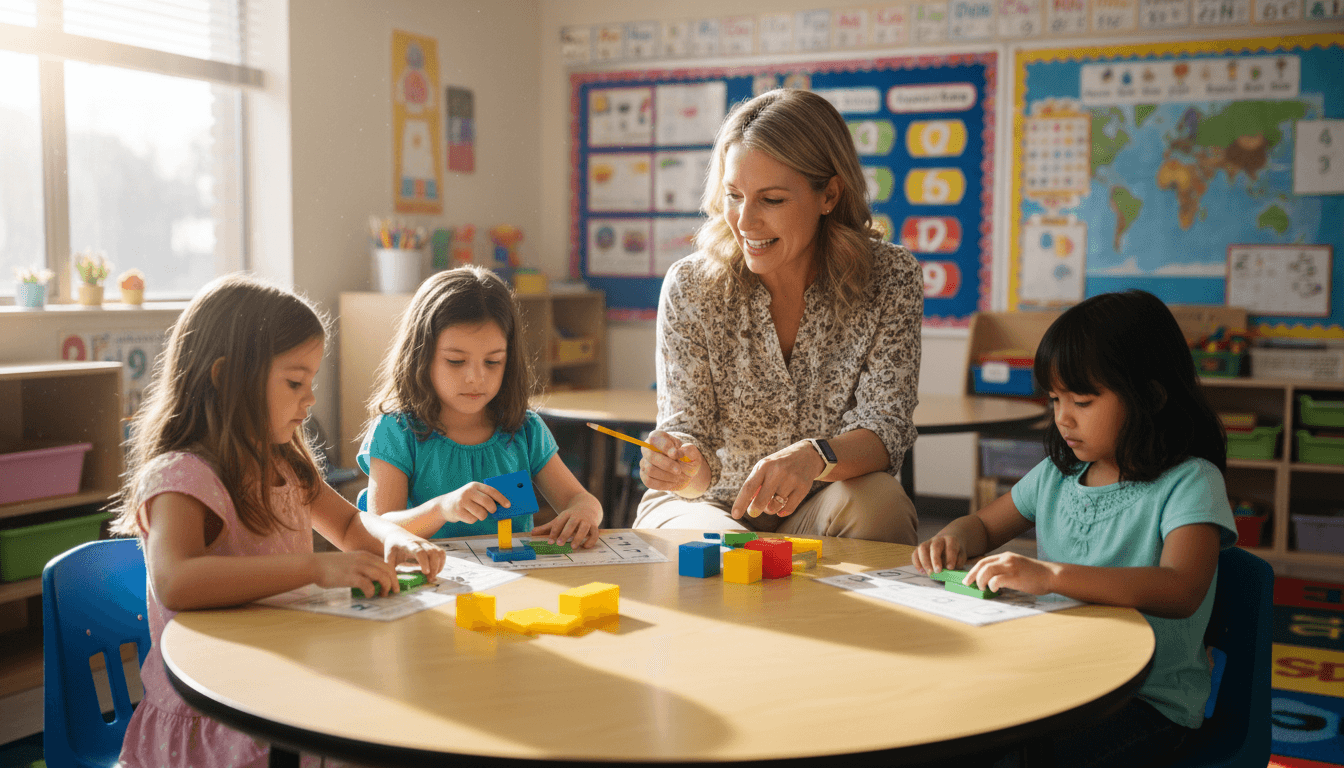
Instead of "We are working on place value to 1,000," try "We are building three-digit numbers with hundreds, tens, and ones blocks, and figuring out what happens when ten tens get traded for one hundred." That sentence puts the math in the parent's head. They can picture their kid moving the blocks. They can ask a question at dinner that actually connects.
Pick the strategy that will show up on the homework page
Second grade homework looks different from how most parents learned math. The page asks the kid to draw before they compute. Name the strategy in the newsletter. "On tonight's page, you will see problems like 47 + 38. We solved them in class by adding tens first, then ones, then trading if we got more than ten ones. So 40 + 30 is 70, and 7 + 8 is 15, which is one ten and five ones. The answer is 85." One worked example. That is the whole section.
Translate money in a sentence
When the money unit hits, most parents are surprised at how slow it feels. The kids are not making change in their heads, they are counting nickels and dimes one at a time. Tell parents that is on purpose. "We are skip-counting by fives and tens with coins because coins make those numbers easy to see. By the end of the unit, your child will count a small pile of coins up to one dollar." That sets the right expectation for the homework folder.
Give one home activity that is not a worksheet
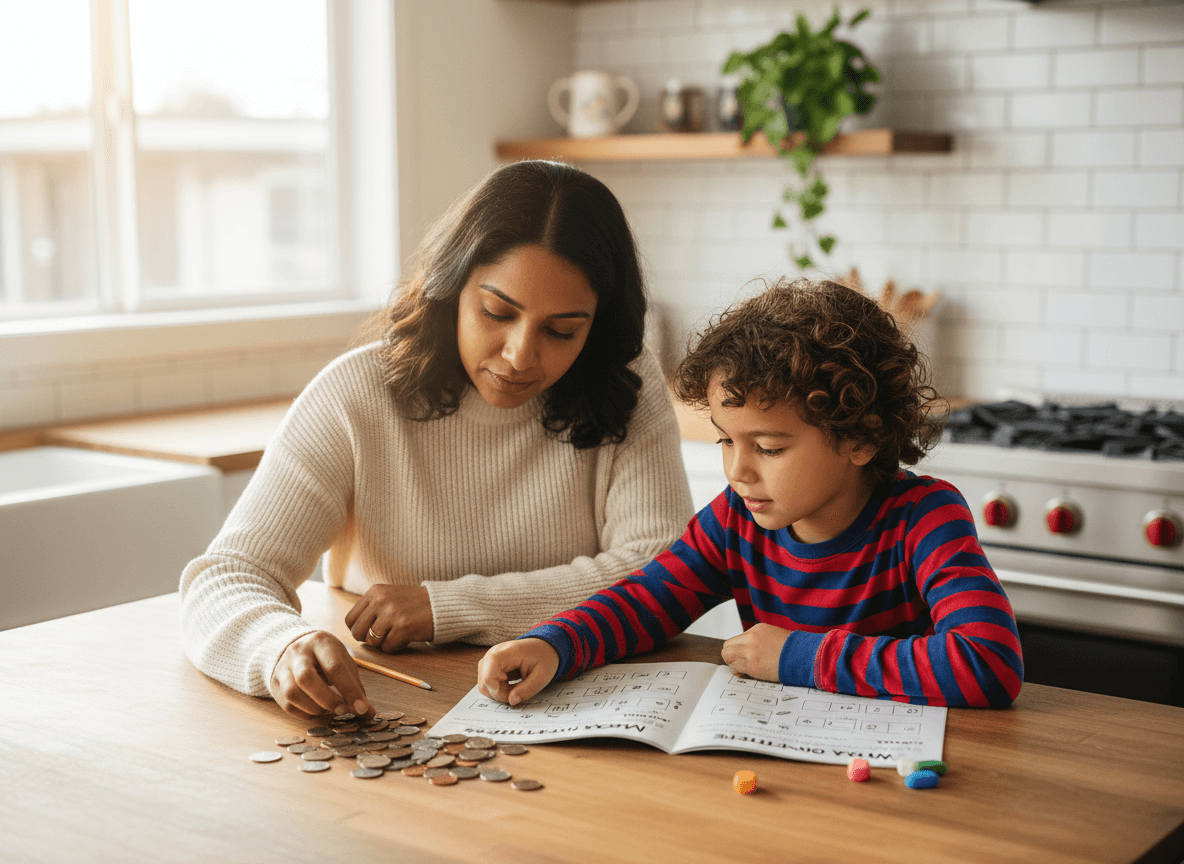
The home activity is anything that touches the math without feeling like school. For place value, pour the change jar onto the table and sort it. For two-digit addition, ask the kid how many minutes until dinner if it is 5:42 right now. For money, let the kid pay for the bagel with exact coins. Five seconds of setup. Real practice.
The working template
Subject: "Math in Room 12 this week: {unit}"
Body: "Hi families, this week we are {unit in motion}. The strategy on the homework is {strategy}. Here is one example:{example}. If your child solves it a different way, ask them to walk you through it. At home this week, try this: {activity}. Heads up: {quiz, schedule shift, supplies needed}. Reply any time. Ms. K."
What to leave out
Standards codes. The name of your district's math program. Long vocabulary lists. None of these help the parent at the kitchen table on a Tuesday night. Save them for the curriculum night handout. The weekly newsletter is for the folder, not the binder.
How Daystage helps with the second grade math newsletter
Daystage holds your template across the year. You set it up once with your sections and your tone, and each week you fill in four blanks and send. The email arrives clean on every parent's phone, all 24 families at once. Fifteen minutes on Sunday night, every Sunday, all year. That is the version of this job that actually sticks.
Get one newsletter idea every week.
Free. For teachers. No spam.
Frequently asked questions
What math actually shows up most in second grade?
Place value to 1,000, two-digit addition and subtraction with regrouping, and money up to one dollar. Some classes also touch arrays as a warm-up for multiplication in third grade. If your newsletter covers those four threads across the year, parents will recognize almost everything that comes home in the folder.
How do I explain regrouping without saying 'borrow' or 'carry'?
Use the word 'trade'. Trade ten ones for one ten. Trade one ten for ten ones. That language matches what the kids do with the blocks in class. Parents who learned 'borrow and carry' can keep their words at home. The kid hears 'trade' from both the teacher and the parent and stops getting confused.
Should I send a worksheet home with the newsletter?
No. The newsletter is the wrapper around the homework folder. If you start adding extra worksheets, parents stop reading the words and just hunt for what is required. Keep the newsletter to text and one example. The worksheets travel through the folder, where they belong.
How do I handle the money unit when some families do not use cash much anymore?
Acknowledge it in the newsletter. Tell parents the unit is about coins because the kids need to count by fives and tens, not because second graders are going shopping. A jar of mixed coins from the change drawer is enough for two weeks of practice at home. Parents who only use cards can still find a handful of quarters somewhere.
How long does a second grade newsletter need to be?
Two short paragraphs plus a one-line heads-up. Phone-screen length. Most second grade parents read the newsletter standing in the kitchen with one hand on a banana. Daystage formats the email to land cleanly at that length, which is part of why second grade teachers keep using it past Thanksgiving.

Adi Ackerman
Author
Adi Ackerman is a former classroom teacher and curriculum writer with 8 years in K-8 schools. She writes about school communication, parent engagement, and what actually works in real classrooms.
More for Math Newsletter
Ready to send your first newsletter?
3 newsletters free. No credit card. First one ready in under 5 minutes.
Get started free