
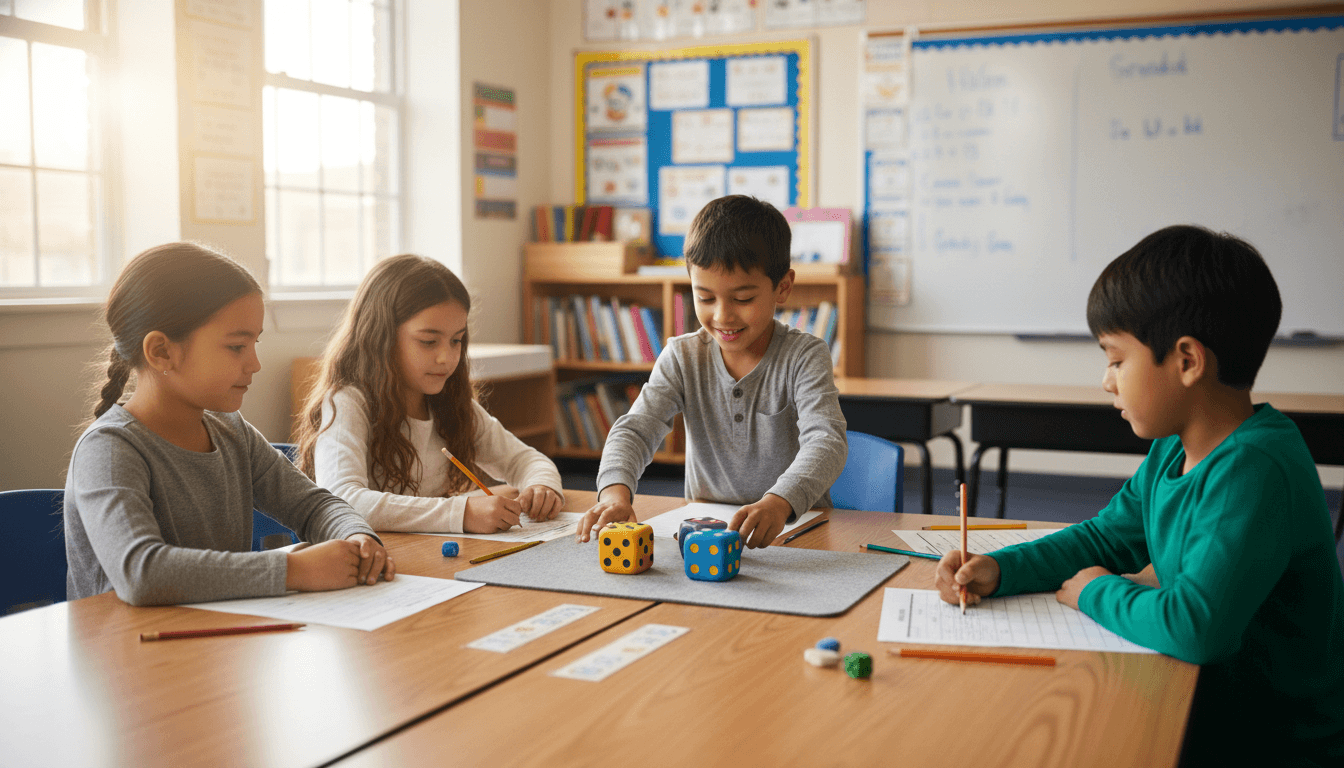
Math Newsletter for a Probability Unit: What to Send Home
Probability is one of the most fun units of the year to write a newsletter for. The home activities require nothing beyond what is in the junk drawer. The math connects directly to the fractions unit parents already survived. And the unit has a clear payoff: kids understand why a 7 comes up so often when you roll two dice. Here is the template for a math newsletter for a probability unit.
Open by tying probability to fractions
First newsletter of the unit: "This week we are starting probability. The good news is, probability is just a fraction with a story. The chance of rolling a 4 on a die is 1 out of 6, written 1/6. The chance of flipping heads on a coin is 1 out of 2, written 1/2. Same fraction work, new vocabulary." Parents relax. They have seen fractions. They can handle probability.
The theoretical vs. experimental move
Week two: "Two kinds of probability come up this week. Theoretical is what should happen. A coin should land heads half the time. Experimental is what actually happens when you flip it 20 times. Maybe you get 12 heads and 8 tails. Both are correct answers to different questions. Your child will see both on the homework." One paragraph and the most common homework confusion of the unit is handled.
A worked example with dice
Pick the dice example because it is the most surprising one. "When you roll two dice, the most common sum is 7. Why? Because there are six different ways to get a 7 (1 and 6, 2 and 5, 3 and 4, 4 and 3, 5 and 2, 6 and 1) and only one way to get a 2 (1 and 1). So 7 is six times as likely as 2. We rolled 20 times in class and 7 came up four times." Parents read this once and remember it.
A home activity at the kitchen table
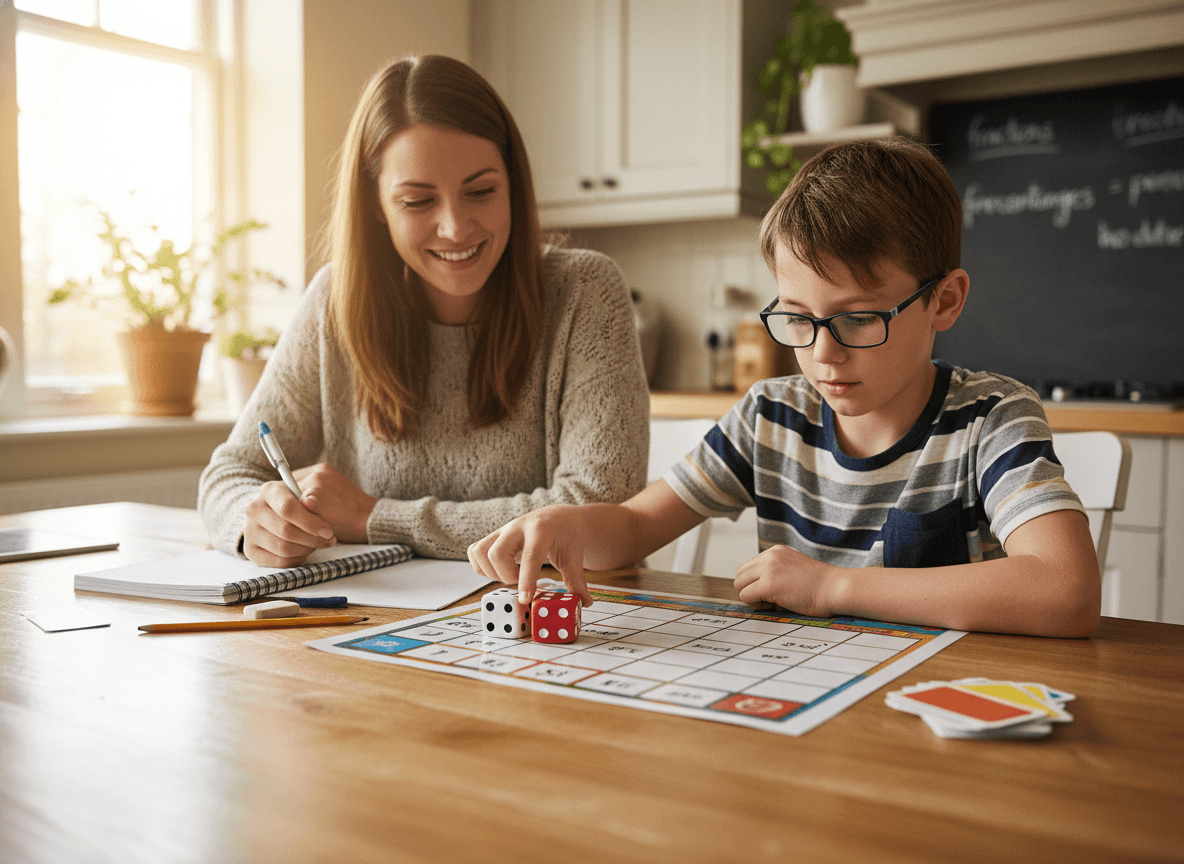
"Tonight, roll two dice 20 times. Have your child record each sum (between 2 and 12) on a tally chart. Then ask, which sum came up most? Was it 7?" Five minutes, no supplies beyond what is already in the closet. The math jumps off the page when the dice are in their hand.
Independent vs. dependent events, in one line
When the unit gets to compound events, drop this in: "Two events are independent if one does not affect the other (flipping a coin twice). Two events are dependent if the first changes the second (drawing two cards from a deck without putting the first one back). Your child will see both this week. Ask which kind a problem is before they calculate." One paragraph, both terms.
The heads-up about the assessment
Close with the date. "Quiz on the 8th covering theoretical and experimental probability and simple compound events. Review page came home Monday. No calculator needed." Done.
How Daystage helps with the probability unit newsletter
Daystage holds the probability shell across the three to four weeks of the unit. The fractions-tie opener stays in week one. The theoretical-vs-experimental paragraph carries week two and three. The independent-vs-dependent line drops in late in the unit. You write the activity and the heads-up, send to every family on your roster, and the probability unit comes home as a set of dice games, not a textbook.
Get one newsletter idea every week.
Free. For teachers. No spam.
Frequently asked questions
What is the most important distinction to teach parents in a probability unit?
Theoretical versus experimental probability. Theoretical is what should happen (a coin lands heads half the time). Experimental is what actually happens when you flip the coin 20 times (maybe 12 heads, 8 tails). Kids are often confused that these do not match, and parents are too. Naming the distinction in the newsletter clears up the homework in one paragraph.
What home activity works best for probability?
Dice or coins. Roll two dice 20 times and record each sum. Then ask, 'Which sum came up most? Was it 7?' The most common sum on two dice is 7, because there are six ways to roll a 7 and fewer ways to roll any other number. Five minutes, real dice, the math jumps off the page. No supplies beyond what is already in the junk drawer.
How do I explain a probability as a fraction without confusing parents?
Tie it back to the fractions unit. 'Probability is just a fraction. The chance of rolling a 4 on a die is 1 out of 6, written 1/6. The chance of flipping heads on a coin is 1 out of 2, written 1/2.' Parents who got through the fractions newsletter understand probability instantly. The unit is not new math, it is fractions with a story.
Should I include independent vs. dependent events in the newsletter?
Mention it once, briefly, in the relevant week. 'Two events are independent if one does not affect the other (flipping a coin twice). Two events are dependent if one changes the other (drawing two cards without putting the first one back).' One paragraph, one example each, move on. Parents have the vocabulary if their kid says it at the table.
How do I keep a probability newsletter from sounding like a math textbook?
Lead with the dice and the cards. Real objects, real numbers, real rolls. Skip the words 'sample space' and 'compound event' unless they show up on homework that week. Daystage saves the shell so the structure stays consistent, and you fill in the activity, the example, and the heads-up. Twelve minutes, every Sunday, the unit lands without jargon.

Adi Ackerman
Author
Adi Ackerman is a former classroom teacher and curriculum writer with 8 years in K-8 schools. She writes about school communication, parent engagement, and what actually works in real classrooms.
More for Math Newsletter
Ready to send your first newsletter?
3 newsletters free. No credit card. First one ready in under 5 minutes.
Get started free