

Math Newsletter for Math Competition Updates: What to Share
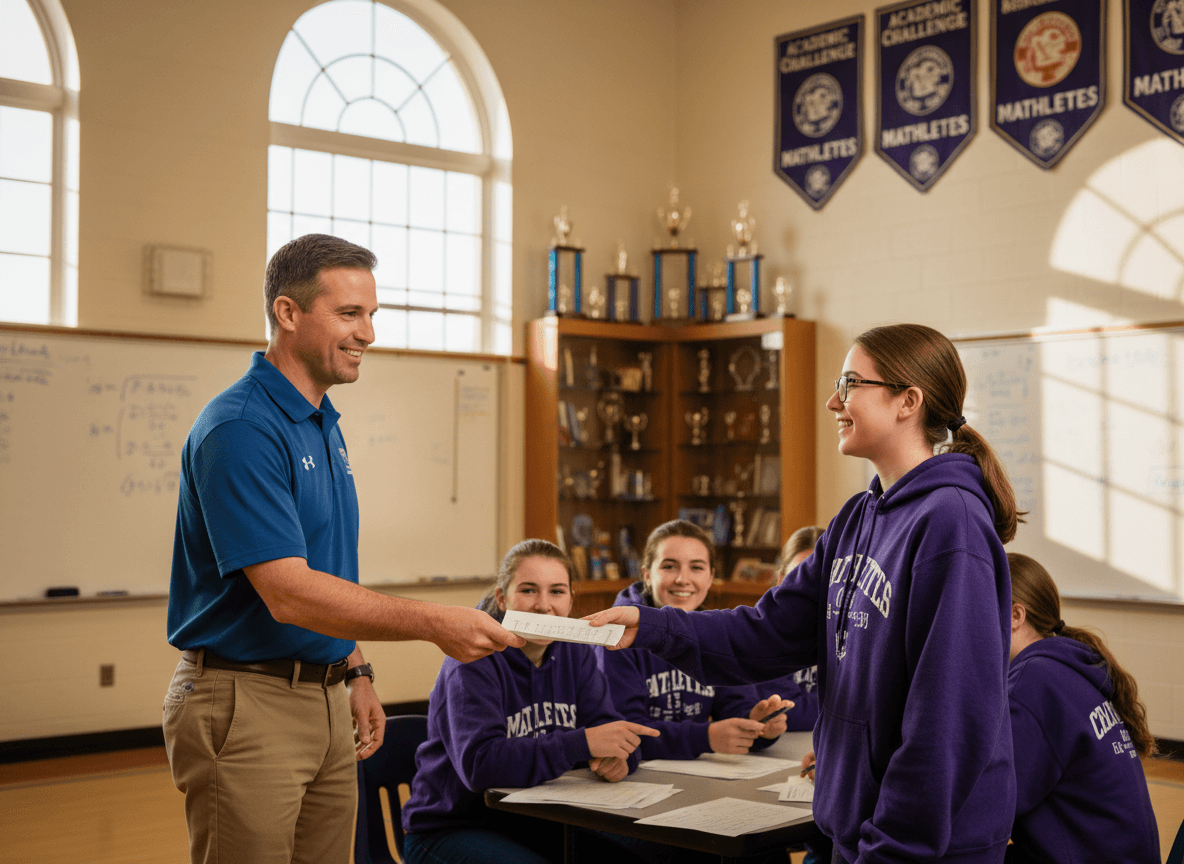
A math competition pulls in three different audiences at the same time. The kids who placed, the kids who did not, and the parents who drove. A good math newsletter for math competition updates speaks to all three without making any of them feel like an afterthought. Here is the structure I use across the season, plus the lines that keep parents engaged from sign-up through the final meet.
Send the sign-up newsletter three weeks out
The pre-meet newsletter is logistics. Date, venue, drop-off time, pickup window, what the kids should bring, what the kids should not bring. List the cost in dollars if there is one. Tell parents whether lunch is provided or if their kid needs a brown bag. Three weeks gives families time to plan around a Saturday. Two weeks gets you last-minute carpool chaos. One week gets you a kid showing up without a pencil.
Use the reminder newsletter to confirm, not repeat
Five days before the meet, send a short reminder. Same address, same time, plus the parking note and the room number. Three sentences. If you copy and paste the whole sign-up newsletter, parents skim it and miss the new piece. Keep the reminder under 100 words and put the new information first.
Write the post-meet recap with a formula
Every recap has the same four blocks. Team result. One thing the team did well. One thing we are working on for next meet. A thank you to the drivers by first name. "Our seventh grade team placed fourth out of fourteen. We answered every relay round correctly, which has not happened all year. We are still losing time on the sprint round, so that is what practice this week focuses on. Thank you to Sarah, Mike, and Dana for driving on Saturday." Four sentences. Done.
The kid who did not place
At every meet, two-thirds of the team did not place. The recap newsletter has to honor that. Avoid the trap of writing only about the trophy winners. Mention something the whole team did. "Every kid on our roster sat through three full rounds, which is 90 minutes of sustained problem solving. That is the actual skill we are building." Parents of non-placers read that sentence and feel their kid is seen. The kid hears their parent say "Ms. K said you did the whole 90 minutes" and that lands harder than a ribbon.
A working competition template
Subject: "Math meet recap: 4th place, and what we are working on next"
Body:
"Hi families,
Quick recap from Saturday. The team placed 4th out of 14, which moves us up from 7th in the fall meet. The relay round was our strongest. The sprint round is the focus for practice this week.
Every kid on the roster worked the full 90 minutes. That is the habit I care about most at this point in the season.
Thank you to the four parent drivers who made Saturday possible. Next meet is February 8th at Lincoln Middle. Sign-up newsletter will go out three weeks before.
Reply with questions. Coach K."
The season wrap-up
At the end of the season, send one longer newsletter that names every kid on the roster. Not their scores. Their names, and one sentence each about something they did well over the year. This is the newsletter parents print and keep. It also signals to families on the fence whether to sign their kid up next year, which is the recruiting move the team needs to survive.
How Daystage helps with the math competition newsletter
A competition season is four to six emails to the same parent list, spread across five months. Daystage holds the parent roster, the sign-up template, the recap template, and the season wrap-up template in one place. You fill in the blanks before each meet and send. The whole admin side of coaching a math team becomes a 15-minute task per meet instead of an evening of copy-pasting from last year.
Get one newsletter idea every week.
Free. For teachers. No spam.
Frequently asked questions
How early should the sign-up newsletter go out?
Three weeks before the meet, not two. Parents need time to clear the Saturday, arrange carpools, and pack a lunch if the venue does not feed kids. A reminder goes out one week before with the address, the start time, and the pickup window. Anything later than three weeks gets you a flurry of last-minute emails asking what the dress code is.
What do I write to the parent of the kid who did not place?
Write the same recap that goes to every family, then send a separate two-sentence note to that kid's parent. 'Maya stayed in her seat the whole round and worked every problem. She is showing up the way I want a competitor to show up.' That is the message. Do not mention the placement. The score card already said that part.
Should the newsletter list every kid's score?
No. List team scores and the top three individuals if that is the standard at your meet. Individual scores belong in the kid's folder, not in a newsletter that goes to 60 families. A public leaderboard turns a math meet into a ranking event and quietly thins out your team by November.
How do I get more parents to volunteer to drive?
Ask in the newsletter with a specific count and a specific ask. 'I need four drivers for Saturday morning. Each driver takes three kids. Round trip is two hours. Reply to this email if you can do it.' Vague asks get vague responses. A real number and a real time window gets you four drivers in a day.
Can I run all of this from one email tool?
Yes. I run the sign-up, the reminder, the recap, and the season wrap-up from Daystage. The same parent list, the same template, four sends across a season. It takes the admin out of coaching a math team and gives me the time back to actually teach problem solving.

Adi Ackerman
Author
Adi Ackerman is a former classroom teacher and curriculum writer with 8 years in K-8 schools. She writes about school communication, parent engagement, and what actually works in real classrooms.
More for Math Newsletter
Ready to send your first newsletter?
3 newsletters free. No credit card. First one ready in under 5 minutes.
Get started free