
Kindergarten Play-Based Learning Newsletter: How to Help Families Understand Why Play Is the Work
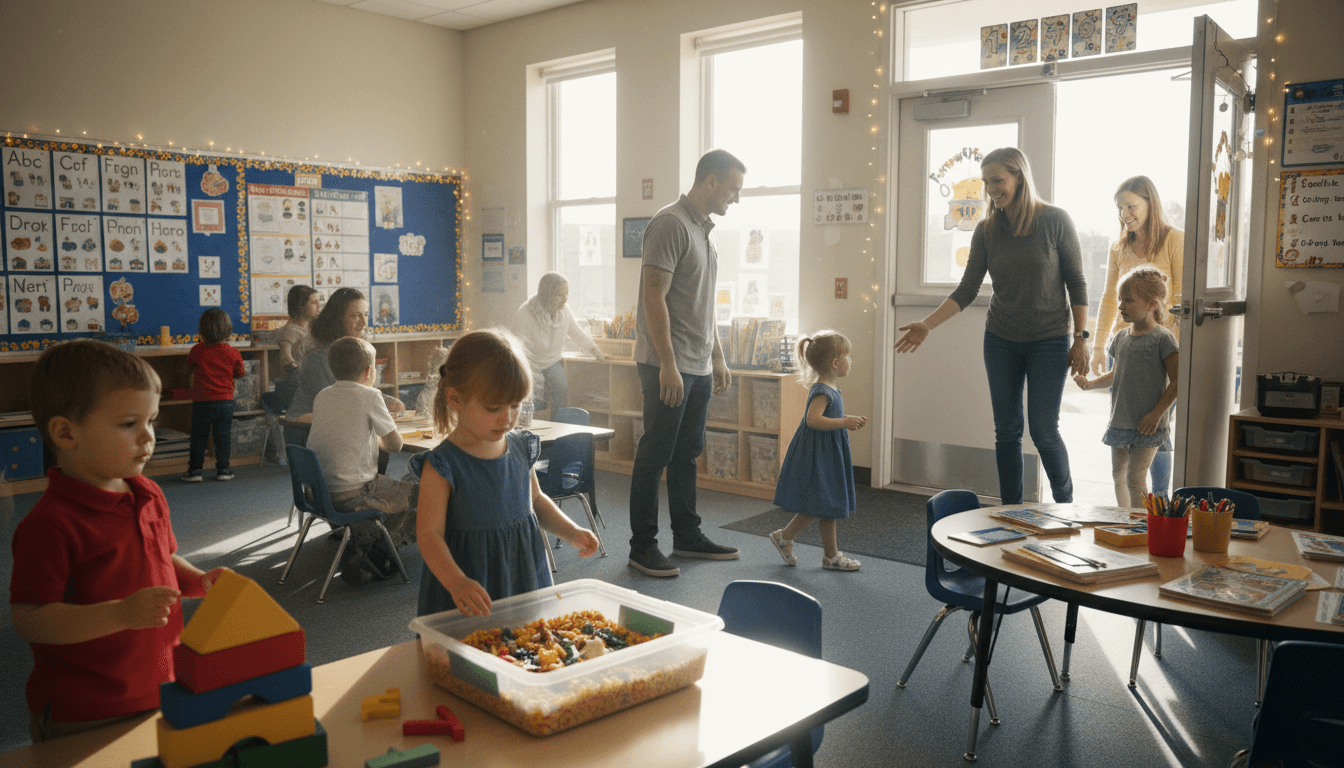
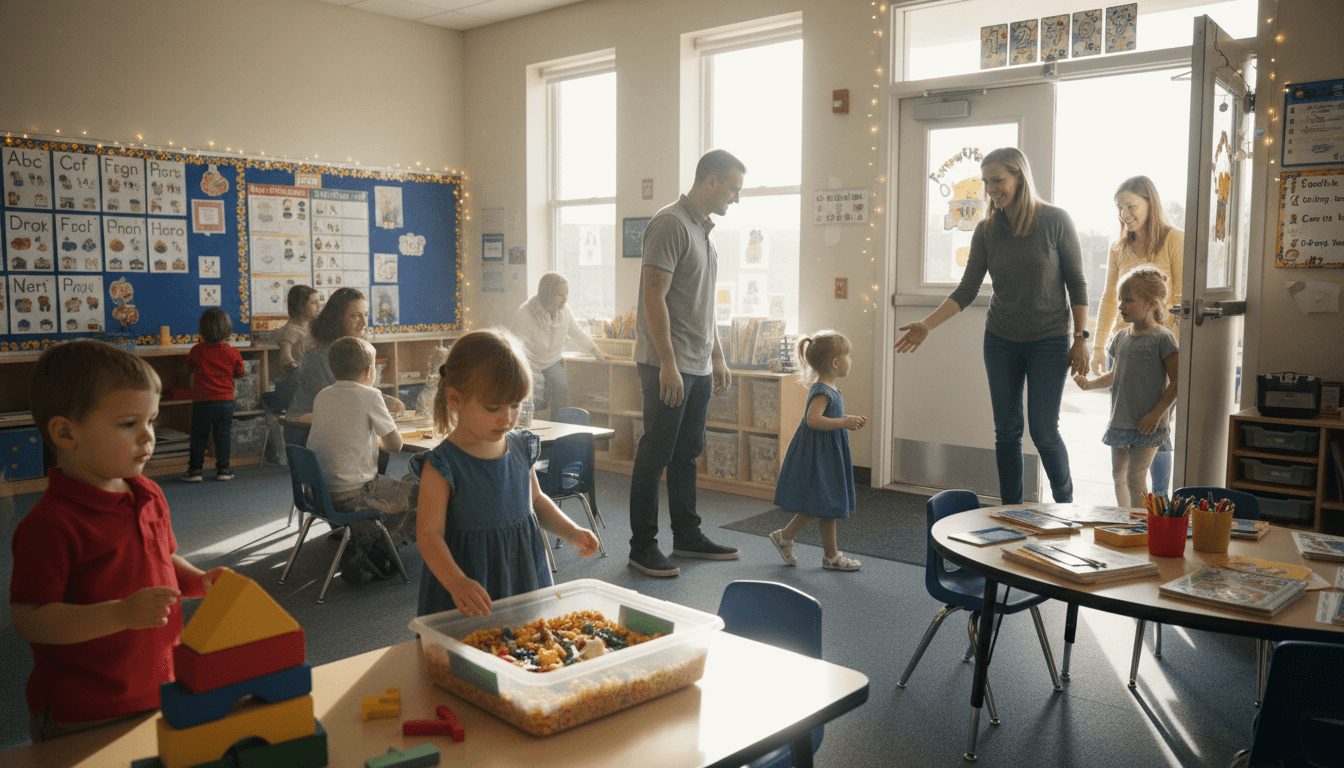
Play-based learning generates more family concern than almost any other aspect of kindergarten teaching. Families who send their child to school expecting to see worksheets and sit-down instruction come home hearing about dramatic play and building centers and wonder whether their child is being educated or babysit. Addressing this concern directly and specifically is one of the most important communications a play-based kindergarten teacher can make.
What play looks like in a learning context
The most effective way to explain play-based learning is to describe specific activities and the specific skills they develop. Not general claims about the value of play but concrete connections between observable activities and measurable learning outcomes.
Block building: spatial reasoning, early geometry, mathematical thinking about size, shape, and quantity, and engineering problem-solving when structures fall. Dramatic play: vocabulary development, narrative structure, social negotiation, perspective-taking, and emotional regulation in the context of role conflict. Art: fine motor skills, creative decision-making, color and pattern recognition, and persistence through a challenging process.
When parents can read a list like this and connect the activities their child describes to the specific skills those activities develop, the resistance to play-based learning reduces significantly.
The teacher's role during play
Families who imagine a play-based classroom as children left to their own devices without teaching input have a fundamentally inaccurate picture of what a skilled early childhood teacher does during play. Describe your active role: observing and documenting, asking questions that extend thinking, introducing new vocabulary, posing challenges, and using what you observe to plan the next day's instruction.
Play-based teaching is not passive. It is observation-intensive and requires significant professional skill. Families who understand this are more trusting of the approach.
How play and explicit instruction work together
Most kindergarten programs blend play-based learning with direct instruction rather than relying on either alone. The newsletter should describe both and show how they connect. Children learn letter sounds during morning meeting through explicit instruction. They practice and apply those sounds during choice time in the literacy center where they are writing labels for their block constructions. The explicit instruction gives children the skill and the play gives them an authentic reason to use it.
What families can do at home
Include a brief section on how families can support the play-based learning approach at home. Unstructured play time is genuinely valuable. Imaginative play with minimal screen involvement develops the same skills as classroom play. Resist the urge to schedule every after-school hour with structured activities. Children who have space to direct their own play arrive in class with more creative problem-solving capacity.
An invitation to observe
Close with an invitation to come watch a morning of play-based kindergarten in action. Families who observe for 45 minutes are far more convinced than those who read any newsletter. The proof of play-based learning is in the room itself.
Get one newsletter idea every week.
Free. For teachers. No spam.
Frequently asked questions
How do you explain play-based learning to skeptical kindergarten parents?
Connect every play type to specific skills it develops. Block play is spatial reasoning and early math. Dramatic play is language development, social negotiation, and perspective-taking. Art and sensory play is fine motor development and creative problem-solving. When parents can see the specific learning happening inside play, the skepticism reduces significantly.
How much of the kindergarten day should be play-based?
Research supports that play should be a significant portion of the early childhood school day, with structured play and purposeful play integrated with more explicit instruction rather than completely separated from it. The exact proportion varies by program. The newsletter should describe your specific approach rather than a universal percentage.
What do kindergarten teachers observe during play that informs their instruction?
Language use and vocabulary, social problem-solving strategies, mathematical thinking in building and sorting activities, narrative development in dramatic play, fine motor skills in art and construction, and emerging literacy in any play that involves writing, reading, or environmental print. Play-based observation is a rich source of assessment data.
How do you address parents who want more academic work and less play?
Acknowledge the concern directly and then respond with specific examples of the learning that is already embedded in play. Avoid dismissing the concern as uninformed. A parent who feels heard and then shown evidence is far more receptive than one who feels lectured. Invite the parent to come observe a play session.
How does Daystage support play-based learning communication?
Daystage is designed for school newsletter communication. Kindergarten teachers use it to send curriculum explanation newsletters with photos and descriptions that help families understand the learning happening in their classroom.

Adi Ackerman
Author
Adi Ackerman is a former classroom teacher and curriculum writer with 8 years in K-8 schools. She writes about school communication, parent engagement, and what actually works in real classrooms.
More for Kindergarten Transition
Kindergarten Lunch and Snack Newsletter: What Families Need to Know Before the First Cafeteria Day
Kindergarten Transition · 5 min read
Kindergarten Report Card Newsletter Guide for Families
Kindergarten Transition · 5 min read
Kindergarten Supply List Newsletter: How to Tell Families What to Buy Without the Confusion
Kindergarten Transition · 5 min read
Ready to send your first newsletter?
3 newsletters free. No credit card. First one ready in under 5 minutes.
Get started free