

Eclectic Homeschool Newsletter: Mixing Methods and Communicating Progress
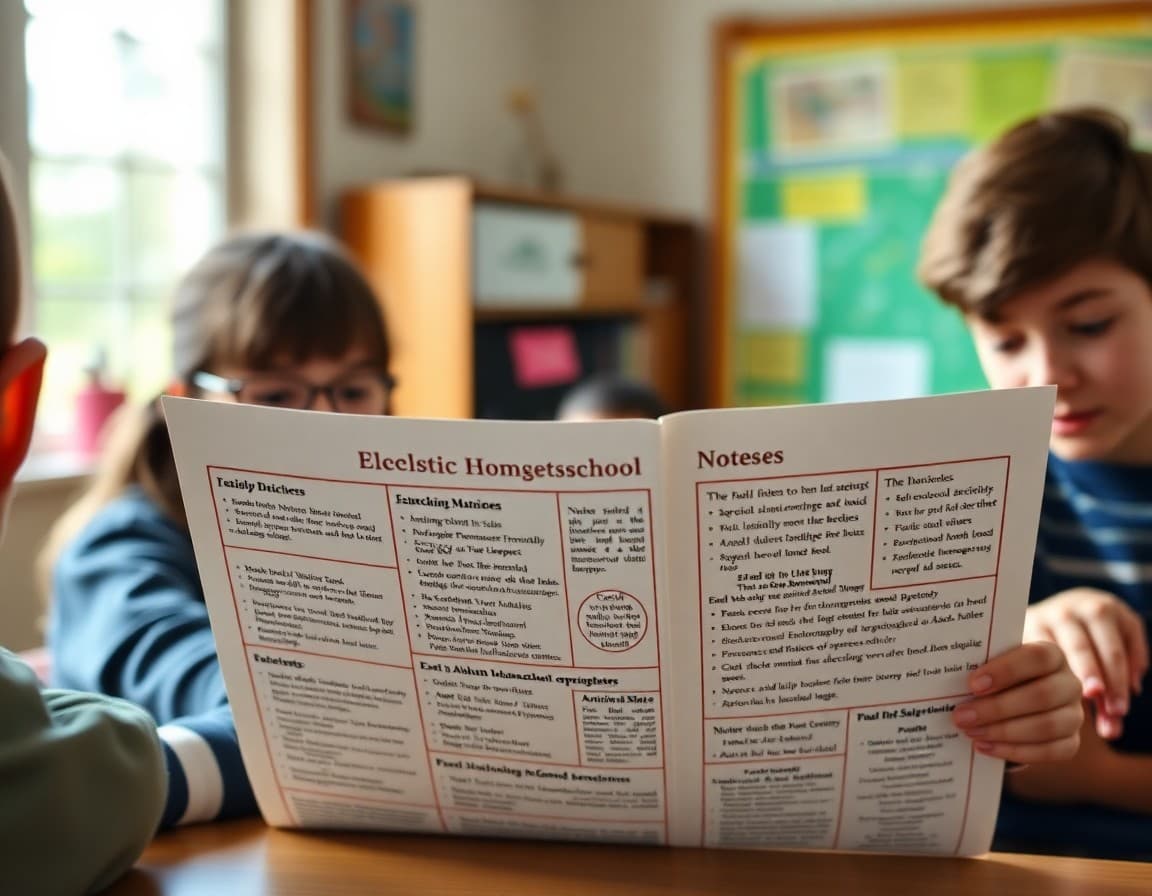
Eclectic homeschooling is the most common approach among experienced homeschool families, and also one of the hardest to explain. When a family draws from classical, Charlotte Mason, unit study, and traditional textbook approaches depending on the subject and the child, newsletters that simply list "what we studied" can feel disjointed or hard to follow. Done well, an eclectic homeschool newsletter is evidence that the approach is intentional rather than random.
Lead with Your Educational Intentions
Before diving into subject-by-subject updates, a brief paragraph explaining the philosophy behind your choices gives readers the context to understand the details that follow. This does not need to be a manifesto. "We use structured math because consistency matters for number sense, Charlotte Mason methods for nature study because they match how my daughter learns best, and classical history because I love the narrative approach" is specific enough to be meaningful without being overwhelming.
This framing paragraph is especially important in newsletters sent to extended family who may not understand homeschool approaches at all.
Organize Updates by Subject, Not Philosophy
The most readable format for an eclectic homeschool newsletter is a subject-by-subject rundown. For each subject, include: what curriculum or approach you are using, what the student completed this month, and a brief note on how it is going. Five subjects, four sentences each, organized under clear headers, is more readable and more useful than a narrative that jumps between subjects and methods.
Name specific curricula. "We are using Math-U-See Delta" is more credible and useful than "we are using a mastery-based math approach." Specificity signals intentionality.
Show the Cross-Curricular Connections
One of the genuine strengths of eclectic homeschooling is the ability to make connections across subjects that single-methodology approaches miss. When your history, literature, and art studies converge on the same period, that connection is worth noting in the newsletter. "This month we studied the American Revolution in history, read Johnny Tremain in literature, and made Colonial-era hornbooks in art" demonstrates that the eclecticism is strategic, not haphazard.
Include a What Is Working Section
Eclectic families switch curricula or approaches more than families committed to a single method. A brief "what is working" section in each newsletter documents the evaluation process that makes eclectic homeschooling thoughtful rather than impulsive. "We switched from Singapore Math to Math-U-See because the visual, block-based approach is clicking for Emma in a way that the textbook format did not. She did 15 lessons in 3 weeks once we made the change." This kind of note builds a record of your educational decision-making over time.
Sample Monthly Newsletter
September Progress Report - The Henderson Family Homeschool
Math (Math-U-See Delta): Completed lessons 1-8, focusing on multi-digit multiplication. Emma understands the conceptual model well. Moving to long division next month.
Reading/Language Arts (Sonlight Level E + IEW): Finished The Door in the Wall and started The Secret Garden. Writing: completed three structured summaries and one free-choice creative piece. IEW's Key Word Outlining is helping her organize her thoughts before writing, which has been a noticeable improvement.
History (Story of the World Vol. 3): Chapters 1-4, covering the Renaissance and Reformation. Added primary source excerpts from the Norton Anthology of Early Modern English Literature for the Reformation chapters. Emma loved the Gutenberg printing press hands-on activity.
Science (Charlotte Mason nature study + Apologia Botany): Weekly nature journals through October. Starting structured botany in November when the weather turns. This two-part approach is working well.
Address the Common Concern About Gaps
The most common worry about eclectic homeschooling is that mixing methods will leave gaps in a child's education. Address this concern directly in a newsletter once or twice a year. Note how you track coverage, what scope and sequence you reference to ensure subjects are progressing appropriately, and what you do when you notice an area that needs more attention. Proactive transparency about your quality-check process prevents the gap concern from becoming a persistent source of family friction.
Document Your Reasoning for Future Reference
The newsletters you write now become your educational record later. When your eclectic student applies to college or needs to document their homeschool curriculum for a state oversight evaluation, a library of newsletters that explain what was studied and why is far more useful than trying to reconstruct a curriculum narrative from memory. Daystage makes it easy to keep all of your newsletters organized and accessible, which turns the communication work you are already doing into a long-term documentation asset.
Get one newsletter idea every week.
Free. For teachers. No spam.
Frequently asked questions
What is an eclectic homeschool approach?
An eclectic homeschool draws from multiple educational philosophies and curriculum sources rather than following a single method. A family might use a structured Saxon math program, Charlotte Mason-inspired nature journals, classical history reading through Story of the World, and child-led science exploration. The defining characteristic is intentional selection across approaches rather than commitment to one philosophy. Eclectic homeschoolers often say they use whatever works for each subject and each child.
How do I explain an eclectic approach in a newsletter without confusing readers?
Organize the newsletter by subject area rather than by educational philosophy. For each subject, name what curriculum or approach you are using and briefly note why it fits that particular child or subject. Most readers, including extended family and co-op partners, do not need to understand the philosophical differences between Charlotte Mason and classical education. They need to know what the student is studying and how it is going.
How often should an eclectic homeschool family send a newsletter?
Monthly works well for most eclectic homeschoolers who are sharing progress with extended family or a small accountability group. If you are part of a co-op or structured learning group, the newsletter frequency should match the group's communication rhythm. For purely internal documentation purposes, a monthly newsletter serves both communication and record-keeping functions without creating an overwhelming writing commitment.
Can a newsletter help justify an eclectic approach to skeptical family members?
Yes. Regular newsletters that describe specific learning activities, name the curricula being used, and show student progress are one of the most effective tools for reassuring family members who worry that eclectic homeschooling is not rigorous. When Grandma can see that her grandchild completed 80 math lessons, read 12 books, and wrote three essays this year, the abstract worry about whether the child is being educated properly has less room to grow.
What tool works best for an eclectic homeschool newsletter?
Daystage is a good fit because the newsletter builder lets you add sections for each subject without any complicated formatting. You can include photos of projects, link to curriculum resources, and create a clean document that looks intentional rather than improvised. For eclectic families who often get questioned about their approach, a polished newsletter signals that the educational decisions behind the method are thoughtful.

Adi Ackerman
Author
Adi Ackerman is a former classroom teacher and curriculum writer with 8 years in K-8 schools. She writes about school communication, parent engagement, and what actually works in real classrooms.
More for Homeschool
Homeschool Curriculum Newsletter: How to Share Your Curriculum Choices with Your Community
Homeschool · 5 min read
Homeschool Assessment and Portfolio Newsletter: How to Communicate Student Progress Without Letter Grades
Homeschool · 6 min read
Homeschool Co-op Newsletter Guide: Keeping Member Families Informed and Engaged
Homeschool · 6 min read
Ready to send your first newsletter?
3 newsletters free. No credit card. First one ready in under 5 minutes.
Get started free