

12th Grade ELL Support Newsletter for Multilingual Families
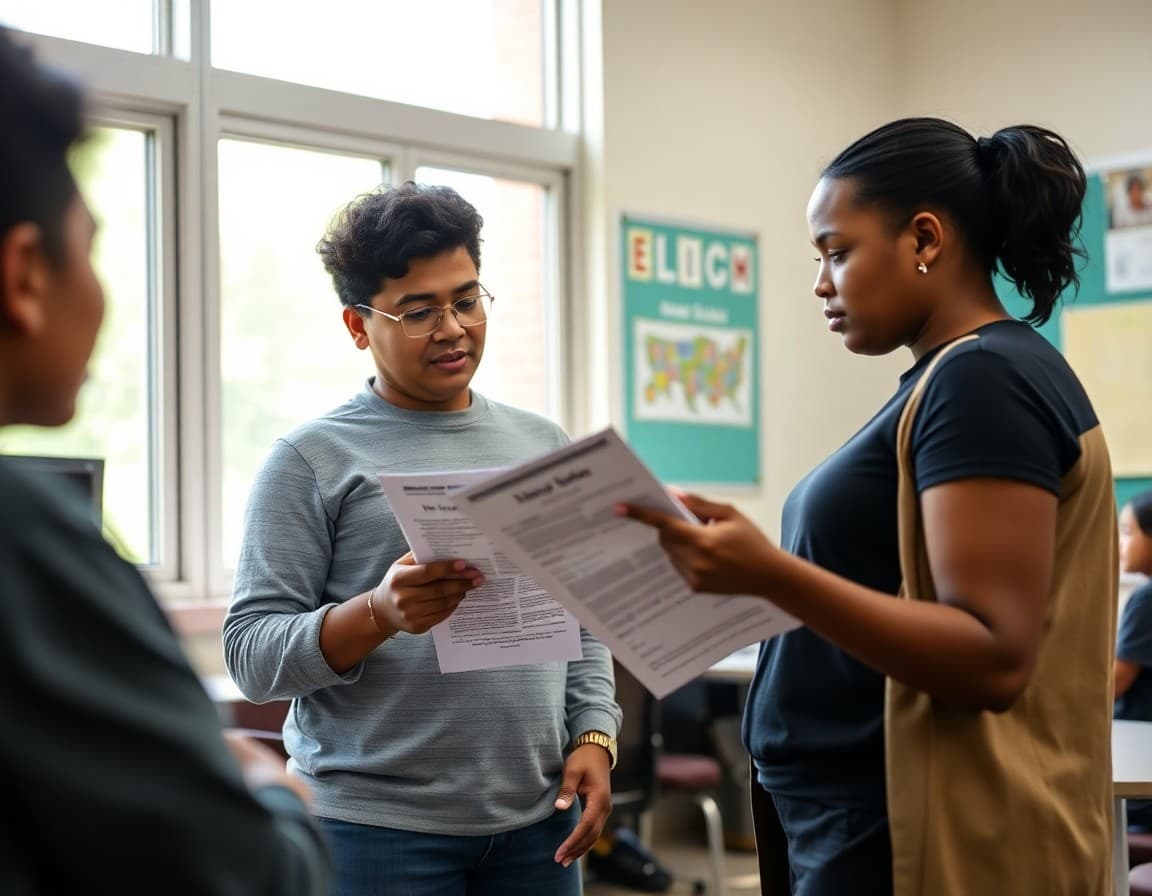
Twelfth grade is a year of high stakes and fast deadlines. For ELL students and their families, it can also be a year of significant confusion. Many multilingual families have limited experience with American college applications, graduation requirements, and post-secondary resources. A thoughtful 12th grade ELL support newsletter for multilingual families is one of the most direct ways to close that gap before graduation day.
Who You Are Really Writing For
When you sit down to write an ELL support newsletter for senior families, keep the primary reader in mind: a parent who may have arrived in the United States as an adult, whose English is functional but not fluent, and who deeply wants to support their child but does not know how the American education system works at the graduation level. That parent is not disengaged. They are often working multiple jobs, but when they get a message that is clear and in their language, they read it carefully and share it with their family.
Write for that person. Short sentences. Specific information. Translated key points in the main languages your families speak. Skip the educational jargon entirely.
What 12th Grade ELL Families Need to Know Right Now
Senior year has a compressed timeline and families need to know what is happening when. Your newsletter should address graduation credit requirements clearly, especially if your student population includes newcomers who are on modified credit tracks. Families need to know whether their child is on pace, what the graduation ceremony involves, and what happens if a student needs additional time to complete requirements.
For post-secondary planning, ELL families often have less access to informal networks where this information travels. Include FAFSA deadlines explicitly, including information for DACA and undocumented students if applicable to your population. Cover what community college disability and ESL services look like, since many ELL seniors continue in English language support programs post-graduation. Be specific about dates and contacts, not just general information.
A Template Excerpt for a Multilingual-Friendly Newsletter
Here is a sample section formatted for clarity and translation accessibility:
"Important: FAFSA Deadline Coming Soon
The FAFSA (Free Application for Federal Student Aid) is how students apply for college financial help from the government. The deadline for our state priority funding is February 1. Even if you are not sure your student will attend college, submitting the FAFSA keeps your options open.
If you need help completing the FAFSA, come to our FAFSA Night on January 15 at 6:00 PM in the library. Interpreters will be available in Spanish and Somali.
[Esta información también está disponible en español. Llame a la escuela para hablar con alguien de habla hispana.]"
Notice the plain language definition of FAFSA, the concrete date, and the note about interpreters. That is the level of specificity multilingual families need.
Language Access in Every Section
Even if you cannot translate the full newsletter every week, make sure every critical action item appears in the family's home language. Use a bilingual staff member, a community liaison, or a volunteer to translate the top two or three items each issue. Over the course of the year, families begin to trust that the critical information will be accessible to them, and they read the newsletter more regularly as a result.
Be consistent about which languages you include. If 60% of your families speak Spanish and 20% speak Somali, those are the two languages to prioritize. A Spanish note at the bottom of every newsletter is not as thorough as a full translation, but it signals effort and respect, and it serves the majority of your non-English-proficient families.
Covering ELL-Specific Academic Supports in Senior Year
Many ELL seniors are still working toward English language proficiency assessments required for graduation in their state. Families need to understand what these assessments are, when they happen, and what students can do to prepare. Your newsletter is the right place to explain this in plain terms: "Your student may need to pass the state English language assessment before graduation. We will know your student's status by October 15 and I will be in touch directly with families whose students need additional preparation time."
For students who are reclassified as English proficient mid-year, that is worth acknowledging in your newsletter too. Reclassification is a significant milestone and many families do not know what it means for services and academic requirements going forward.
College and Career Planning for Multilingual Families
Some ELL seniors plan to attend four-year universities, some plan community college, and some will enter the workforce or vocational training directly. Your newsletter should address all three paths without privileging one over another. For university-bound students, include information about essay help, application timelines, and how to list bilingualism as an asset on applications. For community college and career-bound students, cover vocational programs, local employment resources, and workforce development centers that work with multilingual job seekers.
When possible, share success stories from former ELL students, with permission. Families of current ELL seniors are encouraged and motivated when they see that students who came through the same program went on to successful post-secondary lives. Even a brief mention works: "A former student from this program just completed her nursing degree at the community college. That is the kind of path we are helping your student prepare for."
Building Trust Through Consistent Communication
Many multilingual families have had negative experiences with schools in other countries or feel uncertain about how to engage with American schools. Regular, respectful communication that meets them where they are builds trust over time. When you send a newsletter every two weeks without fail, in language they can access, covering information that is genuinely useful, families begin to see the school as a partner rather than an institution they have to navigate around.
That trust matters most in senior year, when families are making major decisions about their child's future. The teacher whose newsletter they have been reading all year is the teacher they call when something goes wrong or when they need guidance. That relationship is worth investing in from the first newsletter of the year.
Get one newsletter idea every week.
Free. For teachers. No spam.
Frequently asked questions
Should an ELL support newsletter be translated into multiple languages?
Yes, whenever possible. Families of ELL students often have limited English proficiency themselves, which means an English-only newsletter essentially excludes the people it is meant to serve. Google Translate can handle a basic translation pass, but for critical information like graduation requirements or college application deadlines, ask a bilingual staff member or community liaison to review the translation before sending. Even an imperfect translation in the family's home language is more useful than a polished English version they cannot read.
What graduation and transition content should a 12th grade ELL newsletter cover?
Cover credit requirements and how to verify the student is on track, English language proficiency requirements for graduation in your state, FAFSA deadlines (including the special considerations for undocumented students), English language support at community colleges, and any ESL-specific scholarships or programs. ELL seniors and their families often navigate these systems without institutional guidance, and your newsletter can fill that gap directly.
How do I communicate with families who do not use email regularly?
Mix channels. Send the newsletter by email and also print copies to send home with students, especially for families with lower digital access. Text message reminders with a link to the newsletter can also work well. When you know specific families prefer phone calls, make note of that and follow up by phone for critical announcements. The newsletter is the anchor, but it should not be the only channel for ELL families.
How do I handle cultural differences in how families view the school's role in college or career planning?
Start from the assumption that every family wants what is best for their child but may have very different frameworks for what that means. Some families expect the school to take the lead on college planning; others expect their child to manage it independently. Be explicit about what you are offering and why, and frame resources as options rather than requirements. A line like 'these resources are available to your family if you want them, and reaching out is easy' removes pressure while keeping the door open.
Is there a tool that helps teachers send multilingual newsletters without a lot of technical setup?
Daystage makes it straightforward. You can write your newsletter content in English, add translated sections for the languages your families speak, and send everything together in one clean email. Teachers working with multilingual families have found it useful because it keeps the communication organized and professional without requiring technical skills to set up.

Adi Ackerman
Author
Adi Ackerman is a former classroom teacher and curriculum writer with 8 years in K-8 schools. She writes about school communication, parent engagement, and what actually works in real classrooms.
More for High School
Ready to send your first newsletter?
3 newsletters free. No credit card. First one ready in under 5 minutes.
Get started free