
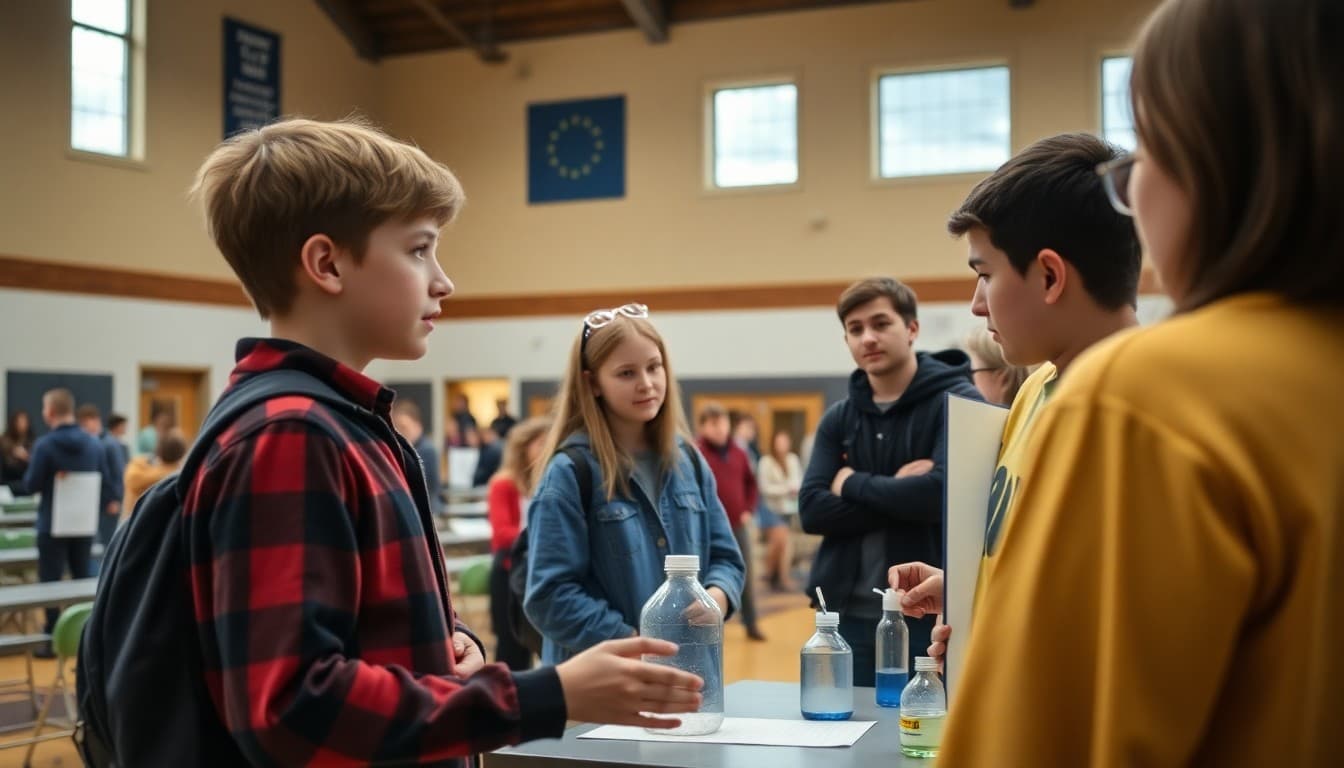
10th Grade Science Fair Newsletter for Families: Full Guide
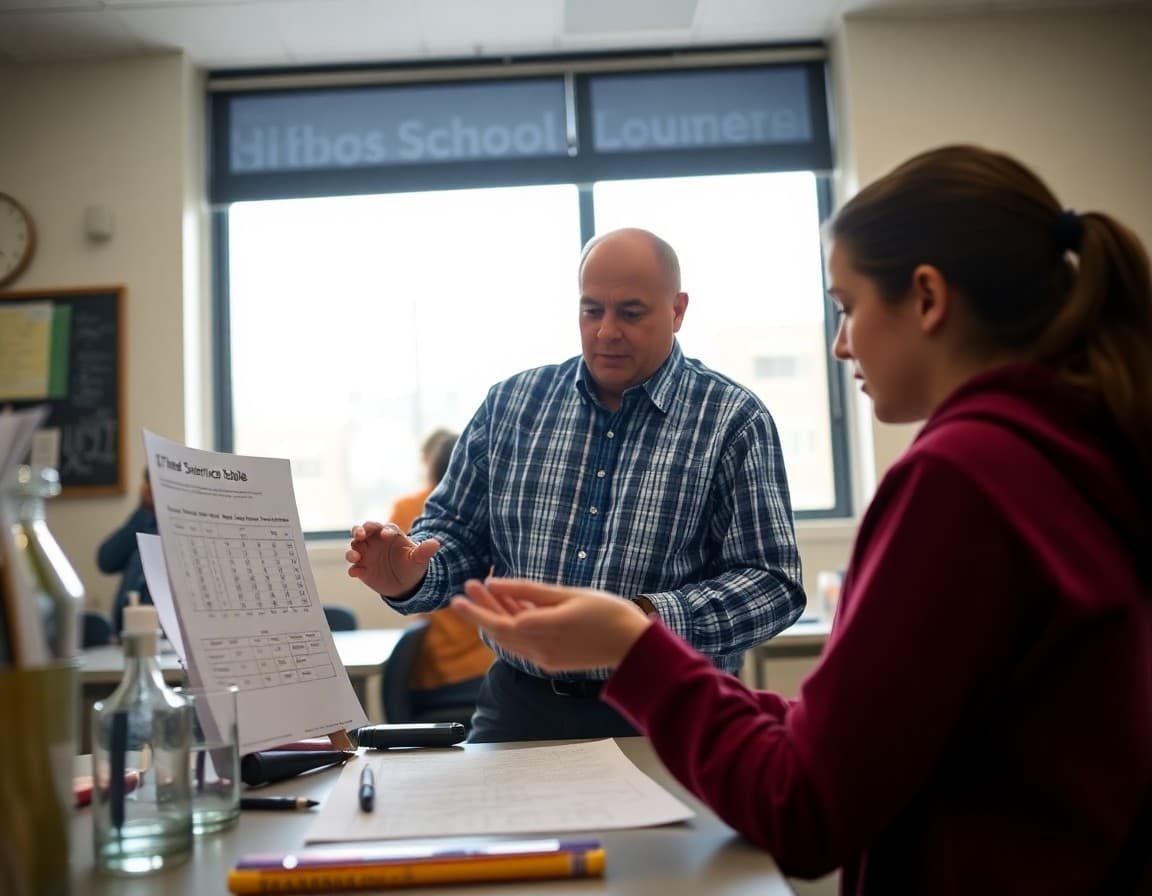
The 10th grade science fair is a step up from freshman year. Students are expected to design original experiments, produce a formal research report, and present their findings to judges who will ask follow-up questions. Families who understand these higher expectations from the start are far better positioned to support their student through a multi-week project than families who assume it is similar to what they did in middle school.
Flag the Difference from Freshman Year
If your students did a science fair in 9th grade, your first newsletter should clearly state what is different this year. In 10th grade, students design their own procedure rather than following a given one. They must include a literature review. Judges at the 10th grade level ask harder questions and expect students to address the limitations of their study. Families who know this upfront will encourage their student to start earlier and go deeper.
Lay Out the Full Project Timeline
A realistic 10th grade science fair timeline runs about seven weeks: week one for topic selection and teacher approval, week two for background research, week three for experimental design review, weeks four and five for running and documenting the experiment, week six for writing the analysis and conclusion, and week seven for display board assembly and practice presentation. Include this timeline in your newsletter so families have a weekly checkpoint.
Explain the Research Report Requirements
By 10th grade, most science fairs require a formal written report alongside the display board. Your newsletter should specify the required sections (abstract, introduction, hypothesis, materials and methods, results, discussion, conclusion, references), the page count, the citation format, and whether a literature review is required. Families cannot help their student plan their time without knowing the scope of the written component.
Clarify What Makes a Strong Research Question
Topic selection is where most 10th grade science fair projects go wrong. Students pick topics that are either too broad ('does music help plants grow?') or impossible to test in a school setting. In your newsletter, give examples of strong and weak research questions. Strong: 'Does the frequency of music (classical vs. heavy metal) affect the growth rate of bean plants over 30 days?' Weak: 'Is social media bad for teenagers?' Families who understand this distinction can guide their student toward a testable question.
Address Parent Involvement Boundaries
In 10th grade, the risk of excessive parent involvement is higher because projects are more complex and families are more anxious about results. Be direct in your newsletter: parents may purchase materials, ask questions, and encourage their student to describe their procedure and results. They may not design the experiment, help with data analysis, or write any portion of the report or display. Judges will ask students to explain their methodology, and students who cannot will score poorly regardless of how impressive the board looks.
Sample Newsletter Section for 10th Grade Science Fair
Here is copy you can adapt:
"Our 10th grade science fair is on [DATE]. Students must submit a research question and hypothesis for teacher approval by [DATE]. This year's project includes a 5-7 page research report in addition to the display board. Judging criteria: scientific method (40%), data analysis and interpretation (35%), oral defense (25%). The full rubric is attached. Please ask your student to describe their experimental design in their own words by [DATE]."
Include Fair-Day Logistics
Where do students set up? What time should they arrive? Are families allowed to attend? When do judges rotate through? Can students leave before judging ends? When are winners announced? Students who know the logistics arrive calmer and more prepared. A brief logistics section at the end of your newsletter eliminates the flurry of questions in the final days before the fair.
Mention Regional and State Fair Pathways
If your school's fair serves as a qualifying event for a regional or state fair, include that information. Some 10th grade families are not aware that science fair projects can lead to scholarship opportunities and recognition beyond the school level. A brief mention of the pathway and what it takes to qualify motivates stronger students and gives families context for why the teacher is asking for a research report rather than just a display board.
Get one newsletter idea every week.
Free. For teachers. No spam.
Frequently asked questions
How is a 10th grade science fair different from a 9th grade fair?
By 10th grade, students are expected to design original experiments rather than follow pre-set procedures, write more formal research reports, and defend their methodology to judges. The level of analysis expected is higher: graphs should include error bars or statistical comparison, and conclusions should address limitations of the study. Your newsletter should flag these higher expectations explicitly.
When should the first 10th grade science fair newsletter go out?
Six to eight weeks before the fair date. At that point, students should be in the topic selection and approval phase. Families who receive the first newsletter at this stage can monitor the schedule throughout the project rather than scrambling in the final week.
What information should a 10th grade science fair newsletter include?
Fair date, project approval deadline, required components (research question, hypothesis, materials, procedure, data analysis, conclusion, references), display board specifications, judging rubric summary, and fair-day logistics. Include a link to the full rubric so families can review it at home.
How do I explain experimental controls and variables to parents who may not have science backgrounds?
In the newsletter, use a real example. 'If a student is testing whether music affects plant growth, the control is a plant grown in silence. The independent variable is the music. The dependent variable is the growth rate.' Parents who can explain the concept to their student in plain language are more useful than parents who nod along without understanding it.
What tool makes it easiest to distribute 10th grade science fair information to families?
Daystage lets you include the project timeline as a visual schedule, attach the rubric as a downloadable PDF, and send a fair-day reminder with setup instructions. Families get everything in one newsletter they can bookmark.

Adi Ackerman
Author
Adi Ackerman is a former classroom teacher and curriculum writer with 8 years in K-8 schools. She writes about school communication, parent engagement, and what actually works in real classrooms.
More for High School
Tenth Grade Science Newsletter: Communicating Chemistry and Physics to Families
High School · 7 min read
10th Grade Curriculum Overview Newsletter: What Sophomores Are Learning This Year
High School · 7 min read
10th Grade Testing Newsletter: How to Prepare Sophomore Parents for PSAT and State Assessments
High School · 7 min read
Ready to send your first newsletter?
3 newsletters free. No credit card. First one ready in under 5 minutes.
Get started free