
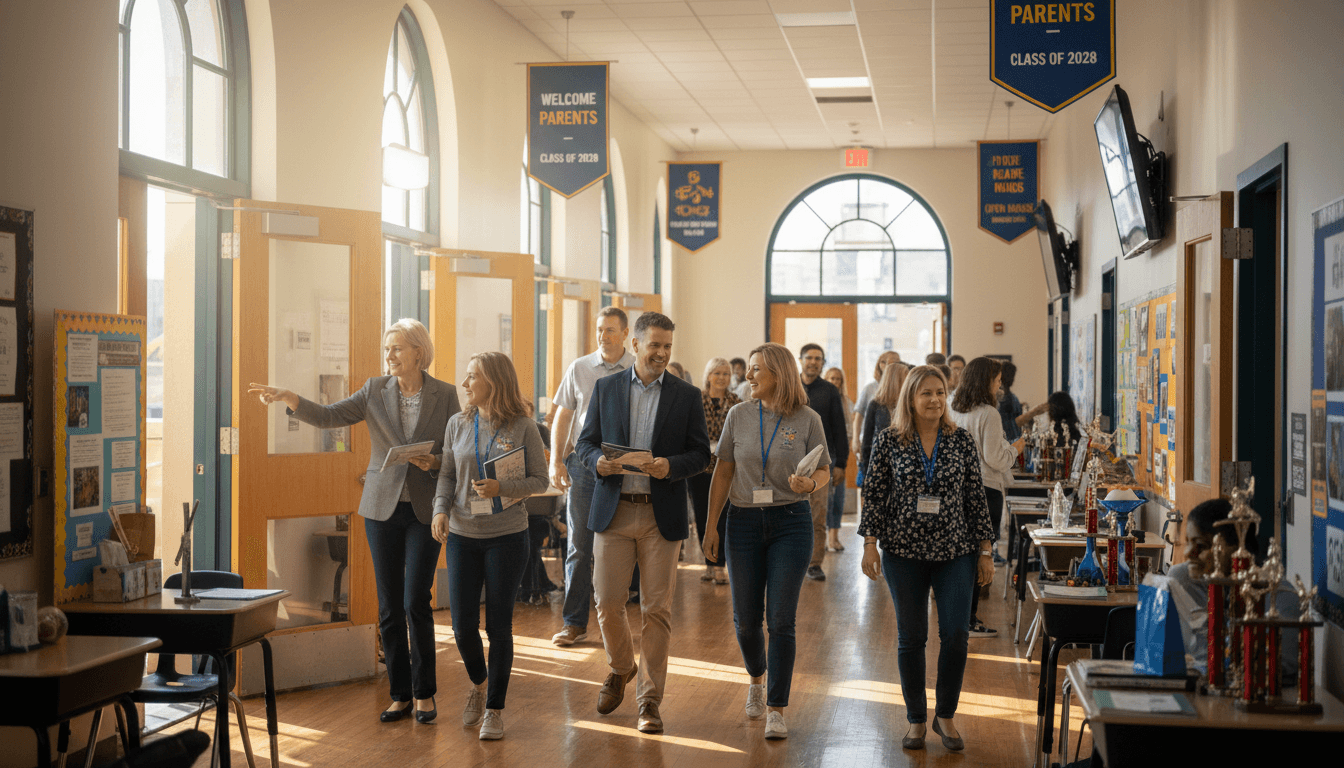
10th Grade Open House Newsletter: What to Send Sophomore Parents Before and After Open House
Open house is one of the most valuable communication opportunities of the school year, and most of its value is lost to poor preparation or nonexistent follow-up. Parents who walk into your classroom having read a clear pre-event newsletter arrive with better questions and more context. Parents who receive a follow-up after the event have a written record of your course expectations, your contact information, and the key points you covered. The newsletter work around open house is not optional context. It is how open house actually becomes useful.
The Pre-Open-House Newsletter: Setting the Stage
Send your pre-open-house newsletter at least five to seven days before the event. The goal is to orient parents so they are not walking in cold. Cover the event logistics first: date, start time, the schedule format (parents typically follow their student's class schedule in abbreviated periods), parking, check-in procedures, and where to find your classroom. Parents who have to figure out logistics on the day of open house often arrive flustered, which is not the tone you want for a first impression.
After logistics, give a brief preview of what you will cover in your classroom session. Something like: "I will introduce myself, give an overview of the 10th grade English curriculum, explain how I grade and communicate with families, and answer a few questions." This tells parents what to expect and prompts them to think about what they actually want to know before they walk through the door.
What to Cover in Your Open House Classroom Session
High school open house sessions are short. Ten to fifteen minutes per classroom is typical, which means you need to be focused and prepared. Cover these essentials: who you are and what you teach, the major units or topics for the year, how grades are calculated, your homework and late work policy, how you communicate with families and how often, and the best way to reach you.
A one-page handout with this information lets parents take notes and take something home. If you use a digital classroom platform like Google Classroom or Canvas, show the parent view briefly so families know where to look when their student references an assignment or due date. The more concrete you are, the more confident parents leave feeling.
What Sophomore Parents Specifically Want to Know
Parents of 10th graders have particular concerns that differ from freshman or junior parents. They want to understand how your course connects to college preparation, whether AP or honors options exist for next year, how the PSAT connects to your curriculum if it does, and what academic habits or skills students need to succeed in your class. Anticipating these questions and addressing them proactively in your session, or in your pre-open-house newsletter, signals that you understand the sophomore experience rather than just delivering a generic course overview.
The Post-Open-House Newsletter: Making It Stick
Send your post-open-house newsletter within two days of the event. For parents who attended, it is a useful summary that captures everything you covered so they do not have to rely on memory. For parents who could not attend, it is a complete substitute.
Structure this newsletter the same way you structured your in-person session: course overview, major assessments and grading, communication style, key dates in the coming weeks, and your contact information. If multiple parents asked the same question at open house, address it directly in the newsletter. "Several parents asked about our classroom phone policy" or "A number of you asked about how this course connects to AP English next year" shows that you listened and that you are responsive to what families actually care about.
Reaching Parents Who Could Not Attend
Not every parent can attend open house. Work schedules, childcare, transportation, and language barriers all create real obstacles for many families. Your post-open-house newsletter must work as a standalone document for these parents, not just as a recap for those who were there.
Consider including a brief sentence acknowledging families who could not make it: "If you were not able to attend, everything I covered is summarized below. Please reach out if you have any questions." This small gesture signals that you noticed their absence without making it feel like an accusation, and it opens the door for follow-up from families who would otherwise feel disconnected from the school year before it has really begun.
Following Up on Open House Questions
If parents asked questions at open house that you could not fully answer, follow up in your newsletter. If a parent asked about tutoring resources and you did not have the full list on hand, include it in the post-event send. If a parent raised a question about advanced course options and you want to provide more detail, do that here.
This kind of follow-through builds credibility quickly. Parents remember whether teachers did what they said they would do. A teacher who follows up on open house questions with actual answers in the next newsletter sets a tone for the rest of the year.
Using Open House Communication to Set the Year's Tone
The newsletter work around open house is your first real communication with the full parent group. It tells families how you approach your job: whether you are organized, thoughtful, and communicative, or whether they will have to chase information throughout the year. A well-executed pre- and post-open-house newsletter is a small investment with outsized returns in parent trust and engagement. It is worth doing right.
Get one newsletter idea every week.
Free. For teachers. No spam.
Frequently asked questions
What should a 10th grade teacher include in a pre-open-house newsletter?
A strong pre-open-house newsletter covers the event schedule, what parents can expect from your classroom session, your contact information, and a brief overview of your course. Include parking and check-in logistics if they are not obvious. If you plan to share materials or a syllabus at the event, mention this so parents come prepared with questions. The goal is to set expectations so the actual visit is efficient and productive.
How long should a classroom session be at a high school open house?
Most high school open house formats give each teacher 10 to 15 minutes per session, with parents rotating through their student's schedule. In that window, you have time for a brief introduction, a two- to three-minute overview of the course, your communication style and grading approach, and a short Q and A. Preparing a concise handout or slide removes pressure from the time constraint.
What should I send parents after open house?
A post-open-house newsletter should summarize the key points from your session for parents who attended and serve as a full brief for those who could not come. Include your course overview, major assessment structure, grading policy, and contact information. If parents asked questions that came up repeatedly, addressing them in the follow-up is useful. Close with any upcoming dates or deadlines in the first few weeks of school.
How do I handle parents who cannot attend open house?
Your post-open-house newsletter is the primary tool for reaching absent families. Make it comprehensive enough to stand alone, as if you are giving them the full open house experience in written form. For parents who want to follow up with questions, include clear guidance on how to reach you and what to expect in terms of response time. Some teachers also offer a brief virtual meeting option for families who could not attend.
What newsletter tool works best for high school teachers?
Daystage makes it easy to send a well-organized open house newsletter with sections for schedule details, course overview, and contact information all in one place. You can send the pre-event newsletter a week before open house, then follow up with the post-event summary a day or two later. Having both newsletters in the same tool makes it easy for parents to reference back and for you to stay consistent with your communication all year.

Adi Ackerman
Author
Adi Ackerman is a former classroom teacher and curriculum writer with 8 years in K-8 schools. She writes about school communication, parent engagement, and what actually works in real classrooms.
More for High School
10th Grade Parent Communication Guide: What to Send Sophomore Parents All Year
High School · 7 min read
10th Grade Curriculum Overview Newsletter: What Sophomores Are Learning This Year
High School · 7 min read
10th Grade Classroom Newsletter Ideas: What Sophomore Teachers Should Communicate All Year
High School · 7 min read
Ready to send your first newsletter?
3 newsletters free. No credit card. First one ready in under 5 minutes.
Get started free