
Teacher Newsletter for Senior Trips: Communicating Travel Details and Conduct to Families
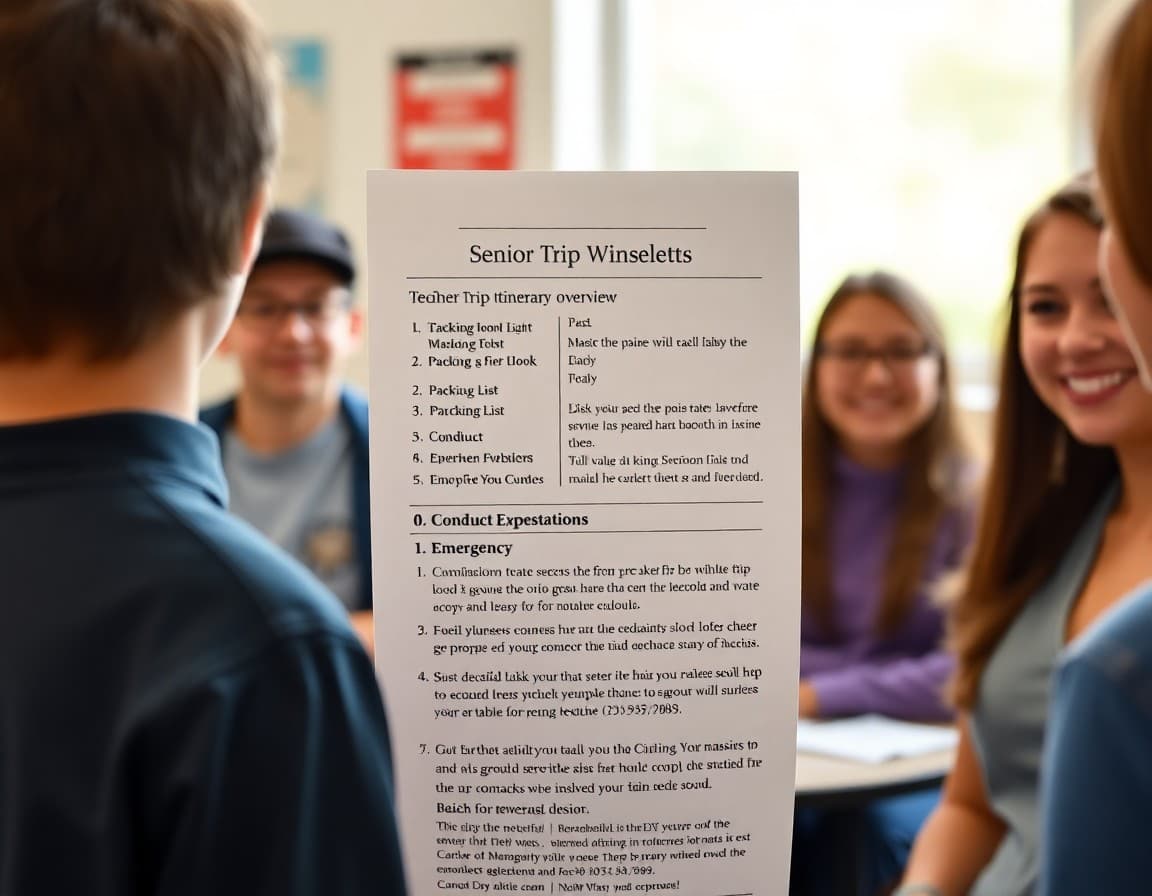
Why Senior Trip Communication Requires Careful Planning
A senior trip puts students in an unfamiliar environment with compressed supervision and higher independence than they experience at school. Families who receive comprehensive information about the trip before departure are better positioned to have the right conversations with their student and to respond appropriately if something goes wrong during the trip. A newsletter series covering payment, preparation, and conduct in the weeks before departure is more effective than a single document sent the week before students leave.
Trip Overview: Destination, Dates, and Itinerary
The first senior trip newsletter should give families the complete picture: destination, departure and return dates, a summary of the planned activities, and the educational or experiential purpose of the trip. Families who understand what the trip is for treat it differently than those who see it as an end-of-year social event. The itinerary summary should include major activities without necessarily providing minute-by-minute scheduling, which can change and create confusion.
Cost and Payment Timeline
A newsletter that provides the full trip cost, the payment schedule with specific deadlines, the acceptable payment methods, the cancellation and refund policy, and information about financial assistance options if available gives families a complete financial picture without requiring individual conversations about cost. Families who cannot afford the full cost benefit from knowing early that assistance options exist.
What to Pack: The Complete List
A packing list that specifies what is required, what is recommended, what is not permitted, and any weight or size restrictions for luggage helps students arrive at departure with everything they need and nothing they should not have. Packing list errors, whether missing a required item or bringing something prohibited, cause problems that a clear newsletter can prevent.
Conduct Expectations and Consequences
This section of the newsletter is the most important for preventing problems during the trip and for managing parent expectations if something goes wrong. Name the prohibited behaviors specifically. Name the consequences specifically, including what it costs the family if early return is required. Name the supervision arrangements so families understand who is responsible for their student at each point in the itinerary. Families who receive this in writing before the trip cannot claim they were not informed.
Emergency Procedures and Communication During the Trip
Families need to know what to do if they need to reach their student during the trip, who the supervising adults are and how to reach them, and what the school's emergency communication plan is. A newsletter that provides this information specifically prevents the frantic contact attempts that happen when a family cannot reach their student and does not know who to call.
Efficient Trip Communication With Daystage
High school teachers who use Daystage for senior trip newsletters build a communication arc across the months between the trip announcement and the departure date. A series of targeted newsletters covering registration, payment, preparation, and conduct ensures that every family arrives at the departure date fully informed and that students have the best possible conditions for a memorable and safe experience.
Get one newsletter idea every week.
Free. For teachers. No spam.
Frequently asked questions
What should a senior trip newsletter include?
A senior trip newsletter should cover the destination and dates, the itinerary overview, the cost and payment deadlines, what students need to bring, the conduct expectations and consequences for violations, supervision arrangements, emergency contact procedures, and any required permission forms or medical information.
What conduct expectations should a senior trip newsletter address?
Conduct expectations for senior trips should cover the school's substance use policy and the consequences for violations (which typically include being sent home at the family's expense), curfew and room check procedures, phone use policies during organized activities, behavior at cultural or historical sites, and the general professional standard expected when students represent the school outside campus.
How should families prepare students for a senior trip?
Families can help prepare students for a senior trip by reviewing the packing list together, discussing the conduct expectations before departure, ensuring the student has any necessary medications or medical documentation, reviewing the emergency contact plan, and having a direct conversation about their expectations for the student's behavior during the trip.
What happens if a student violates conduct expectations on a senior trip?
Most schools have policies requiring students to be sent home if they violate substance use policies or other major conduct expectations during a trip. The cost of early return transportation is typically the family's responsibility. A newsletter that names this policy clearly before the trip prevents the surprise and frustration that families experience when they receive an unexpected call during the trip.
What tool helps teachers send newsletters efficiently?
Daystage is built for school communication. High school teachers use it to send formatted trip newsletters with itineraries, packing lists, conduct policies, and emergency information directly to senior parent email lists.

Adi Ackerman
Author
Adi Ackerman is a former classroom teacher and curriculum writer with 8 years in K-8 schools. She writes about school communication, parent engagement, and what actually works in real classrooms.
More for High School
Teacher Newsletter for College Visit Trips: Preparing Students and Families for Campus Visits
High School · 6 min read
Teacher Newsletter for High School Internship Programs: Preparing Students and Families
High School · 6 min read
Teacher Newsletter for Graduation Practice: Preparing Students and Families for Commencement
High School · 6 min read
Ready to send your first newsletter?
3 newsletters free. No credit card. First one ready in under 5 minutes.
Get started free