

Teacher Newsletter for Job Shadow Days: Getting Students and Families Ready
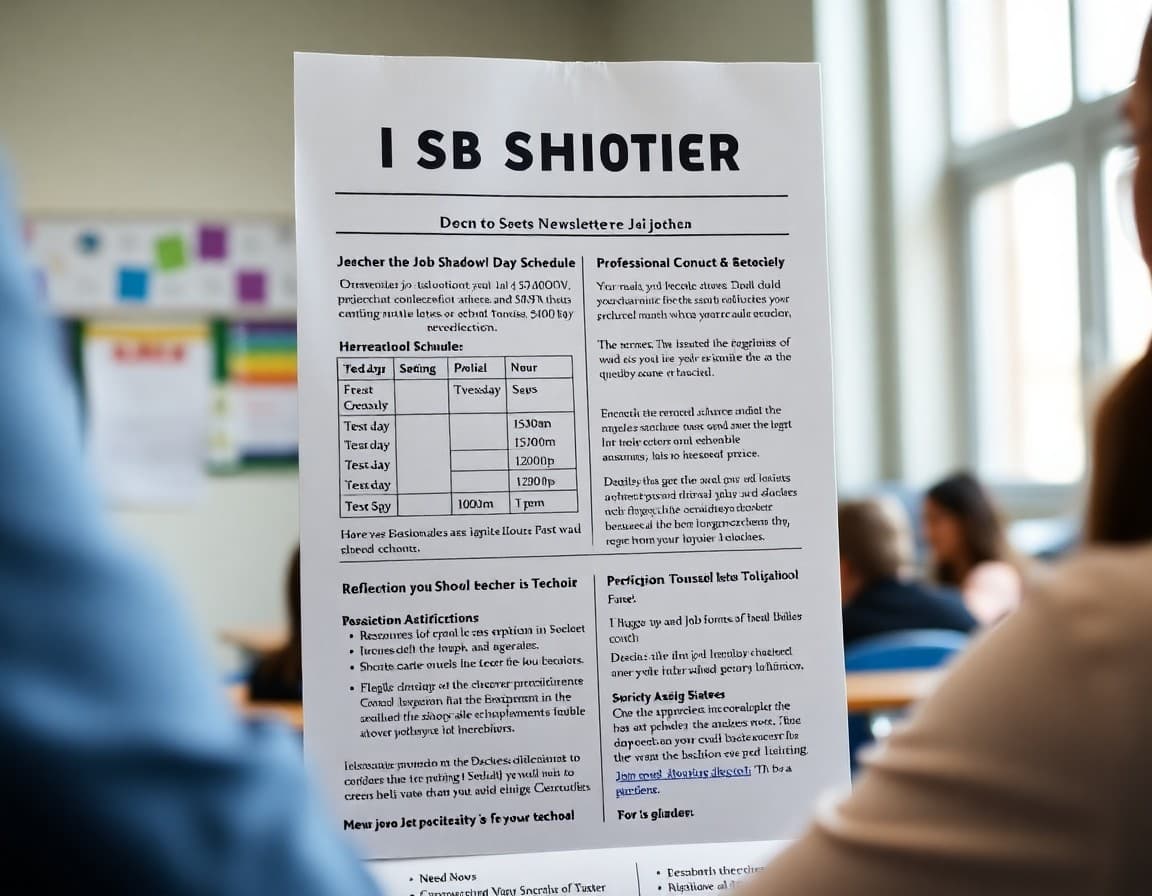
What a Job Shadow Day Is Really For
Job shadow days are not career confirmation exercises. They are reality tests. Students who shadow a profession they were certain about and find it aligns with their expectations gain confidence. Students who find the work less interesting than they imagined, more physical, more repetitive, more social, or more stressful than they expected gain information that should inform their planning before they commit to a college major or professional pathway. Both outcomes are valuable. A newsletter that frames the experience this way helps students and families approach it with openness rather than predetermined conclusions.
Logistics: What Students Need to Know Before the Day
A job shadow newsletter should cover the start time, the dress code for the industry they are visiting, what to bring, how to get there, and who the school contact is if something goes wrong. Students who arrive at a job shadow without knowing the parking situation or dress code for a law office versus a construction site start the day with a problem rather than a positive first impression. Specific logistics in writing prevent avoidable complications.
Professional Conduct During the Shadow
A job shadow puts students in a professional's workplace as a guest. The behavior standards are those of the profession, not the classroom. A newsletter that names the expected behaviors specifically, active listening, appropriate questions, phone-free engagement, and a positive attitude toward whatever task they are assigned, helps families reinforce those standards at home before the day arrives.
Questions That Make a Shadow Valuable
Students who arrive with prepared questions get more from a job shadow than those who wait to be told what to notice. A newsletter that provides three to five strong observation questions gives students a starting framework: What do you spend most of your time doing that surprised you? What skills matter most that you did not expect when you started? What would you tell a high school student who wanted to do this work? Students who ask questions like these leave with stories rather than general impressions.
The Reflection Assignment and Why It Matters
The reflection assignment translates experience into insight. Students who complete it thoughtfully know more about their own interests and the field they observed than students who write a general summary of the day. Families who ask specific questions, not "how was it?" but "what surprised you most about what you saw?", support the same reflective thinking the assignment requires.
Thank-You Notes: A Required Professional Habit
A thank-you note or email to the host within 24 hours of the job shadow is a professional obligation. It is also good practice for the networking habits that career development requires. A newsletter that names this specifically and explains that it is part of the assignment, not optional, gives families a clear expectation to reinforce.
Reaching Families With Daystage
Job shadow day newsletters sent through Daystage reach every family with the preparation information they need. A well-prepared student makes a better impression on the host and gets more from the experience, which means the newsletter directly affects the quality of the learning opportunity.
Get one newsletter idea every week.
Free. For teachers. No spam.
Frequently asked questions
What should a job shadow day newsletter explain to families?
A job shadow day newsletter should explain the logistics, the professional conduct expectations, what students should bring, how the reflection assignment works, and how families can help secure a placement if the program allows student-sourced sites. Students who arrive prepared and professionally behaved get significantly more from the experience.
What is the purpose of a high school job shadow day?
A job shadow day gives students a real, unfiltered look at what a career looks like in daily practice. The goal is not to confirm a career choice but to inform it. Students who shadow a profession they were certain they wanted and discover it is not what they expected gain something more valuable than a day off campus. The experience should prompt genuine reflection on fit, not just confirmation of prior assumptions.
What should students observe during a job shadow?
Students should observe what the professional actually does hour by hour, what kinds of decisions they make, how they communicate with colleagues and clients, what problems arise and how they are handled, and what skills appear to be most important for success in that role. These specific observations form the basis of the reflection assignment.
What professional conduct is expected on a job shadow day?
Professional conduct on a job shadow day includes appropriate attire for the workplace, punctuality, active listening, thoughtful questions, avoiding phone use unless explicitly offered, and a thank-you note or email to the host within 24 hours. These behaviors are part of the curriculum, not optional courtesy.
What tool helps teachers send newsletters efficiently?
Daystage is built for school communication. High school teachers use it to send formatted newsletters with job shadow logistics, professional conduct guides, and reflection assignment details directly to parent email lists.

Adi Ackerman
Author
Adi Ackerman is a former classroom teacher and curriculum writer with 8 years in K-8 schools. She writes about school communication, parent engagement, and what actually works in real classrooms.
More for High School
Teacher Newsletter for High School Internship Programs: Preparing Students and Families
High School · 6 min read
Teacher Newsletter for CTE Pathways: Communicating Career Education to Families
High School · 6 min read
Teacher Newsletter for College Application Timelines: Keeping Senior Families on Track
High School · 6 min read
Ready to send your first newsletter?
3 newsletters free. No credit card. First one ready in under 5 minutes.
Get started free