
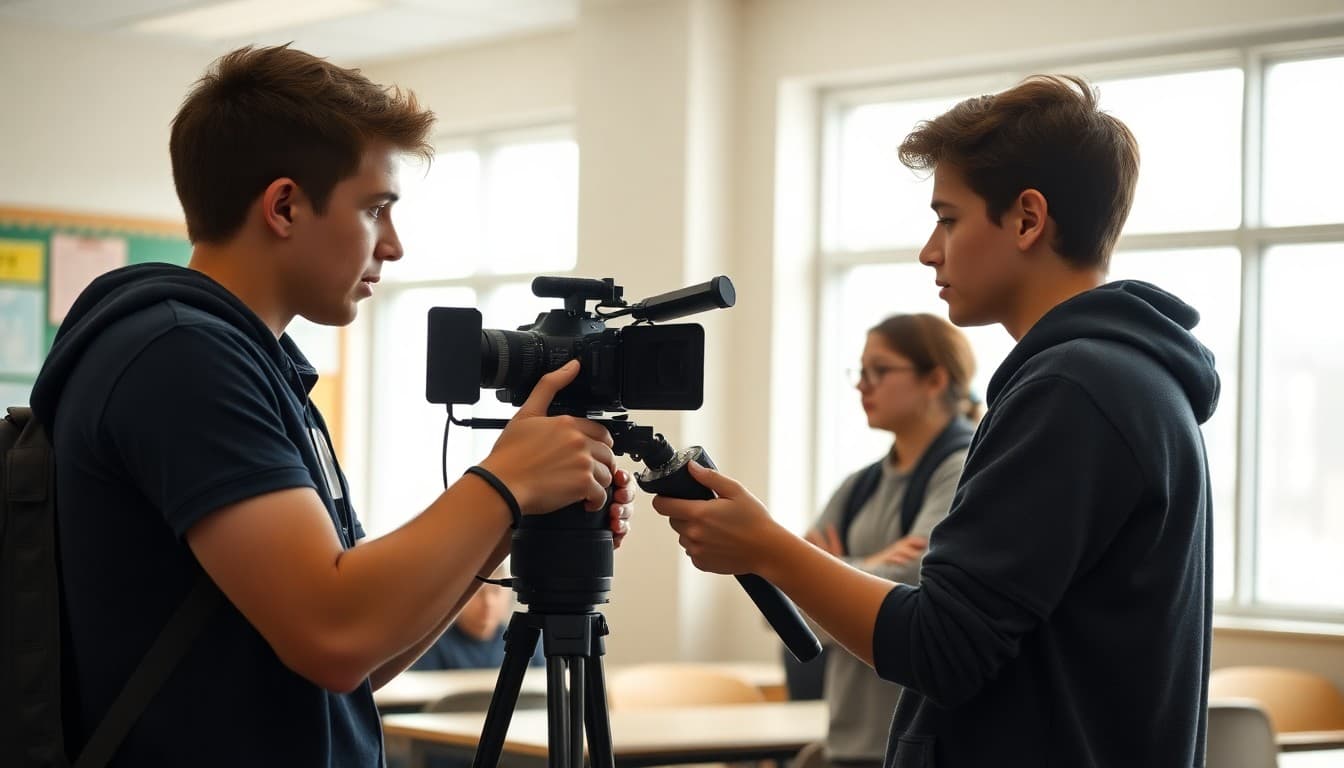
Teacher Newsletter for Film Club: What Students and Families Should Know

Film club is one of those activities that sounds self-explanatory but is actually quite diverse in what it can involve. Some programs are primarily film analysis and appreciation. Others are focused on production. Many do both. Your newsletter is where you clarify what your specific club is about so students who join know what they're signing up for.
Describe What the Club Actually Does
Start with the fundamentals. Does your club make films, analyze them, or both? Do members work individually or in small crews? Is there a signature project the club produces each year? A screening event at the end of the semester? A festival submission process? Two or three sentences here set accurate expectations and help the right students self-select into the program.
Share the Meeting Schedule
List meeting days, times, and location. If the club meets in a media room or library with specialized equipment, note that. If some meetings are production days outside of the regular meeting space, explain how those work and how students find out about them. Consistent meeting information keeps participation stable.
Outline What Students Will Learn
Describe the skills covered during the year: screenwriting, camera operation, lighting, audio, editing, and anything else specific to your curriculum. If you bring in guest filmmakers, let families know. If students learn a specific editing software, name it. Parents who see concrete skill development in the club description are more supportive of the time commitment.
Explain Project Expectations
Tell students what they'll produce. Short films, documentaries, trailers, promotional videos for the school, or a mix. Describe the scope of each project and how long production typically takes. Students who know the project structure going in can commit their time appropriately and plan for the post-production crunch before a screening deadline.
Describe Equipment Access
List what equipment is available for club use and how students access it for project work outside of meeting times. If cameras can be checked out, explain the process and any deposit or insurance requirements. Students who have access to equipment between meetings produce significantly better work than those who only shoot during club hours.
Mention Film Festival and Screening Opportunities
If your club submits to local, regional, or national student film festivals, include that in your newsletter. External submissions give students a concrete goal to work toward and put their work in front of a real audience. If you host a year-end screening, note the tentative date so families can plan to attend.
Address Content and Appropriateness Standards
Film students sometimes push toward mature content before they have the craft to handle it well. A brief note on your program's content standards, what themes are appropriate for school production, and how those decisions get made, prevents surprises during the review process.
Close With How to Stay Involved
Let families know where to find club updates, screening invitations, and project news. Daystage makes it easy to send a quick update when a student film gets accepted to a festival or when the year-end screening date is set. Those moments of celebration, shared through consistent communication, build the culture of the program.
Get one newsletter idea every week.
Free. For teachers. No spam.
Frequently asked questions
What should a film club newsletter include?
Cover meeting times, what students will learn and produce during the year, equipment available for use, any film festival submissions or screening events, project requirements, and how students can get access to equipment for independent work. A clear description of what the club actually does helps students and parents decide whether it fits their interests.
What do students learn in a high school film club?
Students typically learn screenwriting, camera operation, lighting basics, audio recording, and video editing. Depending on the advisor's background and the school's equipment, some programs also cover directing techniques, color grading, and sound design. The range of skills is practical and increasingly relevant for college and career.
Does a school film club produce finished films or just learn technique?
Most clubs do both. Students learn skills through exercises and then apply them to short film projects. Some clubs produce an annual short film or a series of projects for a year-end screening. If your club submits to student film festivals, that gives members a real external audience to work toward.
What equipment does a school film club typically have access to?
Equipment varies widely. Some programs have professional DSLR cameras, lighting kits, and audio recorders. Others rely on smartphones with accessories. Your newsletter should describe what the school provides and what students can use independently, so members know the production tools available to them.
What tool works best for high school teacher newsletters?
Daystage is a practical choice for film club communication. You can share meeting schedules, project updates, screening event invitations, and submission deadlines in one newsletter that reaches all club families. For a creative program like film club, a well-designed newsletter also signals that the program takes communication seriously.

Adi Ackerman
Author
Adi Ackerman is a former classroom teacher and curriculum writer with 8 years in K-8 schools. She writes about school communication, parent engagement, and what actually works in real classrooms.
More for High School
Ready to send your first newsletter?
3 newsletters free. No credit card. First one ready in under 5 minutes.
Get started free