

Teacher Newsletter for Color Guard: What Parents Need to Know
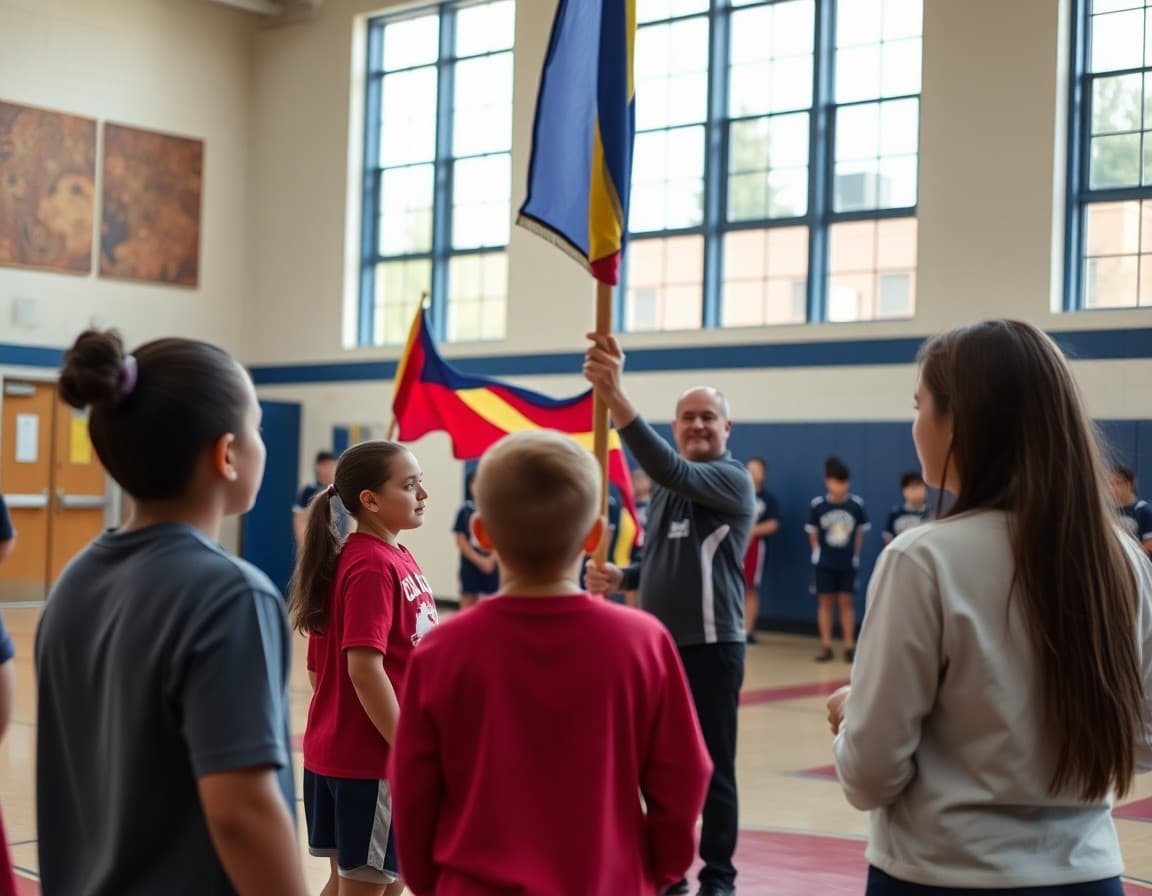
Color guard programs are often the most visually striking part of a marching band performance, but the work behind what happens on the field is invisible to most parents. A newsletter that explains the rehearsal commitment, the equipment culture, and the competition world helps families understand what their student is actually doing and why it matters.
Open With What Color Guard Is
Not all parents know what color guard involves, especially those whose student just joined. A brief description, students perform choreographed routines with flags, rifles, sabres, and other equipment as part of the marching band and sometimes as an independent ensemble, gives everyone the same baseline. This is especially important for families whose student is participating for the first time.
Share the Rehearsal Schedule
Color guard rehearsals often extend beyond regular marching band practice. If your guard holds additional technique rehearsals or design run-throughs, list them separately from the full band schedule. Families who see all rehearsal commitments in one place can plan accordingly. Surprises about schedule add up to attendance problems.
Cover the Performance and Competition Schedule
List every football game performance, fall marching competition, and winter guard competition if your program runs one. Include dates, venues, and approximate times. For competitions, explain whether the guard performs with the full band or independently and what parents can expect from the audience experience. Parents who know what they're attending show up ready to watch.
Describe Equipment Care Expectations
Flags, rifles, and sabres are program property and can be expensive to replace. Tell students and families how equipment should be stored, what to do if something breaks or is damaged, and what the protocol is for reporting equipment issues. Students who understand they're responsible for equipment take better care of it.
Address Costume and Uniform Costs
Share the full costume situation for this season: what the school provides, what families purchase, and what the total estimated cost is. Include any ordering deadlines. If costs are partially covered by fundraising, mention that. Families who know exactly what to expect financially from the beginning of the season are less frustrated when costs arrive.
State the Attendance Policy
Color guard, like all ensemble work, breaks down when members are absent. State your attendance policy clearly: how absences affect a student's position in the show, how to notify the instructor in advance of a missed rehearsal, and what the makeup process looks like. Families who understand the team impact of an absence communicate proactively rather than after the fact.
Describe the Winter Guard Season If Applicable
If your program competes in winter guard, give families an overview of what that season involves: indoor venues, independent competition separate from the band, and different repertoire. Many color guard members participate in both fall and winter seasons, and families who aren't aware of the winter program are often caught off guard when it starts.
Close With Communication and Contact Details
Let families know how you'll communicate schedule changes, competition results, and program updates throughout the season. Daystage makes it easy to send timely updates without fielding individual messages from every guard family. One clear channel builds the parent community that sustains the program long-term.
Get one newsletter idea every week.
Free. For teachers. No spam.
Frequently asked questions
What should a color guard newsletter include?
Cover the rehearsal schedule, performance and competition dates, costume and equipment costs, equipment care expectations, attendance policy, and what the WGI or independent guard season looks like if your program participates beyond the fall marching season. Color guard has specific logistics that families need to understand from the start.
What does color guard equipment include and who provides it?
Color guard equipment typically includes flags, rifles, and sabres. Most schools provide equipment for use during the season, but students are responsible for proper care and storage. Some programs ask families to contribute toward equipment replacement funds. Your newsletter should clarify what students are responsible for and what the school supplies.
How do color guard competitions work?
In fall marching season, color guard is scored as part of the overall marching band. In winter guard season, teams compete independently at indoor competitions, judged on choreography, equipment technique, and overall effect. Your newsletter should explain which competitions apply to your program and what the judging criteria are.
What costume costs should color guard families expect?
Costume costs vary widely depending on show design. Some seasons use simple pieces built on existing uniforms. Others involve elaborate custom costumes that can cost several hundred dollars. Whatever the cost, communicate it early and include any payment deadlines so families can plan.
What tool works best for high school teacher newsletters?
Daystage works well for color guard programs. You can share rehearsal schedules, competition logistics, costume ordering information, and season updates in one newsletter that all guard families receive. Programs that communicate consistently throughout the season build the kind of parent support that sustains the program year over year.

Adi Ackerman
Author
Adi Ackerman is a former classroom teacher and curriculum writer with 8 years in K-8 schools. She writes about school communication, parent engagement, and what actually works in real classrooms.
More for High School
Ready to send your first newsletter?
3 newsletters free. No credit card. First one ready in under 5 minutes.
Get started free