

9th Grade Spelling Words Newsletter: Helping Kids Study at Home
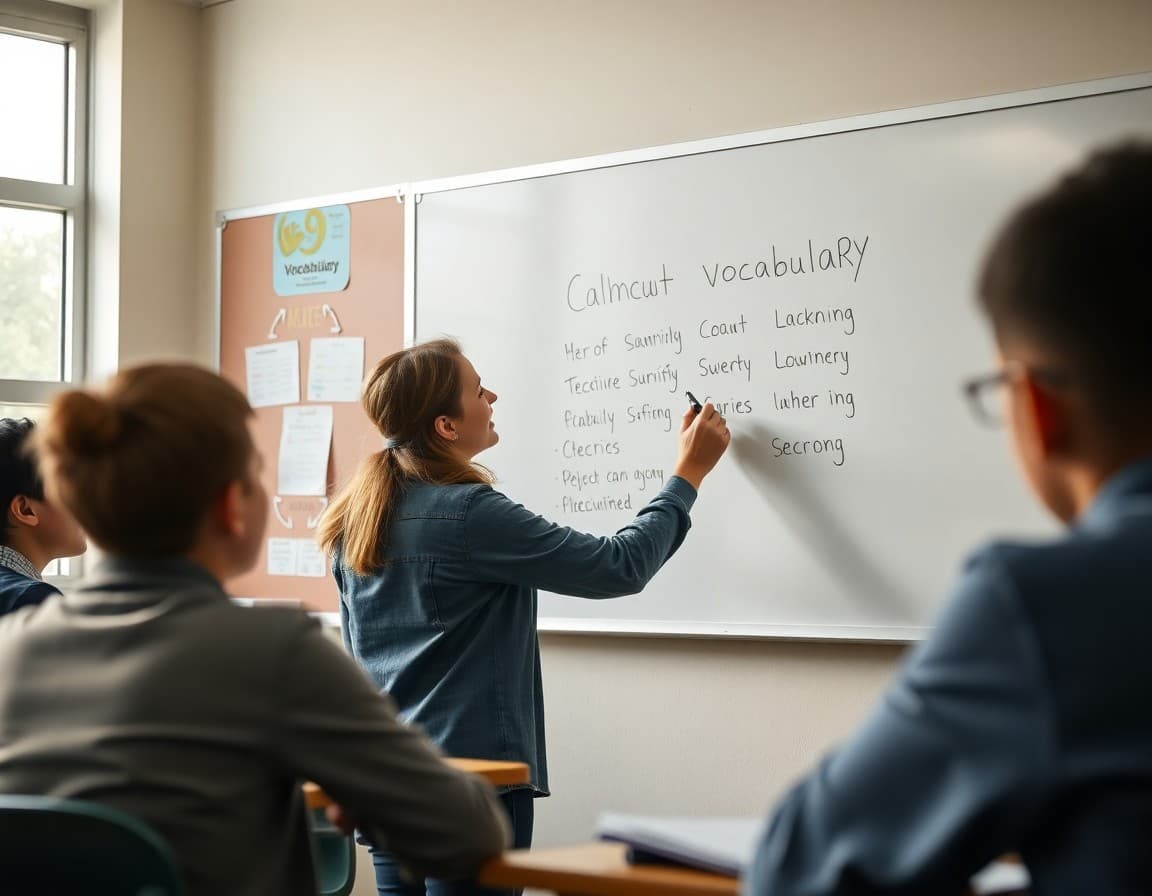
By 9th grade, vocabulary instruction looks different than a traditional spelling list. Most teachers shift from spelling drills to academic vocabulary, literary terms, and SAT-level word study. But families still need to know what students are expected to learn, how to help them study, and when the assessment is. A clear vocabulary and spelling newsletter addresses all three and saves time for everyone.
Clarify What Kind of Word Study This Is
Not all word lists are the same. Your newsletter should say whether this week's list is literary vocabulary tied to a novel, academic vocabulary from a writing unit, or a test-prep word list. Families who understand the purpose are better equipped to help. A parent who thinks vocabulary is about spelling will quiz their student differently than one who knows the goal is using the words correctly in analytical writing.
Send the Word List Directly in the Newsletter
Do not make families wait for a paper copy that may or may not come home. Include the week's word list directly in the newsletter body or attach it as a one-page PDF. List the word, part of speech, and a brief definition. If the word appears in a specific context in your current text, include the sentence. Context makes vocabulary stick faster than isolated definitions.
Recommend a Daily Study Schedule
Families will follow a specific schedule if you give them one. 'Study 10 words on Monday, review all 20 on Tuesday, practice sentences on Wednesday, self-quiz Thursday' is more useful than 'review the list before the test.' Students who space their practice over four days consistently outperform those who cram. Put the recommended schedule in the newsletter.
Explain How the Words Will Be Tested
Is the assessment a matching quiz? Fill in the blank? Writing sentences? An in-context reading comprehension exercise? Families who know how words will be tested can prepare their student appropriately. A student who memorizes definitions but has never written with the words will struggle on a sentence-based quiz even if they can pass a matching test.
Connect Vocabulary to Writing Assignments
If the vocabulary list ties directly to a writing assignment or an essay, say so. Students are more motivated to learn words they know they will use in writing. In your newsletter, note which words are expected to appear in their next written piece and explain that using them correctly will count toward the writing grade. This connection makes vocabulary feel purposeful rather than arbitrary.
Sample Newsletter Section on Vocabulary Study
Here is a section you can adapt:
"This week's 15 vocabulary words come from our reading of [TITLE]. Students should know each word's meaning, part of speech, and how to use it in a sentence. The quiz is on [DATE] and will include fill-in-the-blank sentences. Suggested study plan: learn 5 words per night Monday through Wednesday, review all 15 on Thursday, self-quiz Friday morning. Our Quizlet set is available here: [LINK]."
Share Free Digital Tools for Practice
Name the tools you recommend and link to them directly. Quizlet sets take 10 minutes to build and can be shared with families as a link in the newsletter. For SAT-prep vocabulary, Vocabulary.com has a free tier with thousands of pre-made lists. For spaced repetition, Anki is free and works on any device. Students who study with active recall tools retain vocabulary longer than those who re-read the list.
Tie Vocabulary to College Readiness
For 9th grade families, a brief mention of how vocabulary connects to the SAT and ACT lands well. Roughly 30 percent of the SAT Reading section depends on understanding words in context. Students who build a strong academic vocabulary in 9th and 10th grade have a measurable advantage by the time they sit for those tests. Families who understand this long-term value are more likely to take weekly vocabulary study seriously rather than treating it as busywork.
Get one newsletter idea every week.
Free. For teachers. No spam.
Frequently asked questions
Do 9th graders still have spelling lists?
Many 9th grade English classes use vocabulary lists rather than traditional spelling tests. These include academic vocabulary tied to the current reading unit, SAT or ACT word lists, or literary terms. The newsletter should explain whether the focus is correct spelling, word meaning, or both, since parents assume it is one thing and students often need to study the other.
What is the most effective way for 9th graders to study spelling or vocabulary at home?
Spacing practice over several days works better than cramming the night before. Students who study 10 words per night for three nights retain more than students who study all 30 the night before a quiz. In your newsletter, recommend a specific daily review schedule rather than leaving it to student judgment.
How do I help parents understand the difference between memorizing a word and knowing it?
In your newsletter, explain that knowing a word means being able to define it, spell it, use it correctly in a sentence, and recognize it in context. A student who memorizes definitions but cannot recognize the word in a passage has only half the skill. Tell parents to quiz their student both ways: 'define this word' and 'use it in a sentence about something real.'
Should families use digital flashcard apps for vocabulary study?
Yes, and you should name the ones you recommend. Quizlet sets for your class can be shared with families as a link. Anki is free and works well for spaced repetition. Mention these in your newsletter so students are not building new sets from scratch when pre-made resources already exist.
What newsletter tool makes it easy to share weekly vocabulary lists with 9th grade families?
Daystage lets you embed the weekly word list directly in the newsletter, link to a Quizlet set, and highlight the quiz date as a calendar event. Families get one clean newsletter instead of searching for the vocabulary sheet their student may or may not have brought home.

Adi Ackerman
Author
Adi Ackerman is a former classroom teacher and curriculum writer with 8 years in K-8 schools. She writes about school communication, parent engagement, and what actually works in real classrooms.
More for High School
Ninth Grade ELA Newsletter: What to Tell Families About Reading and Writing in Freshman Year
High School · 7 min read
9th Grade Reading Log Newsletter: Home Reading Program Guide
High School · 6 min read
9th Grade State Testing Newsletter: Preparing Freshman Families for Test Season
High School · 7 min read
Ready to send your first newsletter?
3 newsletters free. No credit card. First one ready in under 5 minutes.
Get started free