

9th Grade Special Education Newsletter: Communicating IEP Support to Freshman Parents
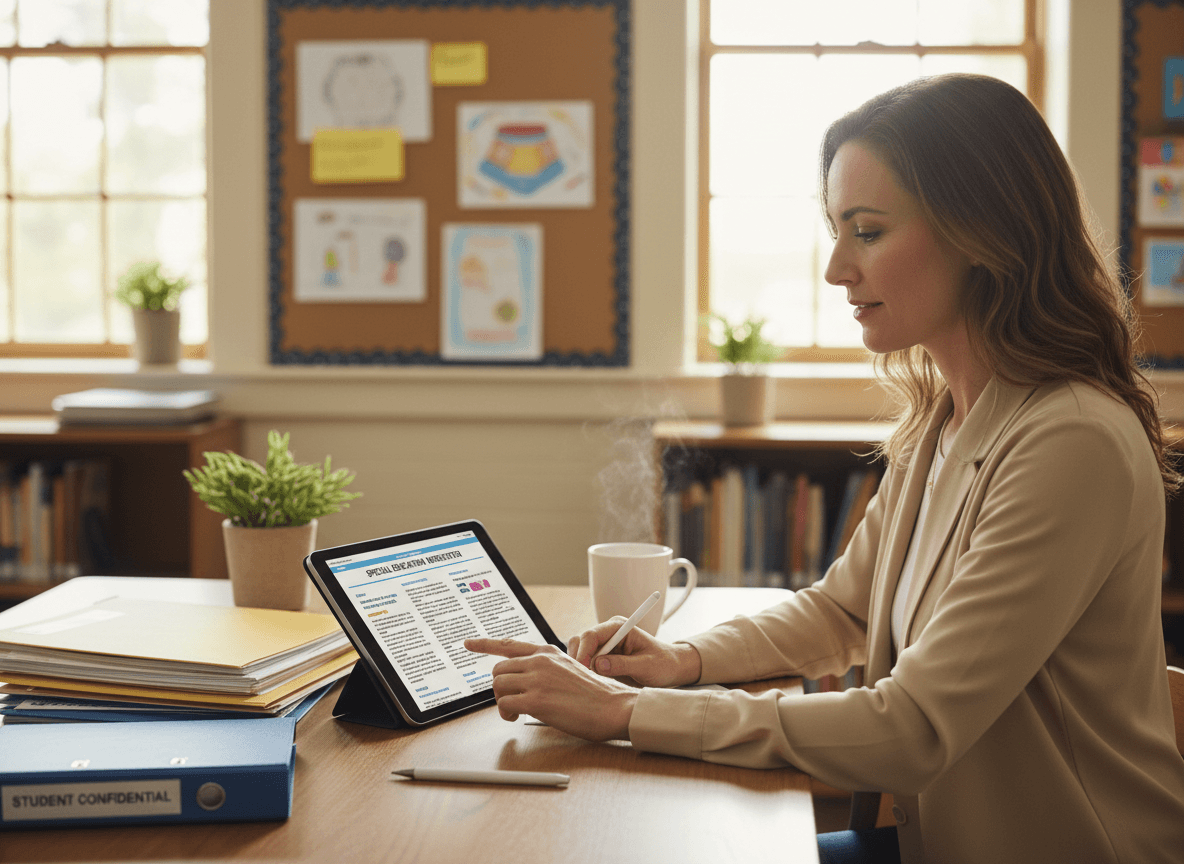
The transition to high school is significant for any student, but for students with IEPs, it comes with a whole additional layer of complexity. New teachers, a new building, a more complex schedule, and for many students, the beginning of formal transition planning. Parents of 9th graders with IEPs need clear, consistent communication from their child's special education team from day one. A regular newsletter is one of the most reliable tools for building that relationship and keeping families informed throughout a pivotal year.
What Makes Freshman Year Different for Students With IEPs
In elementary and middle school, most students with IEPs have one primary teacher or a small team who knows their history well. High school changes that dramatically. A student might now have six or seven general education teachers, each of whom received a copy of the IEP accommodation page but may not fully understand how to implement it. The special education case manager is coordinating across all of those relationships simultaneously while also managing a caseload.
Parents of students with IEPs often feel less informed in high school than they did in middle school, and for good reason: the structure genuinely is more fragmented. A newsletter that communicates clearly about how services are being delivered, who to contact with concerns, and what parents should expect over the course of the year helps close that gap.
Communicating How Services Are Delivered Without Singling Anyone Out
Special education newsletters work best when they describe the program rather than individual students. You can tell parents exactly how your department delivers services without naming anyone or referencing any specific accommodation.
Describe the models your school uses: resource room support (where students come to a dedicated classroom for specific subjects or study support), co-taught inclusion classes (where a special education teacher joins a general education class), consultation services (where you advise general education teachers on how to implement accommodations without being in the room), and self-contained classes for students who need a more separate setting. Tell parents which models are available in your building and how students move between them based on their IEP.
This kind of program description is useful for every parent on your newsletter list and does not require you to reveal anything private about any individual student. Parents read their student's context into it naturally.
Introducing Transition Planning to 9th Grade Families
Many parents of 9th graders with IEPs do not fully understand transition planning or know that it is required by federal law. Your newsletter is an ideal place to introduce this clearly and early.
Explain what transition planning is in straightforward terms: it is the process of identifying where a student wants to be after high school, whether that is college, vocational training, competitive employment, or supported living, and then building the IEP to support that path. Tell parents what the law requires and when it applies to their student. If your school starts transition planning at age 14 rather than waiting until 16, say so.
Give parents something concrete they can do before the first transition-focused IEP meeting. Ask them to think about their student's interests, the activities they do independently at home, the strengths their student demonstrates outside of school, and any goals the student has expressed for life after high school. Parents who arrive at a transition meeting having already had this conversation with their student produce IEPs that are more grounded and more useful.
Explaining the Co-Teaching Model in Plain Terms
Co-teaching is widely used but rarely explained to parents in advance. Many parents have questions about it: Does this mean my student will be pulled out of class? Will other students know my child has an IEP? Is the co-teacher just there for the kids with disabilities?
Address all of these in your newsletter. In a co-taught class, both teachers are present for the full period and work with all students. There is no separate group in the corner. Both teachers plan together and deliver instruction together, using strategies that benefit every learner, not just students with IEPs. This model reduces stigma because there is no visible separation, and it increases access to grade-level content because students with IEPs are in the same classroom with the same instruction as their peers.
If your co-teaching model has limitations, be honest about those too. Not every co-taught pairing is equally prepared or has the same amount of joint planning time. Telling parents what to expect sets appropriate expectations rather than creating disappointment later.
IEP Meeting Communication: Before, During, and After
IEP meetings are one of the most important touchpoints in the relationship between families and your team. Your newsletter can help parents prepare for and make the most of these meetings.
Before a meeting: let parents know the meeting is coming, what topics will be covered, who will be in the room, and what they should bring or think about in advance. If parents can bring their student, encourage that. Many districts now include student-led IEP components, and freshman year is a good time to start building that habit.
After a meeting: a brief follow-up newsletter or note confirming what was decided and what the next steps are helps parents feel confident that the plan is in motion. Many parents leave IEP meetings uncertain about whether what was discussed will actually be implemented. A short written follow-up closes that loop.
Communicating About Accommodations Across the Building
One of the most common frustrations parents of students with IEPs report is inconsistent accommodation implementation. A student's IEP says extended time, but one teacher does not provide it. The IEP says preferential seating, but no one checked whether that was arranged. Your newsletter can address this system-level issue without pointing fingers at specific teachers.
Tell parents what the process is for communicating accommodations to general education teachers. Tell them what to do if they believe an accommodation is not being implemented. Encourage them to contact you first rather than going directly to an administrator, since most accommodation gaps are solved quickly with a direct conversation. This transparency builds trust and gives parents a constructive path when something is not working.
Building a Regular Communication Habit With Special Education Families
Special education families, more than almost any other parent group, benefit from proactive and frequent communication. The issues their students navigate at school are often invisible to parents until something goes wrong. Regular newsletters that describe what is happening in the program, what skills students are working on, and what parents can do at home to support specific goals create the foundation for the kind of collaborative relationship that helps students succeed.
You do not need to write a different newsletter for every student on your caseload. A program-level newsletter sent monthly, combined with individual outreach when something specific needs to be communicated, is sustainable and effective. The key is consistency: parents who hear from you regularly are partners. Parents who only hear from you when there is a problem are on the defensive. A newsletter habit is one of the most practical ways to shift that dynamic.
Get one newsletter idea every week.
Free. For teachers. No spam.
Frequently asked questions
What do parents of 9th grade students with IEPs most need to know at the start of the year?
Parents need to understand three things right away: who their student's case manager is and how to reach them, how their student's services are delivered in this building (resource room, co-teaching, inclusion, or a combination), and that transition planning is either beginning or about to begin. For students who are 14 or approaching 14, the IEP should already include a transition section addressing post-secondary goals. For students not yet there, parents should know when that conversation will start. The high school context is new, the building is larger, the schedule is more complex, and the stakes for post-secondary planning are higher. A newsletter that addresses all of this directly reduces anxiety on both sides.
How do I communicate about IEP accommodations in a newsletter without identifying specific students?
Write at the program level, not the individual level. Describe what your special education program looks like, what kinds of supports are available in the resource room and in co-taught classes, and what the general process is for implementing accommodations across a student's schedule. You do not need to mention any student by name or accommodation by student. Parents of students with IEPs understand that their child's plan is specific to them, and a program-level newsletter is an appropriate complement to the individualized conversation that happens at the IEP meeting.
What is transition planning and when should I mention it in a 9th grade newsletter?
Transition planning is the process of identifying a student's post-secondary goals (work, education, independent living) and building the IEP around those goals. Under IDEA, transition services must begin no later than age 16, but many states and districts start at 14 or even earlier. For most 9th graders, freshman year is either the start of that conversation or the year it becomes more formal. Your newsletter should explain what transition planning is in plain language, note that it is required by federal law, and tell parents what they can do to prepare for the conversation, including thinking about their student's interests, strengths, and long-term goals. Parents who walk into a transition IEP meeting having already thought about these questions have far more productive meetings.
How do I explain the co-teaching model to parents who have never encountered it?
Co-teaching means two teachers, one general education and one special education, share responsibility for instruction in the same classroom. Both teachers are in the room for the full period. Both plan lessons together. Both work with all students, not just the students with IEPs. This model benefits the whole class, not just students receiving special education services, which is worth saying explicitly. Parents sometimes worry that co-teaching means their student will be visibly separated or labeled in a general education class. A newsletter that describes how co-teaching actually works, with both teachers circulating, both delivering instruction, and both available to all students, can resolve that concern before it becomes an objection.
What newsletter tool works well for special education teachers who need to communicate with parents regularly?
Daystage is a good fit for special education teachers because it lets you send polished, organized newsletters without needing advanced tech skills. You can use it for program-level communication to all families who receive special education services, for IEP meeting reminders, for transition planning updates, and for general updates about the resource room or co-taught classes. Since special education communication benefits from being consistent and documented, having all your newsletters in one place also helps with continuity across the school year.

Adi Ackerman
Author
Adi Ackerman is a former classroom teacher and curriculum writer with 8 years in K-8 schools. She writes about school communication, parent engagement, and what actually works in real classrooms.
More for High School
Ready to send your first newsletter?
3 newsletters free. No credit card. First one ready in under 5 minutes.
Get started free