

9th Grade ELL Support Newsletter: Communicating With Parents of Freshman English Language Learners
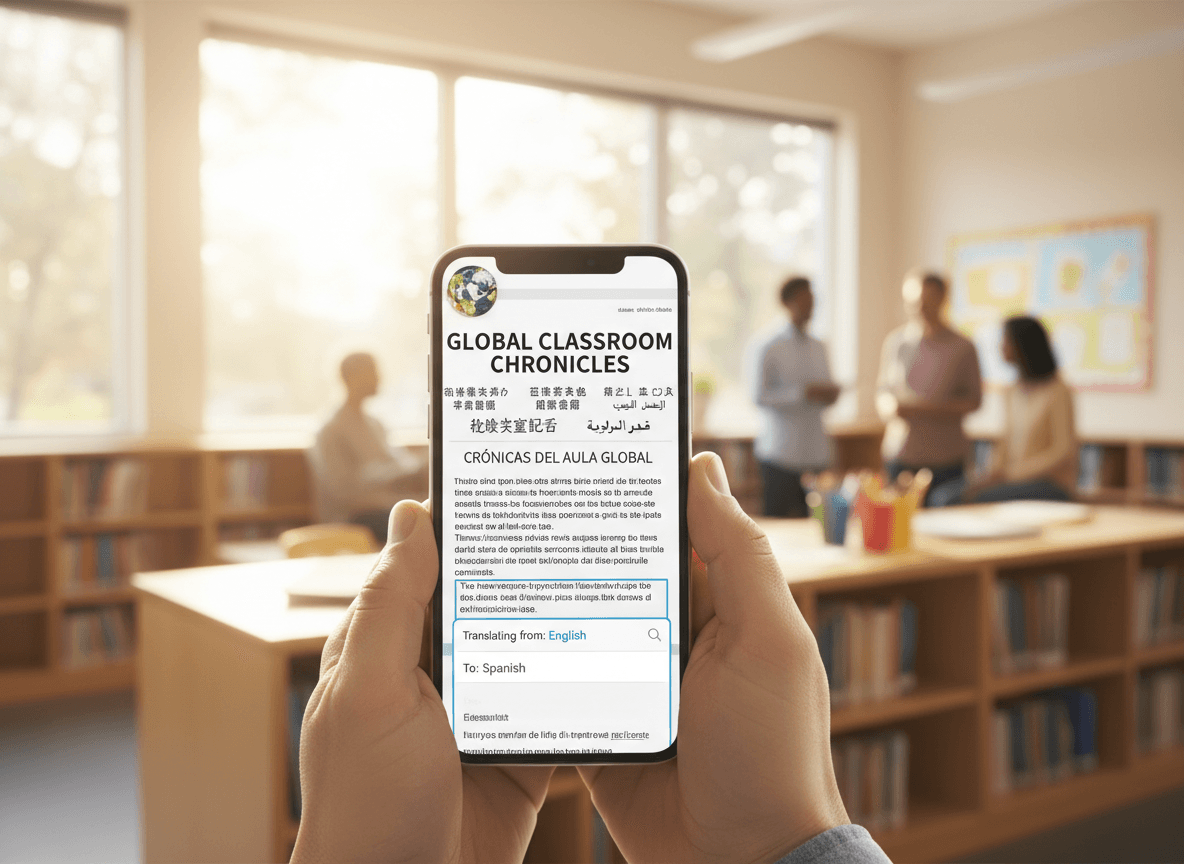
Communicating with the parents of English Language Learners in 9th grade involves a layer of complexity that most parent communication guides skip entirely: the parents themselves may be navigating English as a second language, or may have limited formal schooling, or may be in a community that has historically had reasons to distrust institutions. A thoughtful ELL support newsletter does more than inform. It builds the kind of trust that makes everything else in the school year easier.
What ELL Services Look Like in High School
Parents of 9th grade ELL students often do not know what services their student is actually receiving or how those services are delivered. This is especially true for families who are new to the US school system or who experienced a different model of language support in a previous district.
Your newsletter should describe the specific model your school uses. Sheltered instruction means that core content classes are taught with embedded language supports: simplified text alongside grade-level text, visual vocabulary supports, structured academic discussion protocols, and scaffolded writing tasks. Co-teaching means an ELL specialist joins the general education classroom and works alongside the content teacher to support language access. Pull-out services mean a student leaves a general education class for a period of direct language instruction. Self-contained ELL classes serve students at the earliest proficiency levels who need more intensive, language-focused instruction before accessing grade-level content.
Name the model. Tell parents how many periods their student spends in each type of support. Tell them who delivers those services and how to reach that person. That level of specificity transforms vague institutional language into something a parent can actually understand and act on.
Communicating Across Language Barriers
If you are sending a newsletter to families whose primary language is not English, the first question to answer is: will they be able to read it? English-only newsletters sent to families who are not English-proficient are not communication. They are paperwork.
Start by finding out what languages your families speak at home. Most districts collect this information during enrollment. Then work with your district's translation resources, community liaisons, or bilingual staff to produce your newsletter in the most common home languages in your student population. If professional translation is not available, tools like Google Translate can produce a usable draft that a bilingual colleague can review quickly.
Even when you cannot translate every word, you can structure your English newsletter for maximum accessibility to readers who are developing English literacy. Short sentences. Active verbs. Concrete examples. Avoid idioms ("hit the ground running" or "fall through the cracks" are confusing to non-native speakers). Define acronyms the first time you use them: ELL, IEP, WIDA, LMS. These choices make your newsletter more accessible without requiring translation.
Explaining the Language Development Timeline to Parents
One of the most important things parents of ELL students need to understand is the difference between conversational English and academic English, and why their student may need language support for years even after they seem fluent.
Conversational English, also called Basic Interpersonal Communication Skills, develops relatively quickly. Most students can hold an everyday conversation in English within one to three years of immersion. Academic English, the formal vocabulary and syntax required for reading a history textbook, writing a persuasive essay, or solving a word problem in math, takes significantly longer to develop. Research by Jim Cummins and others puts that timeline at five to seven years.
This matters because parents sometimes see their student speaking confidently in English and wonder why they still have a language specialist supporting them. Your newsletter can explain this gently and clearly: "Your student may be communicating well in everyday conversation, and that is a real achievement. Academic language, the kind used in textbooks and formal writing, develops more slowly and with more deliberate instruction. The support your student is receiving is designed to build that deeper level of language." This explanation prevents the misunderstanding that language services mean their student is struggling, which many families find stigmatizing.
The WIDA Assessment: What Parents Need to Know
Most states use the WIDA ACCESS for ELLs assessment to measure annual English language proficiency. Parents of ELL students will hear about this test, see scores on report cards, and may be asked to respond to placement decisions based on results. Your newsletter is a good place to explain what WIDA is before the test season arrives.
The WIDA assessment measures proficiency across four language domains: listening, speaking, reading, and writing. Scores range from 1 (Entering) to 6 (Reaching). A student progresses through these levels over multiple years of schooling. When a student reaches a composite score of 4.5 or higher (the threshold varies by state), they may be recommended for exiting the ELL program, though the exact criteria differ by district.
Tell parents when the assessment happens, what it looks like, and that the goal is to track growth over time. A student who moves from level 2 to level 3 in a year has made significant progress, and parents deserve to understand that. Frame the assessment as evidence of learning, not a gate their student has to pass.
What Parents Can Do to Support English Development at Home
Many parents of ELL students worry that they cannot help at home because their own English is limited. Your newsletter can reframe this concern directly. Parents do not need to speak English fluently to support their student's language development.
The most powerful thing parents can do is encourage their student to read in any language. Literacy in a home language transfers directly to literacy in English. Students who read regularly in Spanish, Arabic, Mandarin, or any other language develop reading skills that accelerate their English reading development.
Parents can also talk with their student in their home language about what they are learning in school. Understanding a concept in the home language makes it easier to apply the same concept in English. This is not a barrier to English development: it is a bridge. A newsletter paragraph that explicitly validates home language use removes the guilt some families feel about not speaking English at home and replaces it with a clear explanation of why home language maintenance actually helps.
Building Trust With ELL Families Over Time
ELL families are among the most underserved by school communication systems. They often receive less information, attend fewer events, and have less contact with teachers than native-English-speaking families. This is usually not because they are disengaged. It is because the communication systems were not designed with them in mind.
A newsletter that reaches ELL families in their own language, respects their existing knowledge and parenting capacity, and gives them concrete, actionable information sends a message that goes beyond any single piece of content: this school sees you, this teacher is trying to reach you, and your student's education matters to us. That message, repeated consistently over the course of the year, builds the trust that every other aspect of the parent-teacher relationship depends on.
Working With Bilingual Liaisons and Community Ambassadors
If your school has bilingual family liaisons, community ambassadors, or parent leaders who speak home languages represented in your student population, your newsletter is a perfect tool to amplify through those networks. A liaison who shares your newsletter in a WhatsApp group or at a parent gathering reaches families who might not have seen your email.
Mention these contacts in your newsletter. Let families know that if they have questions and prefer to speak in their home language, there is someone at the school who can help. That single sentence, in the appropriate home language, can open the door for a family that had previously assumed communication with the school was not accessible to them.
Get one newsletter idea every week.
Free. For teachers. No spam.
Frequently asked questions
What ELL services are typically available to 9th grade students in high school?
High school ELL services vary by district, but the most common models include sheltered instruction (core academic courses taught with language supports built in, often by a teacher with ELL certification), co-teaching (an ELL specialist joins general education classes alongside the core teacher), pull-out support (students leave the general education classroom for designated language development instruction), and self-contained classes for students at the earliest proficiency levels. Many schools use a combination of these depending on a student's WIDA or ELP proficiency level. Your newsletter should describe clearly which model or combination of models your school uses so parents understand what their student's day looks like.
How do I communicate with parents who have limited English themselves?
Start with translation. Most school districts have access to translation services or multilingual staff who can help translate a newsletter into the primary home languages of your students. Google Translate and similar tools are imperfect but can be useful for short messages when professional translation is not available. When possible, send newsletters in both English and the family's home language in the same document. You can also use visuals, icons, and simple sentence structure to make the English version more accessible to parents who are developing their own literacy. Relationships with bilingual community liaisons or parent ambassadors who speak the home language can extend your reach significantly.
How long does it typically take for a student to become proficient in academic English?
Research consistently shows that conversational English, the kind used in everyday social interactions, develops in one to three years. Academic language, the formal, content-specific language required to succeed in school, typically takes five to seven years to develop to a level comparable to native-speaking peers. This distinction is important for parents, who may see their student communicating confidently in English at home or with friends and assume the language support is no longer needed. Your newsletter can explain this timeline clearly and gently so parents understand that their student may still benefit from language services even when they appear fluent in casual conversation.
What is the WIDA or ELP assessment and how should I explain it to parents?
WIDA stands for World-Class Instructional Design and Assessment. It is the English language proficiency assessment used in most US states. Students who are identified as English Language Learners take the WIDA ACCESS assessment annually to measure their progress across four language domains: listening, speaking, reading, and writing. The scores determine what level of language support a student needs and when they might exit the ELL program. Explaining this to parents in plain language, including what the score levels mean and that the goal is growth over time, helps them understand the assessment as a supportive tool rather than a barrier.
What newsletter tool helps ELL teachers communicate effectively with multilingual families?
Daystage makes it easy for ELL teachers to write and send newsletters to their parent community. You can organize your newsletter with clear sections, use simple formatting that stays readable even after translation, and send to your full parent list with one click. For ELL-specific communication, the visual clarity of a Daystage newsletter, with distinct sections, clean layouts, and mobile-friendly design, makes translated versions easier to read and navigate. Many ELL teachers use Daystage to send regular updates about language development progress, upcoming assessments, and resources for families who want to support English development at home.

Adi Ackerman
Author
Adi Ackerman is a former classroom teacher and curriculum writer with 8 years in K-8 schools. She writes about school communication, parent engagement, and what actually works in real classrooms.
More for High School
Ready to send your first newsletter?
3 newsletters free. No credit card. First one ready in under 5 minutes.
Get started free