

9th Grade Curriculum Overview Newsletter: What to Tell Parents at the Start of the Year
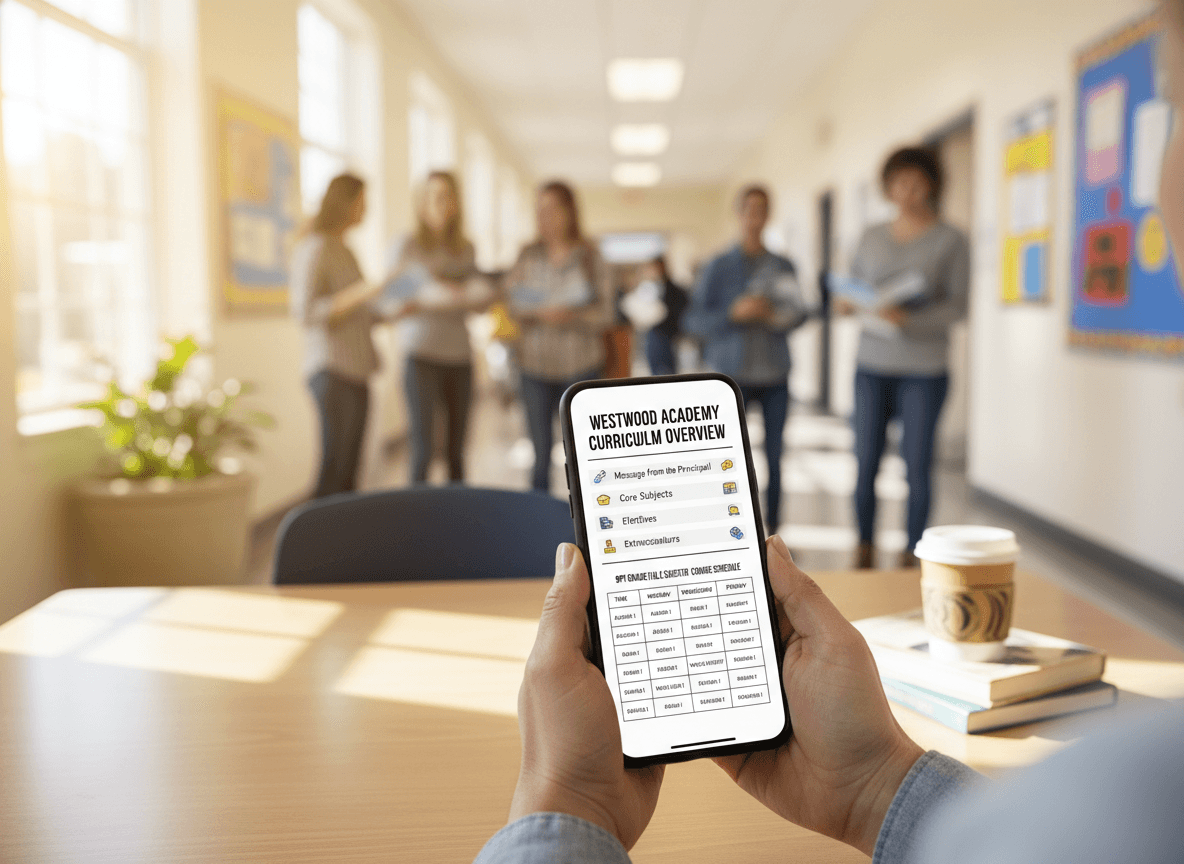
The first week of 9th grade is disorienting for students and parents alike. New building, new schedule, new teachers, new expectations. Parents who were used to knowing exactly what their child was studying in middle school suddenly feel out of the loop. A curriculum overview newsletter sent in the first week of school fixes that problem before it starts. It tells parents what their student will study, why it matters, and how freshman year is different from what came before.
Why a Curriculum Overview Newsletter Matters More in 9th Grade
Middle school parents were often more hands-on. They knew the teachers, they attended curriculum nights, they understood roughly what each grade covered. High school breaks that familiarity. Parents now have a student with six or seven different teachers, and no single teacher is giving them the full picture.
When you send a curriculum overview newsletter, you position yourself as the teacher who communicates. That reputation pays dividends all year. Parents who understand what their student is studying are better partners. They can reinforce concepts at home, ask better questions, and reach out earlier when their student is struggling rather than waiting until a grade report arrives.
What to Cover in Each Subject Area
You do not need to write a full syllabus. What parents need is a clear map of the year. For English 9, that might look like: "We will read three full novels this year, including one contemporary work and one classical text, and students will write five major essays, including one research paper." For Algebra or Geometry, something like: "We will build on the algebra skills from 8th grade, spend the first quarter on linear equations and inequalities, and move into quadratic functions in the second semester."
Biology newsletters work well with a unit-by-unit list: cells and cellular processes, genetics and heredity, evolution and natural selection, ecology and ecosystems. World History or Geography can name the geographic regions or time periods students will study and flag any major projects or simulations. Physical Education usually has a simple rotation of units, and naming them helps parents understand why their student needs a specific uniform or equipment on certain days.
Explaining Standards-Based Learning Without Using Jargon
Many 9th grade parents will encounter standards-based grading for the first time in high school. Some districts started it in middle school, but plenty have not. Either way, a brief, plain-language explanation in your overview newsletter prevents a lot of confusion later.
Skip the acronyms. Do not write "students will be assessed on grade-level CCSS ELA standards for RL and RI strands." Write: "In English 9, your student's reading grade reflects two separate skills: understanding what a story or poem means, and analyzing how the author built that meaning through word choice, structure, and point of view. You will see both scores on their report card." Concrete examples make abstract grading systems feel manageable.
Addressing the Jump from Middle School to High School
One of the most useful things you can put in a 9th grade curriculum newsletter is an honest description of how freshman year differs from 8th grade. Parents need to know that the transition is real and that some adjustment time is normal.
A few specific differences worth naming: reading assignments are longer and often assigned for homework rather than completed in class. Writing assignments require more independent research and citation. Math moves at a pace that assumes students remember content from prior years. Projects tend to span two to four weeks and require students to manage their own timelines. Grading is often more rigorous, and a B in 9th grade genuinely represents more mastery than a B in 8th grade.
Frame this not as a warning but as context. Something like: "Freshman year is a real step up, and that is by design. Most students find their footing within the first couple of months. Knowing what to expect makes the adjustment smoother for everyone."
Describing Pacing and Major Units
Parents appreciate a loose timeline. You do not need to commit to exact dates, but telling parents "we will spend roughly the first nine weeks on cell biology before moving into genetics" gives them a frame of reference. If there is a major project, a research paper, or a standardized test on the horizon, name it and approximate when it will land.
This kind of transparency serves you as much as it serves parents. When a student comes home saying they have a huge project due next week, parents who already knew it was coming are more sympathetic and more prepared to help. Parents who are blindsided by major assignments sometimes blame the teacher. Proactive communication eliminates most of that friction.
What Parents Should Know About Grade-Level Expectations
Be direct about what proficiency looks like. If a student earning a C in English 9 is still meeting grade-level expectations, say that. If your grading scale means that a 70 is passing but not proficient, explain the distinction. Parents who understand your grading philosophy make fewer panicked calls about single test scores and more useful conversations with their student about long-term growth.
Also worth mentioning: what happens if a student falls behind. Is there a tutoring center? Do you offer extra help sessions? Is there a late work policy? A brief mention of the support structures available reassures parents that the school has a plan if things get difficult.
Electives and Enrichment Opportunities
Parents often do not know what their student's elective actually involves. A sentence or two per elective in the overview newsletter closes that gap. If your school has a strong arts program, a career and technical education pathway, or a language program, this is a good place to introduce those. Parents who understand the scope of elective learning are more likely to encourage their student to engage seriously with it, rather than treating electives as filler classes.
Keeping the Newsletter Useful Without Making It Overwhelming
The risk with a curriculum overview newsletter is going too long. Parents are busy. If your newsletter requires fifteen minutes to read, most of them will not read it. Aim for a format that can be skimmed: short paragraphs per subject, bullet points for unit lists, and one clear section for each major area. Use headers so parents can jump to the subject they care most about right now.
End with a simple invitation: tell parents the best way to reach you if they have questions, and let them know you will be sending regular updates throughout the year. That single sentence does a lot of work. It positions you as approachable, sets expectations for ongoing communication, and makes parents feel like partners rather than bystanders in their child's freshman year.
Get one newsletter idea every week.
Free. For teachers. No spam.
Frequently asked questions
What subjects should I cover in a 9th grade curriculum overview newsletter?
A thorough overview newsletter touches on every core subject a 9th grader takes: English 9 (literature, writing, grammar), Algebra 1 or Geometry (depending on where students placed), Biology or Physical Science, World History or Geography, and Physical Education. If your students take electives or language classes, a brief sentence per elective helps parents understand the full picture. You do not need to go deep on every subject, but parents appreciate knowing the shape of the whole year, not just one class.
How do I explain standards-based grading to parents who have never encountered it before?
Start with what parents already understand: their child needs to demonstrate specific skills to pass each course. Then explain that standards-based grading organizes those skills into clear categories so both students and parents can see exactly where a student is strong and where they need more practice. Use plain language and avoid acronyms. A one-sentence example, such as 'Instead of one overall English grade, your student will see separate scores for literary analysis, argumentative writing, and vocabulary,' makes the concept concrete and removes most of the confusion.
How is 9th grade different from 8th grade, and should I explain that in the newsletter?
Yes, naming the shift directly is one of the most valuable things you can put in a curriculum overview newsletter. In 9th grade, the pace accelerates, the reading load increases, and students are expected to manage multi-week projects with less teacher scaffolding. Essays tend to be longer and require outside sources. Math moves faster and assumes more prior knowledge. Telling parents this upfront, with practical suggestions for how to support their student through the adjustment, sets realistic expectations and reduces the number of worried emails you receive in October.
How detailed should a curriculum overview newsletter be? Parents do not want to read a syllabus.
Aim for one to two paragraphs per subject, or a short bulleted list of major units per class. Parents want enough detail to have an informed conversation with their student, not enough to recreate the lesson plan. A useful test: if a parent reads your newsletter and can tell their student 'I heard you are starting a genetics unit in biology this quarter,' you have hit the right level. If the newsletter reads like a state standards document, you have gone too far.
What newsletter tool makes it easy to send a curriculum overview to all freshman parents at once?
Daystage is built for exactly this kind of teacher-to-parent communication. You can organize your curriculum overview into clear sections with headings for each subject, add images or graphics to break up text, and send to your entire parent list with one click. Parents receive a clean, mobile-friendly newsletter that is easy to read on their phone. Many 9th grade teachers use Daystage to send their back-to-school curriculum newsletter in the first week of school, then follow up with subject-specific updates throughout the year.

Adi Ackerman
Author
Adi Ackerman is a former classroom teacher and curriculum writer with 8 years in K-8 schools. She writes about school communication, parent engagement, and what actually works in real classrooms.
More for High School
Ready to send your first newsletter?
3 newsletters free. No credit card. First one ready in under 5 minutes.
Get started free