
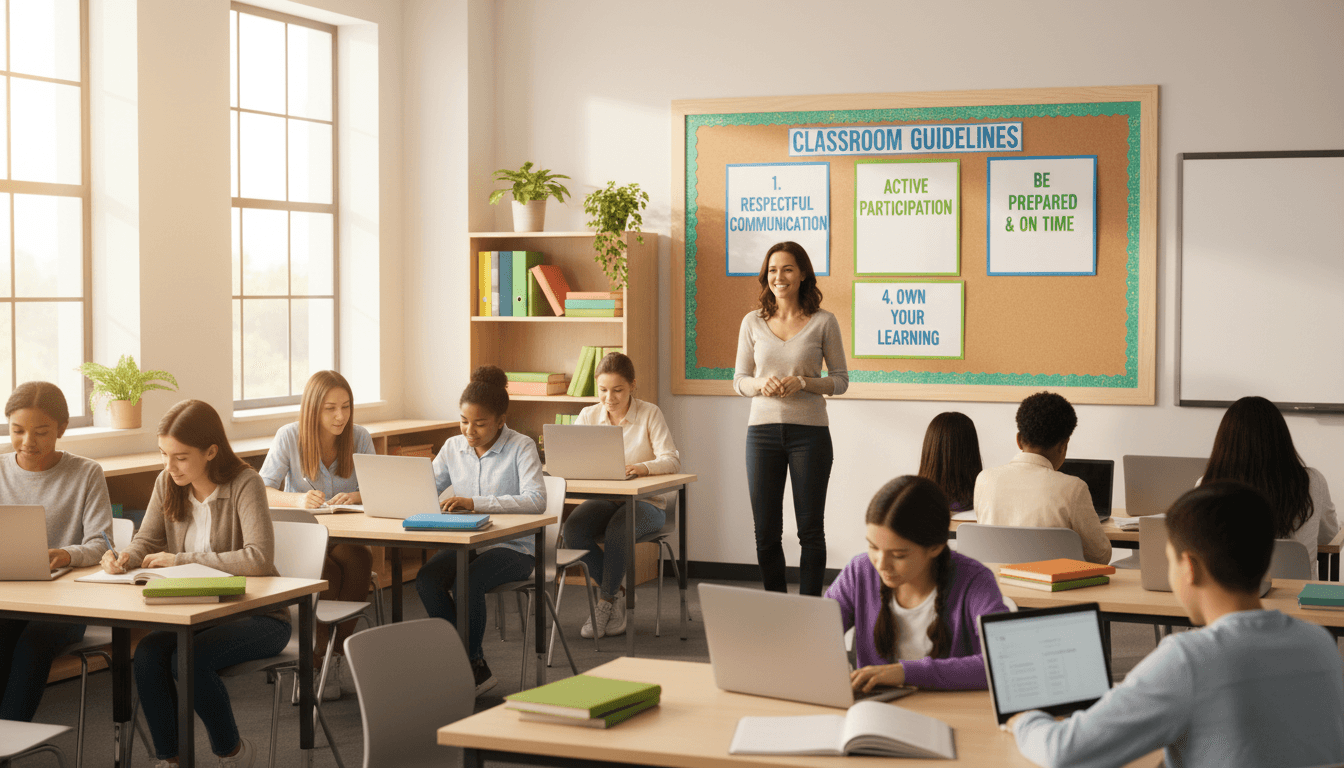
9th Grade Classroom Rules Newsletter: Communicating Expectations to Freshman Parents

The start of 9th grade is when habits form. Students who understand what is expected in each classroom settle in faster, stress less, and perform better. Parents who understand the same expectations are better equipped to support their student at home and partner with you when things go sideways. A classroom rules and expectations newsletter, sent in the first few days of school, is one of the most practical tools you have for starting the year well.
Rules Versus Procedures: Why the Distinction Matters
Before writing your newsletter, it helps to be clear in your own mind about what you are communicating. Rules are the core expectations that never change: treat people with respect, come to class prepared, do your own work. Procedures are the mechanics of how your classroom runs: where students sit on day one, how to turn in a late assignment, what to do if they finish early. Both need to be communicated, but they have different weight.
In your newsletter, you can address this distinction briefly. Something like: "There are a small number of non-negotiable expectations in this class, and then there are routines that make the day run smoothly. Both matter, but if I adjust a procedure mid-year, that is normal. The core expectations stay constant." This framing helps parents understand that your classroom is both structured and adaptive.
How to Communicate Phone and Device Policies Clearly
Phone policies are one of the most loaded topics in high school classrooms right now. Parents have strong feelings in both directions. Some worry about their student's safety and want them reachable at all times. Others support strict phone policies. Your newsletter cannot resolve that debate, but it can explain your position clearly and respectfully.
Describe what your phone policy is and why you have it. If phones must be in bags or in a phone holder, say so and explain the learning rationale. If there are emergency exceptions, name them. If you allow phones for certain activities, name those too. The more specific you are, the less room there is for a student to negotiate a policy based on a vague newsletter.
For parents who are worried about emergency contact, acknowledge it directly: "I understand that many parents want to be able to reach their student during the school day. If there is a genuine emergency, the front office can reach any student in any class within minutes. That is the right channel for urgent contact during instructional time."
Framing Discipline Without Sounding Legalistic
A classroom rules newsletter that reads like a legal contract puts parents on edge before anything has even happened. The goal is not to cover every possible scenario in advance. The goal is to give parents confidence that you have a fair, consistent approach to behavior and that you will handle problems professionally.
Describe your general approach in plain language. How do you handle a student who is chronically late? What happens the first time a student is disrespectful? What is your process before involving a parent? Parents who understand your sequence of responses feel less blindsided when you contact them about an issue.
A short, honest description of your philosophy goes a long way: "My goal is to handle most issues directly with students first. I do not want to make every small problem bigger by escalating immediately. If I reach out to you, it is because I have already tried to address something with your student and I want your perspective and support."
Explaining Attendance and Tardy Policies
Ninth graders are notorious for testing attendance boundaries. They learn quickly which teachers track tardies and which do not. Your newsletter is a chance to make your attendance expectations explicit to parents before patterns develop.
State your policy clearly: how many unexcused tardies before a consequence, how absences affect grades (especially if your district has seat time requirements), and what the process is for making up missed work. Also tell parents what you need from them when a student is absent. Do they email you? Do they fill out a form through the main office? What is the window for submitting a makeup assignment?
What Parents Should Do When a Rule Is Broken
This section of the newsletter is one that teachers often skip, and it is one of the most valuable. When a student breaks a rule and the parent finds out, that parent does not know what to do. They want to help but they do not know whether they should call the school, punish the student at home, wait for more information, or do nothing.
Give them a clear, calm sequence. First: have a conversation with your student and get their account of what happened. Second: reach out to the teacher if you need more information or context. Third: avoid punishing your student before you have heard from the teacher, because the situation is sometimes more complicated than what a 14-year-old reports. Fourth: follow up with your student after the issue is resolved to reinforce the expectation going forward.
This kind of practical guidance shows parents that you see them as partners, not adversaries, and that you trust them to handle discipline thoughtfully at home.
Keeping the Tone Warm Without Being Soft
A classroom rules newsletter can communicate high expectations while still sounding like a human wrote it. The mistake many teachers make is swinging to one extreme: either so warm that the rules feel optional, or so formal that the newsletter reads like a policy manual. You want neither.
Write in first person. Use specific examples. Acknowledge that rules are only as good as the relationships behind them. A line like "I hold high expectations because I know what 9th graders are capable of, and I want every student in this class to finish the year knowing they rose to the challenge" says more about your teaching philosophy than a bulleted list of consequences ever could.
Inviting Parents Into the Expectations Conversation
End your rules newsletter with an open invitation. Tell parents what the best way to reach you is if they have questions or concerns about your expectations. Let them know you are open to a brief conversation at back-to-school night or via email if something in the newsletter raises a question.
This gesture matters. Parents who feel they can ask questions are less likely to quietly harbor frustration and more likely to support your expectations at home. A two-sentence invitation at the end of your newsletter costs nothing and often prevents the kind of misunderstanding that turns into a problem mid-year.
Get one newsletter idea every week.
Free. For teachers. No spam.
Frequently asked questions
What is the difference between classroom rules and classroom procedures, and should I explain that to parents?
Rules are non-negotiable standards that apply every day: be respectful, be present, do your own work. Procedures are the routines for how things happen in your room: how students turn in assignments, what they do when they arrive late, how they ask to use the restroom. The distinction matters because rules rarely change while procedures can be adjusted as the year develops. Explaining this to parents in your newsletter gives them a clearer picture of what their student needs to consistently follow versus what might be updated as routines are established.
How should I communicate my phone and device policy to parents without making it feel like an attack?
Frame the phone policy around learning rather than compliance. Explain what your class requires in terms of focus and explain how devices interfere with that. Something like: 'Research consistently shows that having a phone visible on the desk reduces attention and memory retention, even when it is face down. In this class, phones stay in bags so students can focus on the work in front of them.' This approach gives parents a reason, not just a rule. Parents who understand the why are far more likely to reinforce the policy at home.
How do I explain discipline expectations without making the newsletter sound like a legal document?
Keep the language conversational and forward-looking. Instead of listing every possible infraction and its corresponding consequence, describe what a good-faith version of your classroom looks like and what happens when the environment is disrupted. Something like: 'Most students find the expectations reasonable and have a great year. When a student has a hard day or makes a poor choice, my first step is always a private conversation. I want to solve problems early before they become patterns.' This tone signals that you are a person, not a disciplinarian, and that your goal is the student's success.
What should parents do if their child breaks a classroom rule?
Tell parents this directly in the newsletter. Most parents want to respond helpfully but do not know what is actually useful. Practical guidance: ask your student what happened from their perspective before reacting, reach out to the teacher if you have questions about an incident, and follow up with your student on whether the situation was resolved. What does not help: calling the school before talking to your student, assuming the teacher was wrong, or ignoring the situation entirely. When parents know how to respond constructively, the recovery from a discipline incident is faster and less stressful for everyone.
What newsletter tool makes it easy to share classroom expectations with all freshman parents at once?
Daystage is a great fit for this kind of communication because it lets you organize your rules and procedures into clear, readable sections that parents can refer back to throughout the year. Unlike an email that gets buried, a Daystage newsletter is easy to find and reread when a question comes up. You can include your contact information, a brief bio, and your expectations all in one polished newsletter that takes under an hour to put together. Many 9th grade teachers send their classroom expectations newsletter in the first week of school and see it reduce the volume of confused parent emails for the entire semester.

Adi Ackerman
Author
Adi Ackerman is a former classroom teacher and curriculum writer with 8 years in K-8 schools. She writes about school communication, parent engagement, and what actually works in real classrooms.
More for High School
Ready to send your first newsletter?
3 newsletters free. No credit card. First one ready in under 5 minutes.
Get started free