

Maine High School Parent Communication Guide for Teachers
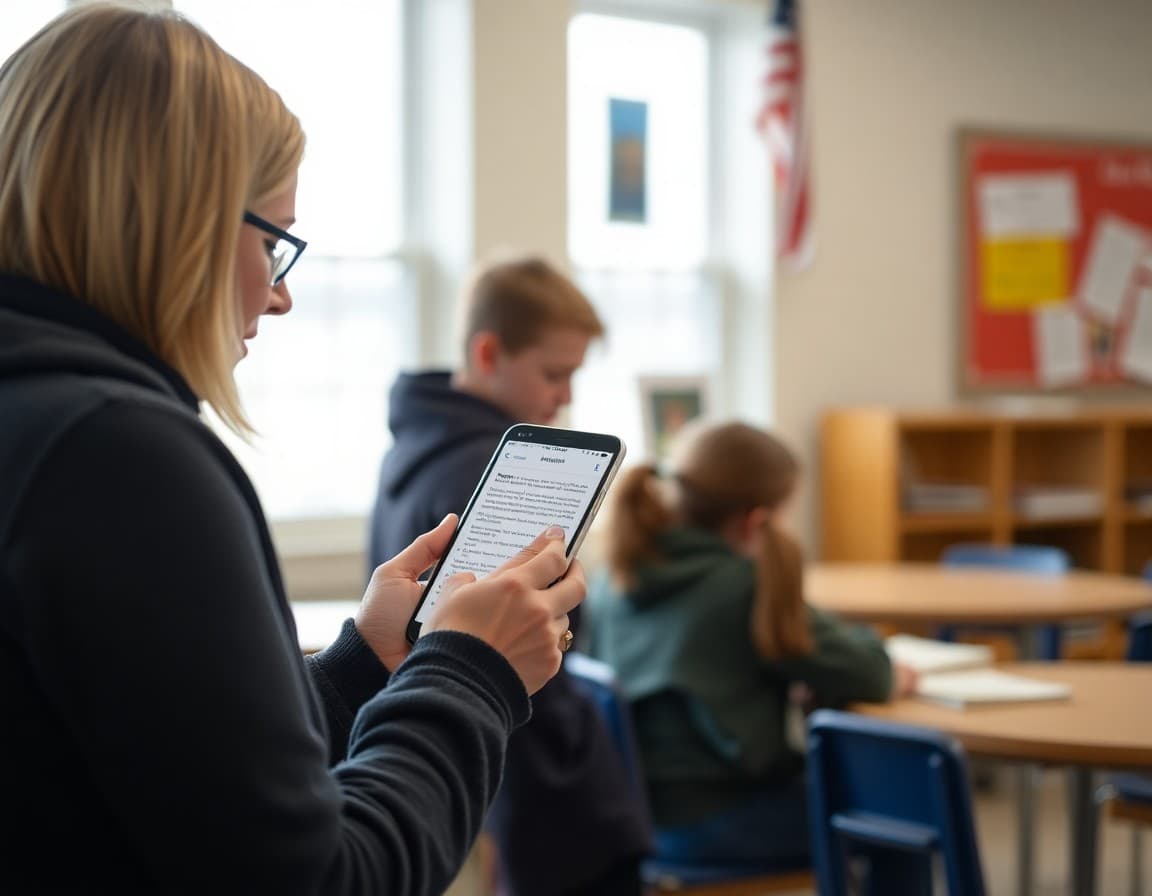
Maine is one of the few states that moved toward proficiency-based graduation requirements, and that shift created a significant parent communication challenge. Parents who went through a traditional letter-grade system often struggle to understand what proficiency grades mean, how they appear on transcripts, and whether colleges will know how to interpret them. Maine high school teachers who explain the proficiency system clearly in their newsletters do something essential: they translate the school's approach for families who are trying to support it.
Explain Proficiency-Based Grading in Plain Language
If your school or course uses proficiency-based grading, start every year with a clear explanation of what that means. Tell parents what the proficiency levels are (Beginning, Developing, Meets Standard, Exceeds Standard or whatever terminology your district uses). Tell them what "Meets Standard" looks like in your course specifically. Tell them how proficiency grades translate to letter grades on transcripts for college applications. And tell them how students who are not yet proficient can demonstrate mastery before the end of the semester. Parents who understand the system support their student more effectively than parents who are confused and anxious about grades they cannot interpret.
Communicate the SAT and College Readiness Information
Maine administers the SAT to all 11th graders at no cost during the school day. The score is the primary college readiness benchmark and connects directly to admission requirements at the University of Maine system. Tell parents the test date in the fall newsletter. Explain how your course builds the reading, writing, and math skills the SAT measures. Point families toward Khan Academy's free Official SAT Practice. For families in rural Maine where private test prep is not accessible, the school-day SAT may be the student's only formal test attempt, making preparation guidance from teachers particularly valuable.
Make the Maine Educational Opportunity Tax Credit Visible
Maine offers an educational opportunity tax credit for college graduates who live and work in Maine, designed to reduce the burden of student loan repayment. For Maine families who are weighing whether college is financially feasible, this is relevant information. While it is a post-graduation benefit rather than a current scholarship, mentioning it in a newsletter for older students shows parents that Maine is actively trying to keep college graduates in the state and that the state is invested in educational attainment.
Address Dual Enrollment and the Maine Community College System
Maine has a strong community college system, and dual enrollment partnerships allow high school students to earn college credits before graduation. For families in rural Maine where four-year college attendance is less common, community college dual enrollment can provide a realistic and affordable path to credential completion. Tell parents about dual enrollment options in your school, how credits transfer to the University of Maine system, and when course selection decisions need to be made.
Connect to Maine's Environment, Economy, and Culture
Maine's identity is shaped by its coastline, forests, lobster and fishing industry, outdoor tourism, and small manufacturing sector. Teachers who connect classroom content to Maine's specific context engage students and parents who see the relevance. A science teacher covering marine ecology and ocean acidification is connecting to something Maine families see in their fishing communities. An economics teacher discussing the tourism economy and seasonal employment is using an example every Maine family recognizes. That local grounding makes the content feel owned rather than imported.
A Sample Maine High School Newsletter Opening
Here is what a proficiency-system-aware opening looks like:
"Welcome to 10th grade English. This course uses proficiency-based grading. Your student will receive scores of Beginning, Developing, Meets Standard, or Exceeds Standard on each major assignment. A transcript sent to colleges will convert these to letter grades using our district's conversion scale. To Meets Standard means your student has demonstrated the skill at grade level. Students who do not yet Meet Standard can revise and resubmit major assignments before the end of each semester."
Leverage Maine's Small-Community Culture
In small Maine communities, teachers and parents often know each other outside school. That familiarity is an advantage in building trust, but it does not replace consistent professional communication. A newsletter keeps parents informed about what is happening in your classroom specifically, not just in the school generally. It also creates a record of what you communicated, which matters when a family questions a grade or assessment decision at the end of the year.
Send Consistently With Daystage
Maine's proficiency-based system, small-community culture, and rural geography all create specific communication demands. Daystage gives Maine teachers a fast and reliable way to meet those demands with a professional newsletter that reaches every family at once. You write your content, add your dates, and deliver in one click. The consistency is what turns good communication intentions into actual parent relationships.
Get one newsletter idea every week.
Free. For teachers. No spam.
Frequently asked questions
What is unique about parent communication in Maine high schools?
Maine was an early adopter of proficiency-based graduation requirements, which means many Maine students receive proficiency grades rather than traditional letter grades in some courses. This system is unfamiliar to parents who went through a traditional grading system. Teachers have an obligation to explain how proficiency grading works, what the graduation standards require, and how transcripts look to college admissions offices. That context is more important in Maine than in most other states.
What graduation requirements do Maine high school parents need to understand?
Maine requires students to demonstrate proficiency across specific learning standards, though districts have flexibility in how they implement the proficiency system. Teachers should communicate which standards their course addresses, what proficiency demonstrations look like, and what students need to do to meet graduation requirements. For families unfamiliar with proficiency-based learning, concrete examples of what proficiency looks like are more useful than abstract descriptions.
How should Maine teachers communicate about the SAT?
Maine administers the SAT to all 11th graders at no cost. The SAT is the primary college readiness assessment in Maine and connects to admission at Maine's public universities. Teachers should communicate the test date in the fall, explain how their course builds SAT-relevant skills, and point families toward free preparation resources. For students in rural Maine with limited access to test prep services, the teacher's newsletter is often the most reliable source of preparation guidance.
How do Maine teachers communicate with families in rural and coastal communities?
Maine has one of the largest rural populations of any state east of the Mississippi. Many Maine communities are small, remote, and have limited broadband access. Teachers in rural Maine should design mobile-friendly newsletters and use phone calls to supplement digital communication for hard-to-reach families. Maine's small-community culture also means teachers often know their students' families personally, which makes informal communication easier but makes consistent professional communication still valuable.
What tool helps Maine high school teachers send newsletters efficiently?
Daystage is a teacher-friendly newsletter platform that works well for Maine schools of all sizes. You write your content, organize it clearly, and send to all families at once. For Maine teachers in small rural schools and larger district schools alike, a fast and reliable communication tool saves time without sacrificing quality.

Adi Ackerman
Author
Adi Ackerman is a former classroom teacher and curriculum writer with 8 years in K-8 schools. She writes about school communication, parent engagement, and what actually works in real classrooms.
More for High School
Ready to send your first newsletter?
3 newsletters free. No credit card. First one ready in under 5 minutes.
Get started free