

March Newsletter Ideas for 9th Grade Teachers: What to Send This Month
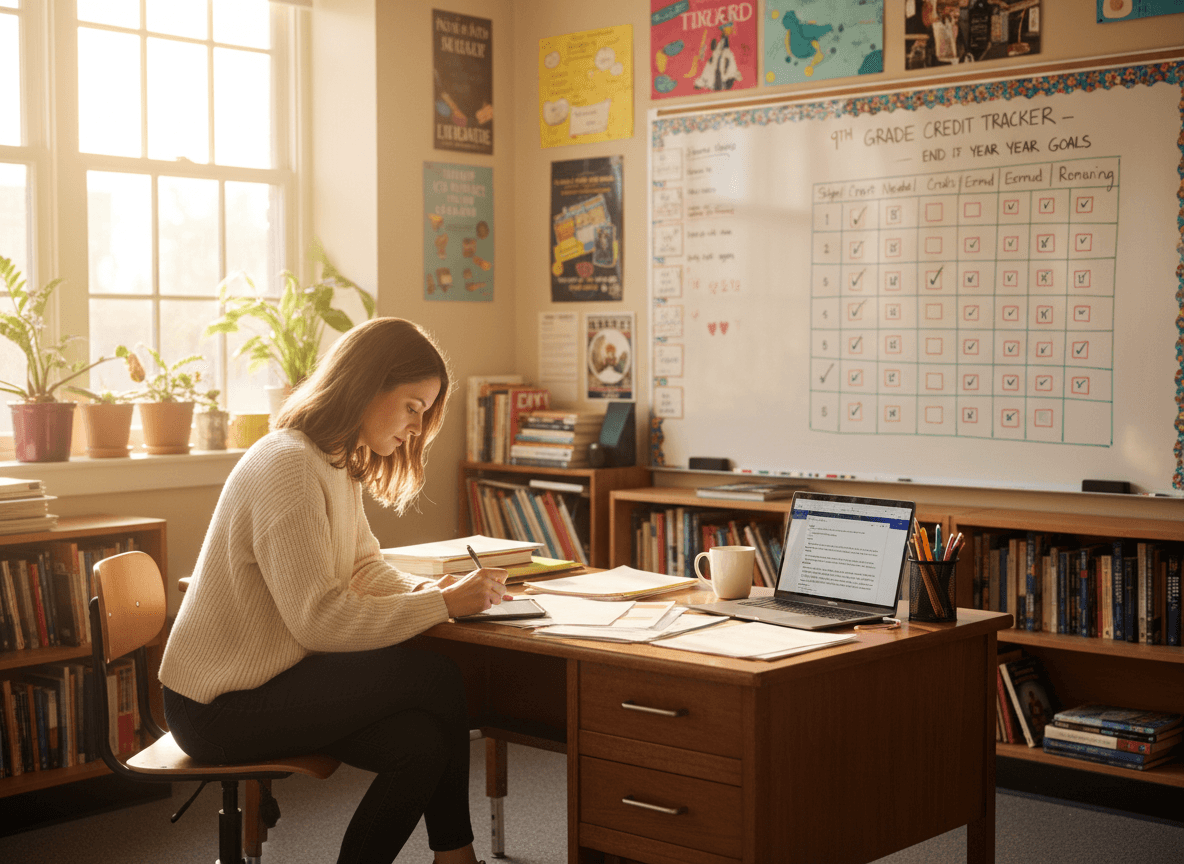
March of freshman year is the beginning of the end. The year is close enough to see the finish line, but far enough away that decisions made now still change the outcome. Your March newsletter is the communication that keeps freshman families from assuming everything is fine and missing something that matters before June.
Give families a credit standing update
High school credit is not automatic. Students earn it by passing their courses, and freshman year is when many students learn that truth for the first time. By March, you have enough data to tell families exactly where their student stands in terms of earning credit in your course. Be direct: if a student is on track, say so. If a student is at risk of not earning credit, say that too, and tell families what still needs to happen and by when.
Preview spring standardized testing
Many schools administer state standardized tests in March, April, or May. For freshmen who have not taken these tests before, the format, stakes, and logistics are unfamiliar. Tell families when testing is scheduled, what it covers, and what a student can do in the weeks before to be prepared. If your school's testing schedule creates schedule changes or altered class periods, mention that in the newsletter so families know what to expect on testing days.
Outline what the rest of the year looks like in your class
March is the right time to tell families what is left in your course before the end of the year. Major assignments, assessments, or projects that will determine final grades should be named now. Freshmen who know a major essay is due in April prepare differently than ones who see it on the calendar for the first time in late April. Parents who have this information can support their students without needing to track down the syllabus themselves.
Address spring break clearly
Spring break is coming and it means different things to different families. Tell parents when break starts and ends, whether any school work is expected during the break, and what you expect students to be ready for when they return. If there is a major assignment due shortly after break, say so now so families are not blindsided by a homework crisis on the last night of vacation. A brief note about safety and expectations over break is worth including, framed as awareness rather than a warning.
Prompt families about sophomore year course selection
Most schools finalize sophomore year course selection in the spring. March is when freshman families should be in active conversation with their student about what to take next year. Encourage parents to ask their student which classes they are strongest in and to talk with the school counselor about the sophomore course options that make sense based on this year's performance. Course selection made in March reflects an informed view of the year. Course selection made under deadline pressure in May does not.
Speak to students who are struggling
Some freshman families reading your March newsletter are carrying real concern about their student. Acknowledge them directly. Tell parents who have a struggling student what the recovery path looks like, who to contact, and what the timeline is for any final interventions before grades close. Those families need specific information, not encouragement. Give them both.
Close with what strong finish means in your class
End your March newsletter by telling families what a strong finish to freshman year looks like in your course specifically. What does it mean to earn full credit, to end with a grade you are proud of, to build the foundation for sophomore year? Freshmen who hear that message from their teacher in March, and whose parents reinforce it at home, are the ones who follow through in April and May.
Get one newsletter idea every week.
Free. For teachers. No spam.
Frequently asked questions
What should a 9th grade March newsletter focus on?
March is when freshman year enters the final stretch. Spring standardized testing is approaching for many students, end-of-year credit standing is becoming visible, and spring break is both a practical and social topic for families. Your newsletter should help parents understand where their freshman stands in terms of full-year credit completion, what testing is coming, and what the last two months of the year will require.
How do I communicate about state testing in a 9th grade newsletter?
Be specific about dates and logistics. Tell families when testing is scheduled, what subjects are covered, what the test environment requires of students, and whether there is anything at home they can do to help their student prepare. Many freshmen have not taken high-stakes standardized tests in high school before. Parent awareness about testing schedules helps students show up prepared rather than surprised.
What should I say about credit standing for freshmen in March?
By March, families should have a clear sense of whether their student is on track to earn full credit in every course. If a student is borderline in any class, March is the last reasonable window to address it before the end-of-year crunch. Tell parents what the minimum passing grade is, what the credit hour requirement looks like for your course, and what options exist for students who are currently not passing.
How should I handle spring break safety reminders in a school newsletter?
Keep it brief and non-alarmist. A sentence or two that acknowledges the break is coming, encourages families to know their student's plans, and reminds students of school behavioral expectations that continue over break is sufficient. You do not need to write a safety guide. You just need parents to know you are thinking about the whole student, not just the academic grade.
What newsletter tool works best for high school teachers?
Daystage helps high school teachers send timely, organized newsletters that cover credit standing, testing, and end-of-year topics without requiring a long formatting process. For 9th grade teachers writing a March newsletter with multiple parent-facing updates, Daystage makes it easy to build a clear communication that reaches every freshman family in one send.

Adi Ackerman
Author
Adi Ackerman is a former classroom teacher and curriculum writer with 8 years in K-8 schools. She writes about school communication, parent engagement, and what actually works in real classrooms.
More for High School
Ready to send your first newsletter?
3 newsletters free. No credit card. First one ready in under 5 minutes.
Get started free