
June Newsletter Ideas for 10th Grade Teachers: What to Send This Month

Sophomore year is crossing the finish line, and your June newsletter is the last communication most of these families will receive from you. Final exams are immediate. Junior year is weeks away in calendar terms and months away in preparation terms. Use this newsletter to close the year cleanly and set families up for a productive summer.
Start with final exam logistics
Date, time, format, and scope. Tell families how the final exam affects the overall grade, what the exam covers, and whether any materials are permitted. If you have a review guide, link to it or describe it briefly. Parents who know the exam structure can support their student more effectively than parents who have only been told there is a test at the end of the year. Put this section first.
Confirm junior year course registration
By June, junior year schedules should be finalized or accessible in the portal. Direct families to check the confirmed schedule and note who to contact if there is an error. If the window for course changes is still open, include the deadline. A student who discovers a scheduling problem in August has significantly fewer options than one who catches it in June. This is worth one paragraph in the newsletter.
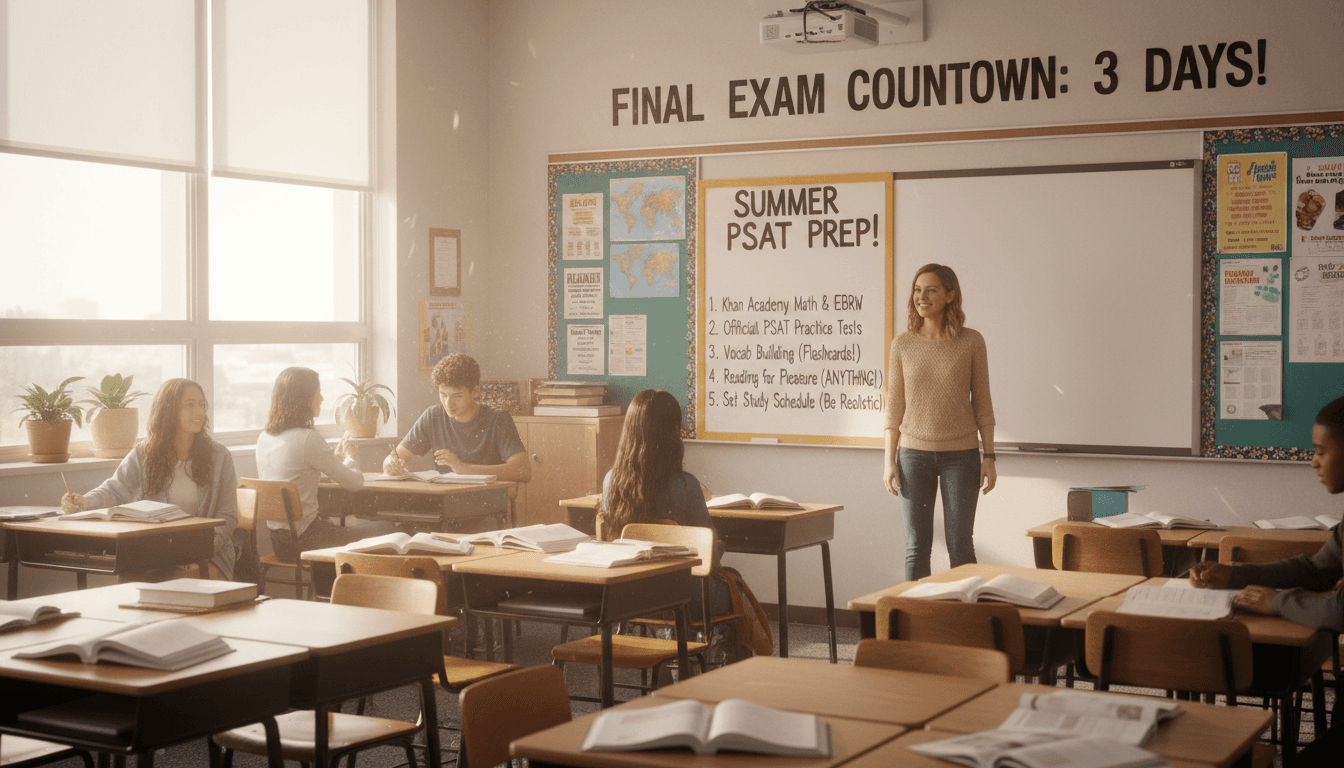
Introduce PSAT prep for the summer
The PSAT is in October of 11th grade, and students who do even a modest amount of preparation over the summer tend to perform meaningfully better than those who walk in without any review. Mention Khan Academy's official PSAT prep program, which is free and built in partnership with the College Board, and suggest families bookmark it for a few sessions over July and August. This is especially useful for first-generation students whose families are less familiar with the College Board ecosystem.
Be honest about what junior year involves
Junior year is harder than sophomore year in almost every way. More AP options, higher workload, and college prep beginning in earnest. Families who understand this going into summer approach September differently than families who find out after the first AP unit test. A brief, honest preview of what your subject looks like in 11th grade gives families context without alarming them. Preparation is the antidote to surprise.
Include any summer academic prep needs
If there is foundational knowledge students should solidify before junior year in your subject, name it and link to a resource. A student heading into AP Chemistry who reviews unit conversions and atomic structure over the summer is not starting from zero in September. A student heading into AP English who reads one book and keeps a reading journal arrives with their analytical muscles active. Specific recommendations are more useful than general encouragement to stay sharp.
Acknowledge what sophomore year was
Sophomore year sits in the middle. Not the transition of freshman year, not the urgency of junior year, not the finality of senior year. Students in the middle can feel invisible, and their families often do too. A short paragraph recognizing what the class accomplished, what growth you observed, or what work you are proud of is worth the two minutes it takes to write. It is the kind of communication families do not forget.
Point to college prep resources for the summer
Sophomore families who are starting to think about college do not always know where to begin. A short note mentioning that the school counselor is available for college planning conversations, that Common App opens in August, or that summer is a good time for informal campus visits gives families a starting point. You are not replacing the counselor's role. You are pointing families toward the right people and the right timing.
Keep it under 400 words and send it before finals
The June newsletter should arrive the week before final exams begin. Families who get it during exam week will read it after exams are over, which is too late for the logistics to be useful. Keep the total length under 400 words, use headers for exam information and junior year prep, and end with something brief and genuine. This is the last communication before summer. Make it one that closes the year well.
Get one newsletter idea every week.
Free. For teachers. No spam.
Frequently asked questions
What should a 10th grade June newsletter include?
Final exam logistics, junior year course confirmation status, summer PSAT prep resources, and a brief close to sophomore year. June is the last communication window before summer, so it needs to cover everything families need while staying short enough to actually get read. Clear headers help families find what is relevant to them quickly.
How do I communicate about PSAT prep in the June newsletter?
Keep it simple. Tell families the PSAT is in October of junior year, note that Khan Academy offers free official prep through its College Board partnership, and encourage students to do a few hours of review over the summer. First-generation students whose families are not familiar with standardized testing timelines benefit especially from seeing this information in writing from a teacher they know.
Should I confirm junior year course schedules in the June newsletter?
Yes. By June, most schedules should be finalized or close to it. Direct families to the portal to verify their student's junior year courses, note any deadline for changes, and include the contact information for the counselor or scheduling office. A student who wanted AP History and ended up in standard is better positioned to fix it in June than in August.
How do I handle the end of sophomore year in the newsletter?
Be direct and specific. Sophomore grades are the first ones college admissions readers look at closely, and finishing the year strong is genuinely meaningful. Acknowledge what the class covered, note any final grade submission timeline, and give families one or two concrete things to do before September. Ending with substance, not just well-wishes, is the right tone.
What newsletter tool works best for high school teachers?
Daystage helps 10th grade teachers close out the year with a clean, organized final newsletter that covers multiple topics without feeling cluttered. You can add exam dates, a PSAT prep link, and a counselor contact in a single well-structured send. Teachers who use Daystage consistently say the end-of-year newsletter is one of the easiest to produce because the format does the organizational work for them.

Adi Ackerman
Author
Adi Ackerman is a former classroom teacher and curriculum writer with 8 years in K-8 schools. She writes about school communication, parent engagement, and what actually works in real classrooms.
More for High School
Ready to send your first newsletter?
3 newsletters free. No credit card. First one ready in under 5 minutes.
Get started free