

June High School Parent Newsletter Template: What to Include This Month
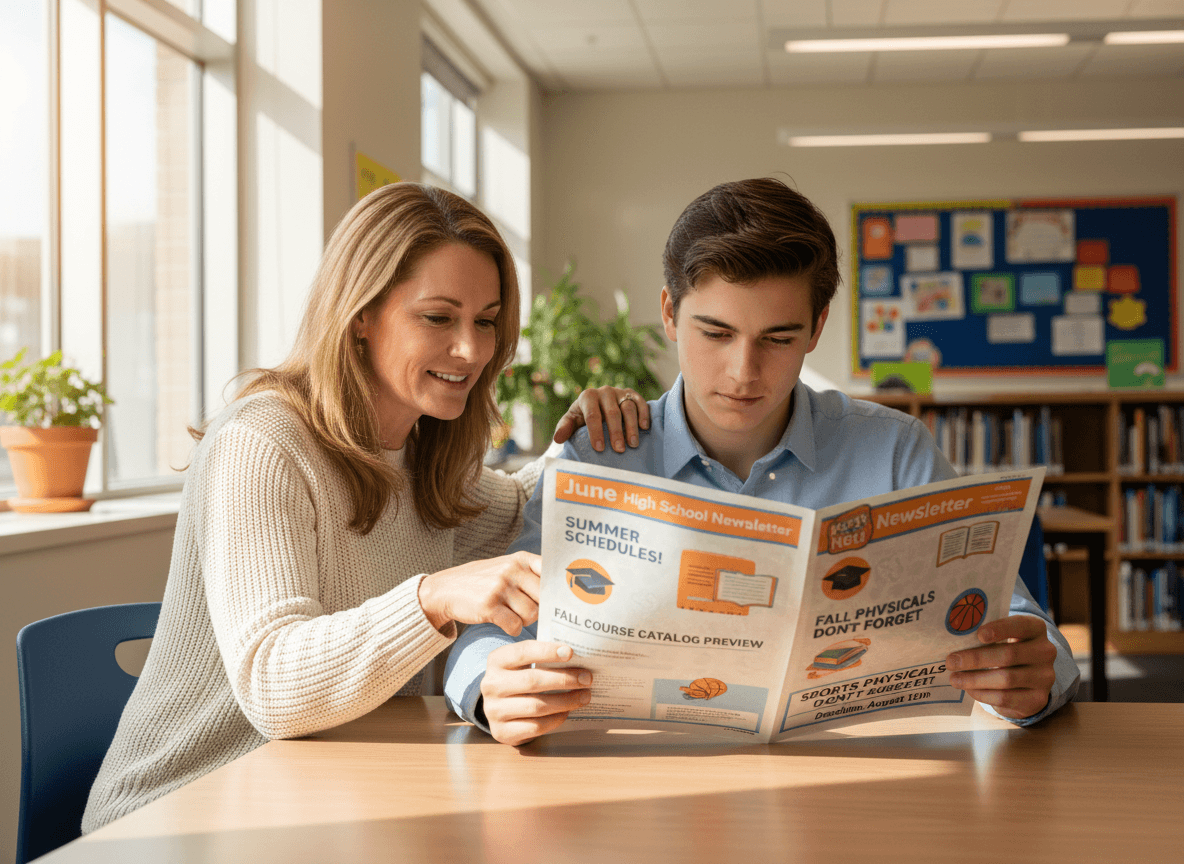
The June newsletter is the last thing many families hear from school before summer. That gives it more weight than most communications you send all year. Done well, it closes out the school year and sets expectations for what comes next. Done poorly or skipped entirely, families head into summer without knowing about summer programs, course confirmations, sports physicals, or summer reading. Here is what to include.
Send it before school ends, not after
The most common mistake with the June newsletter is sending it too late. Once the last week of school arrives, students and families are mentally past the year. The newsletter you send on June 14th after grades are out and lockers are cleaned out will get half the readership of the same newsletter sent on June 1st. Plan to send in the first week of June. Frame it as the summer transition guide. Families who are still in school mode will read it carefully and save the details.
Section 1: Graduation logistics for senior families
If graduation falls in June rather than May, give senior families the complete logistics guide in this newsletter. Date, time, venue, ticket distribution, parking, arrival time, dress code reminders, and the rehearsal schedule. Include a counselor contact for families with final transcript requests or grade verification questions. For seniors who have already graduated by the time June arrives, a brief congratulatory note and any remaining school business, such as returning equipment or collecting final records, is appropriate.
Section 2: Summer programs and enrichment opportunities
District and school-sponsored summer programs deserve the most prominent placement here because families often do not hear about them elsewhere. Include the program name, what it covers, who it is for, the registration deadline, and a contact or link for more information. For rising juniors and seniors, note any college access or SAT prep programs available. For students who need credit recovery, list those options without singling anyone out. Two or three programs with complete information is more useful than a long list without details.
Section 3: Course selection confirmation for next year
This section prevents a significant volume of fall schedule confusion. Tell families how to view their student's confirmed course schedule, the deadline for requesting changes before the fall, the process for submitting change requests, and who to contact with questions. For rising freshmen transitioning from middle school, confirm their course list and include a note about what to expect from the first-day schedule pickup process. Families who see their student's schedule in June have the summer to address errors, rather than showing up on the first day of school with a problem.
Section 4: Summer reading and fall prep assignments
If your school or department assigns summer reading, the June newsletter is the definitive place to communicate it. Include the title or titles, where students can find or purchase the book, any assignment that accompanies the reading, and when students will be assessed in the fall. For AP and honors students, note any summer prerequisite work for their fall courses. Students who receive this information in June rather than July have more time to find materials and plan their summer reading around vacations and other activities.
Section 5: Fall sports physicals
Fall sports seasons open in August, and student athletes need physicals before they can participate. Include the physical deadline for your school or district, where the physical forms are available, and any district-run physical clinic dates in July or August. Families who receive this reminder in June book appointments before summer schedules fill up. Families who receive it in late August either scramble to find an appointment or miss the first week of practice. This is a short section that does a lot of work.
Section 6: A note of appreciation before you close
The end of the June newsletter is a natural place for one brief, genuine note thanking families for their engagement during the year. Not a formal paragraph of filler, just two or three sentences that acknowledge the year and express something specific about the class or community. Families remember how communication made them feel, and a June newsletter that ends with warmth sets the tone for the relationship you pick up again in September.
Sending the final newsletter of the year with less friction
The June newsletter often gets rushed or skipped because teachers are managing end-of-year grading, checkout procedures, and their own planning. Daystage lets you draft each section independently, come back to it as information becomes available, and send when the newsletter is ready. Everything arrives in parent inboxes directly, formatted for mobile, with no login required on the family's end. For the one newsletter that has to carry families from June to September, that reliability matters.
Get one newsletter idea every week.
Free. For teachers. No spam.
Frequently asked questions
What should a June high school parent newsletter include?
Graduation logistics for senior families, summer program information for students in all grades, course selection confirmation details, summer reading assignments, and fall sports physical requirements. June is the last newsletter most teachers send before summer, which means it carries more responsibility than most. Families who receive a well-organized June newsletter start the summer with a clear picture of what comes next and what needs to happen before fall.
How do I handle the June newsletter when school ends mid-month?
Send the June newsletter in the last week of May or the first day of June. Do not wait until mid-June when school is already winding down. The goal is to reach families while they still have school routines in place and are likely to read and act on the information. A June newsletter sent on June 15th often goes unread because families are already mentally past the school year. Send it early and reference it as the summer transition guide.
What summer program information should I include in the June newsletter?
Any district or school-sponsored summer programs your students are eligible for, with application or registration deadlines. Academic enrichment programs for students who want to stay ahead. College access programs for rising juniors and seniors. Credit recovery options for students who need them. You do not need to include every program in existence. Focus on the ones your specific students are most likely to benefit from and where you have enough information to give families a useful summary.
Should the June newsletter confirm course selections for next year?
Yes, and this is one of the highest-value sections you can include. Families who see their student's confirmed course list in the June newsletter have the summer to ask questions, request changes if something looks wrong, and prepare for what the fall schedule will look like. Include the process for requesting a schedule change before the fall deadline, the name and contact for the school counselor handling requests, and any deadlines for changes. For rising freshmen, a course confirmation note is especially reassuring.
What newsletter tool works best for high school teachers sending June parent newsletters?
Daystage works well for the June newsletter because it lets you organize graduation details, summer programs, course confirmations, and fall prep into separate sections without the newsletter becoming overwhelming. You can send it directly to parent inboxes, and it reads cleanly on mobile, which matters in June when families are busy and reading on their phones. Teachers who use Daystage for the final newsletter of the year report that it sets a strong tone for the fall communication relationship they continue in September.

Adi Ackerman
Author
Adi Ackerman is a former classroom teacher and curriculum writer with 8 years in K-8 schools. She writes about school communication, parent engagement, and what actually works in real classrooms.
More for High School
Ready to send your first newsletter?
3 newsletters free. No credit card. First one ready in under 5 minutes.
Get started free