
Journalism High School Newsletter: Learning Updates for Parents
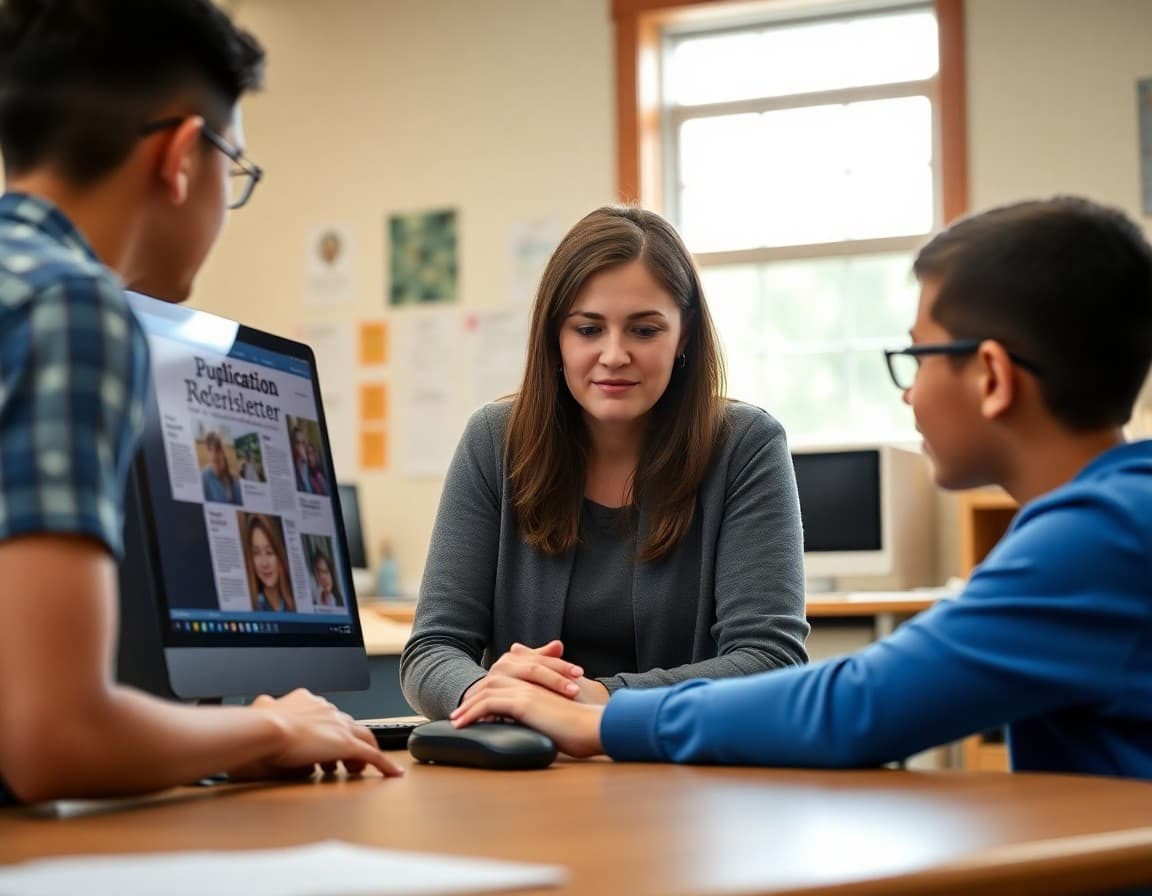
Your journalism students are reporting on the school board's decision about next year's course offerings. They are interviewing administrators, attending public meetings, and learning how to write a lede that pulls readers in without burying the news. Their parents have no idea this is happening. A journalism newsletter closes that gap and turns a course that is often underfunded and underappreciated into something the school community takes seriously.
Lead With the Publication, Not the Lesson
Journalism class has an asset most courses do not: the work is public. Lead every newsletter with a link to the most recent issue of the school paper, the news website, or the broadcast segment. When parents can read or watch what their student produced, the newsletter becomes an invitation to engage rather than just a status update. "This month's edition of The Torch is live. Students covered the new AP course additions, the results of the student election, and a profile on the school's longest-serving custodian." That one paragraph sends parents to the work.
Name the Specific Journalism Skills in Focus
Parents often think journalism class is about writing. It is also about interviewing, source evaluation, photo editing, headline writing, layout design, ethics, and media law. Each month, tell parents which skills are in focus. "This month students are learning to write a hard news lede that answers who, what, when, where, and why in the first two sentences and to use only attributed information in the first paragraph." That description makes the skill visible and shows parents the course has clear technical standards.
Explain the Editorial Process
Many parents do not know what happens between a student pitching a story and that story appearing in print or online. Walk them through it. Story pitch, editor feedback, reporting and interviews, first draft, copy edit, fact-check, design layout, final approval. Showing parents the editorial pipeline explains why stories take time and why quality matters. It also explains why their student might be staying late to finish a piece the night before publication.
Address Media Literacy Directly
Parents in every community worry about misinformation. Your journalism class is one of the few places in the school day where students actively study how information is produced, verified, and distributed. Tell parents that. "Students are analyzing three news articles on the same event from different outlets and identifying which facts are verified, which are disputed, and where the headlines overstate the reporting." Parents who hear this see journalism class as directly useful for navigating the information environment their student already lives in.
Preview the Next Publication Deadline
Journalism runs on deadlines. Tell parents when the next issue goes out, what the editorial theme or lead story focus is, and what students need to complete before that date. A clear deadline section helps students who procrastinate (which is most of them) and gives parents a natural checkpoint to check in. "The October issue publishes on October 14. All photo assignments are due October 9. Late submissions delay the entire issue."
A Sample Journalism Newsletter Skills Section
Here is what a clear skills update looks like:
"This month we focused on interviewing. Students conducted at least two recorded interviews per story, practiced follow-up questions, and learned to paraphrase versus quote directly. The hardest skill students are developing right now is asking a question and then staying quiet long enough for the source to answer fully. It requires more patience than most students expect."
That paragraph covers the skill, the specific practice, and the honest challenge students are navigating. It sounds like a real classroom.
Connect Journalism to College Applications
Journalism builds a visible portfolio. Students who write for the school paper, edit a section, or serve as editor-in-chief have a concrete body of published work to reference in college applications. They can submit clips, list editorial leadership, and write essays about their experiences covering real stories. Tell parents that in your newsletter, especially in the fall when college applications are on every family's mind.
Keep the Channel Open With Daystage
A journalism newsletter that goes out before each publication cycle keeps parents informed and the program visible. Daystage makes it easy to build, format, and send that newsletter in one place. You add your links to student work, list the upcoming deadlines, and deliver to all families in one click. For a program whose output is public, the newsletter is the bridge between what students produce and the parents who should be reading it.
Get one newsletter idea every week.
Free. For teachers. No spam.
Frequently asked questions
What should a high school journalism class newsletter cover?
Cover what students are producing this month, the editorial and reporting skills they are building, upcoming publication deadlines, and any public-facing work parents can read. Journalism class has a natural advantage over other subjects: the work is often public. Directing parents to the student paper or website is one of the most effective things a journalism newsletter can do.
How do I explain media literacy skills to parents?
Tie it to something parents already care about: the ability to tell good information from bad. Tell parents students are learning to evaluate the credibility of a source, identify bias in reporting, and distinguish between a news story and an opinion piece. Frame it as critical thinking applied to media, which is a skill parents universally want their student to develop.
How should I communicate about sensitive topics that students might cover in the school paper?
Be transparent about your editorial standards and the process students follow before a story is published. Explain that student journalists learn to verify facts, seek multiple sources, and consider how coverage affects the school community. Parents who understand the journalistic process are less likely to be alarmed by a sensitive story and more likely to see it as an example of serious student work.
How do I handle First Amendment discussions in a journalism newsletter?
Explain the legal framework briefly: the Hazelwood decision gives school administrators some authority over school-sponsored publications, and the Student Press Law Center provides guidance on student press rights in each state. Tell parents that your class covers these rights and responsibilities directly and that students are expected to act as ethical journalists, not just content creators.
What tool does a journalism teacher use to send a professional newsletter fast?
Daystage is a strong option. You write your content, add links to student publications, list upcoming deadlines, and send to all families at once. It is faster than formatting a newsletter manually and more reliable than a flyer that sits at the bottom of a backpack.

Adi Ackerman
Author
Adi Ackerman is a former classroom teacher and curriculum writer with 8 years in K-8 schools. She writes about school communication, parent engagement, and what actually works in real classrooms.
More for High School
Ready to send your first newsletter?
3 newsletters free. No credit card. First one ready in under 5 minutes.
Get started free