

January High School Parent Newsletter Template: What to Include This Month
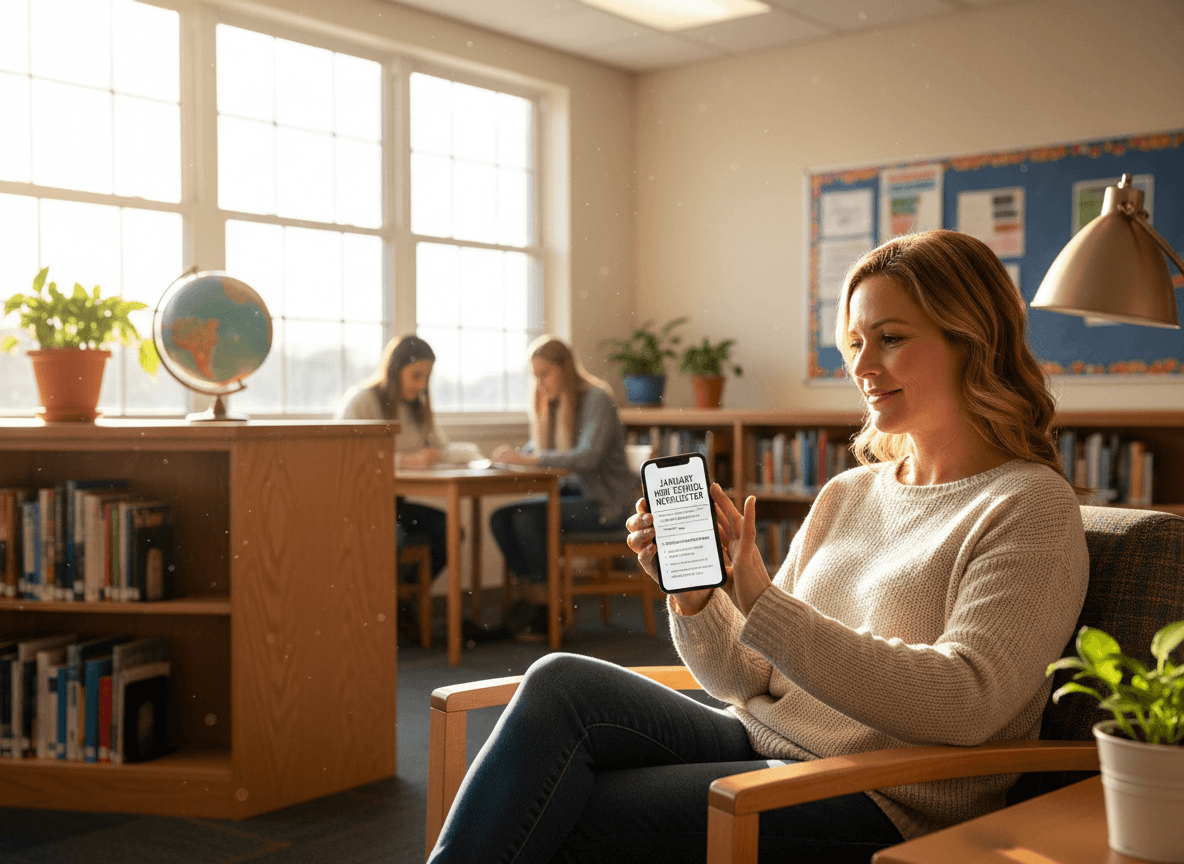
January is one of the most important months to send a parent newsletter at the high school level. The first semester is on the transcript. The second semester is starting. College deadlines are active for seniors. Course selection is approaching for underclassmen. Your families need a clear, organized communication that helps them understand what is happening and what they need to do about it. Here is a template that works.
Why January matters for high school families
Families often receive less direct communication from high school teachers than from elementary or middle school teachers. January is the moment when that gap shows up most clearly. First-semester grades are posted, course selection windows are opening, and college-related decisions are compounding for families of juniors and seniors. A January newsletter that addresses these items directly is genuinely useful, not just a check-the-box communication.
Section 1: Second semester kickoff
Open with the second semester start date, any schedule changes, and a brief preview of what the semester covers in your course. Families who returned from winter break already know school is restarting. What they want to know is what changes and what stays the same. If there are new classroom expectations, a new grading structure, or a major project starting in January, name it here.
Section 2: First semester grades and what they mean
Address grades directly. If your school uses a semester-plus-semester grading structure, explain how first-semester grades combine with second semester to form a final grade. A student who earned a C in the first semester can still earn a B for the year with a strong second semester. Families who understand the math are more motivated to support their student's second-semester effort. This section should be one short paragraph, not a long explanation.
Section 3: Senior college application reminders
Regular decision deadlines for most colleges fall in early January. By the time your newsletter arrives, the deadlines may have passed, but there is still action required: checking application portals for missing materials, submitting financial aid documents, and staying active on scholarship applications. A short paragraph reminding senior families to log into their college portals and check for any outstanding items is one of the most useful things you can put in a January newsletter.
Section 4: Course selection for underclassmen
In many high schools, course selection for the following year happens in late January or February. Give families a brief overview of the timeline, how course recommendations work, and who to contact with questions. Families who are prepared for the course selection conversation with their student and their counselor make better decisions than families who encounter the process without context.
Section 5: January dates
MLK Day, any grade-level events, the course selection timeline, report card distribution date, and back-to-school night if your school runs one in January. Keep this section as a clean list. Families scan dates. They do not read paragraphs about dates.
Sample January newsletter structure
Here is a template you can adapt directly. Start with a two-sentence welcome back. Follow with a short paragraph on second semester, one on grades and GPA context, one on senior deadlines, one on course selection, and a dates list at the bottom. Total length: 350 to 450 words. Send it on a Tuesday or Wednesday in the first week of January. That is the newsletter that gets read.
Making it happen without a formatting marathon
The reason most high school teachers do not send a January parent newsletter is not that they lack ideas. It is that the production process takes too long. Daystage lets you draft the structure above, add your specific content, and send it directly to parent inboxes in under 20 minutes. The newsletter arrives formatted correctly in Gmail and Outlook, reads cleanly on mobile, and does not require parents to click a link or log in anywhere. That is the January newsletter that actually gets opened.
Get one newsletter idea every week.
Free. For teachers. No spam.
Frequently asked questions
What should a January high school parent newsletter include?
Second semester start date and any schedule changes, midterm results context and what grades mean for the full-year GPA, upcoming college deadlines for seniors, course selection information for underclassmen, and any January events like MLK Day or exam result posting dates. January is one of the most action-rich months of the school year, and a well-organized newsletter helps families stay on top of the decisions landing in their lap.
When should I send the January high school newsletter?
Send it in the first week of January, ideally Tuesday or Wednesday. Families who have just returned from winter break are actively checking email and are mentally back in school mode. A newsletter that arrives in the first week captures that attention window before the second semester routines set in and families become less responsive to school communications.
How should I address midterm results in the January newsletter?
Address midterm results directly without singling out individual performance. Acknowledge that first-semester grades are now on the transcript and that the second semester is an opportunity to build on them. Explain how the grading structure works if the two semesters combine into a final grade, so families understand the specific impact of second-semester performance. Families who understand how the math works are more likely to help their student make a real second-semester effort.
What college application information should I include for seniors?
January is when regular decision deadlines are happening or have just passed for most schools. Remind seniors to check their application portal for any missing materials, financial aid verification, and scholarship applications still open. Point families to the guidance counselor as the resource for any outstanding items. A brief note in the newsletter is often what catches a family that has let something slip.
What newsletter tool works best for high school teachers sending to parents?
Daystage is built for exactly this kind of multi-section school newsletter. You can organize the January newsletter with clear sections for each audience (seniors, juniors, general families), add links to important deadlines, and send the whole thing directly to parent inboxes in a format that reads cleanly on any device. Teachers who use Daystage for monthly parent newsletters report that families engage more than they did with previous tools because the newsletter arrives in-line in their email, not as a link they have to click.

Adi Ackerman
Author
Adi Ackerman is a former classroom teacher and curriculum writer with 8 years in K-8 schools. She writes about school communication, parent engagement, and what actually works in real classrooms.
More for High School
Ready to send your first newsletter?
3 newsletters free. No credit card. First one ready in under 5 minutes.
Get started free