
High School STEM Newsletter: Communicating Science, Technology, and Engineering Programs

STEM programs in high schools sit at an interesting intersection. They are academically rigorous, increasingly tied to workforce outcomes, and often the most visible part of a school's identity when students compete in robotics tournaments or science fairs. But the families most affected by STEM program decisions, course sequences, competition participation, specialized equipment access, are often the least informed about what those decisions are.
A STEM newsletter bridges that gap. Not by explaining science to families, but by explaining the program itself: what is happening, what opportunities exist, and what students need to do to access them.
Course Sequence Clarity: The Highest-Value Content
The single most useful thing a STEM newsletter can do is help families understand the course sequence and what decisions to make when. STEM course pathways in high school involve prerequisite structures that are not always obvious: the freshman who takes the wrong math track closes off AP Physics by junior year. The sophomore who does not know dual enrollment exists misses the chance to take college-level engineering courses for free.
Once per semester, publish a clear course pathway overview. Show the recommended sequences for students heading toward engineering, computer science, health sciences, and environmental science. Include when enrollment decisions happen, who to talk to, and what preparation is required for advanced courses. This single piece of content is worth more than six months of event announcements.
Competition and Project Highlights
STEM competitions are where the program becomes visible. Robotics tournaments, science olympiad events, FIRST competitions, regional science fairs, technology challenges. Families of participants know when these happen. Families of other students, and the broader school community, often do not.
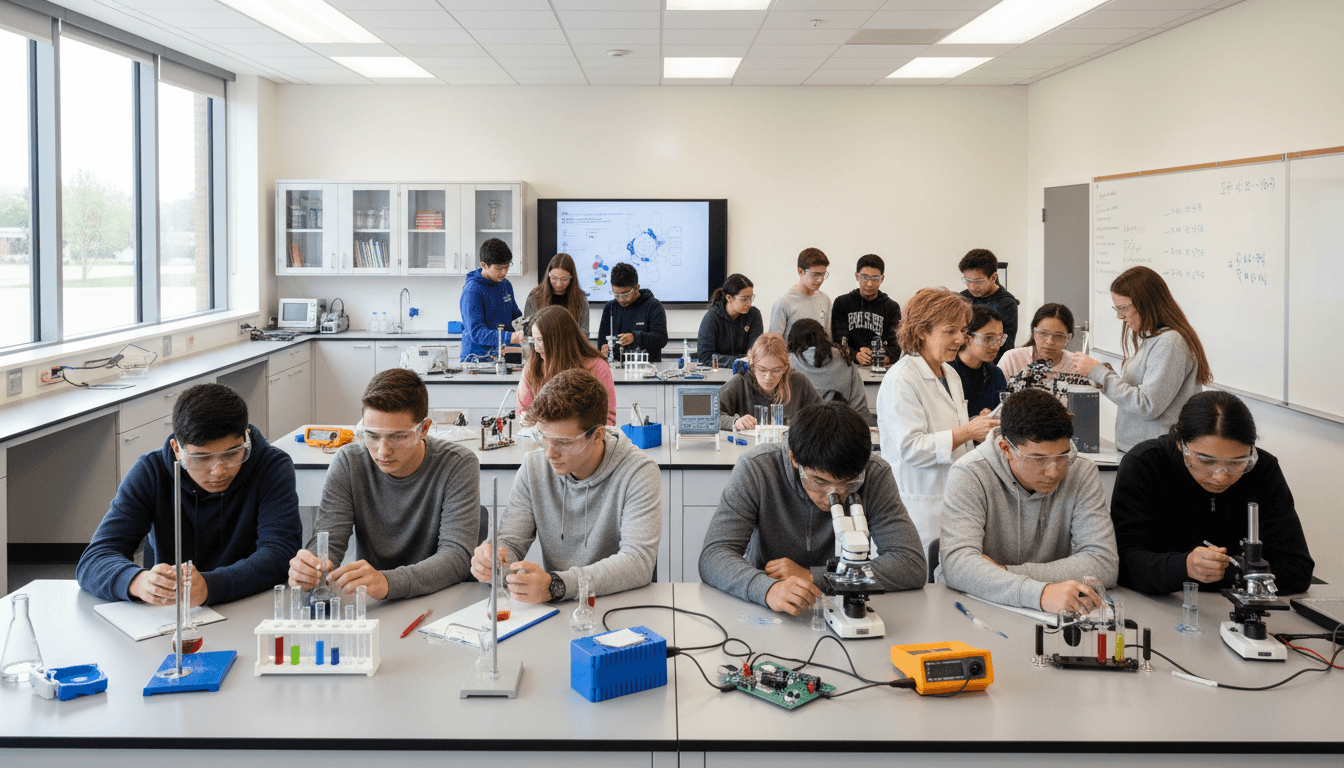
A STEM newsletter that covers competition results, with a brief description of what the competition involves and what students built or solved, extends the program's visibility beyond the small group of families already inside it. Include photos when possible. A picture of students with a robot they built carries more weight than three paragraphs about engineering design principles.
Research, Internship, and Program Opportunities
High school students have access to STEM opportunities that most families do not know exist. Summer research programs at universities, state science competitions, paid STEM internships through district or community partnerships, science teacher training programs that include student components. These opportunities tend to reach students who already have advocates at home. A newsletter ensures they reach every family.
When including an opportunity, give families the practical details: who is eligible, when the application is due, whether there is a cost, and who at school can help a student apply. Remove the friction between knowing an opportunity exists and acting on it.
Making STEM Relevant to Career Outcomes
High school families making course decisions respond to information about outcomes. A brief alumni spotlight once a semester, with a former student describing what they studied in high school and where it led, is among the most effective content a STEM newsletter can include. Not abstract career statistics. An actual person, from this school, who can trace a line from AP Chemistry or the robotics team to what they are doing now.
Pair alumni profiles with concrete data when available: the percentage of STEM pathway completers who received merit-based college scholarships or enrolled in four-year programs in STEM fields. Families making decisions about course loads and extracurricular time want to know that the investment is connected to something real.
Equipment, Lab Access, and Resource Updates
STEM programs often receive grants, donations, and upgraded equipment in ways that go uncommunicated to families. New 3D printers, a coding lab upgrade, a partnership with a local university that gives students access to research facilities. These are not just interesting updates. They are evidence that the program is alive and growing.
When the department receives new resources, say so in the newsletter. Include who donated, what the equipment enables, and how students will use it. This acknowledges donors, builds program credibility, and gives families a concrete picture of what the school is investing in.
Get one newsletter idea every week.
Free. For teachers. No spam.
Frequently asked questions
When should high school STEM programs send newsletters to families?
Send a program overview in September that maps out the full course sequence and competition calendar for the year. Follow with competition-specific issues in the three to four weeks before major events, and a spring issue during course selection season when students in grades 9 and 10 are deciding their academic path for the following year.
What should a high school STEM newsletter include?
The course sequence from introductory to advanced levels, upcoming competition dates and what they involve, summer programs and research opportunities with deadlines, student project highlights, any industry partnerships or guest speaker events, and specific college and career outcomes tied to each STEM pathway.
How should high schools communicate STEM opportunities to families of students in grades 9 and 10?
Frame the course sequence as a decision that needs to be made early, because students who skip pre-calculus in 9th grade often cannot complete the calculus requirement needed for competitive STEM college programs. A September or October newsletter reaching freshmen families has a concrete impact on the decisions they make in spring course selection.
What are common challenges with high school STEM program communication?
STEM programs often under-communicate to families who are not already aware of them, which means the students who would benefit most from advanced STEM pathways are the last to learn they exist. Competition participation in particular tends to be concentrated among students whose families already know to look for it.
How can Daystage support high school STEM newsletter communication?
Daystage lets STEM department leads build a recurring newsletter schedule tied to the competition and course selection calendar, so families receive timely program information without the department having to manually trigger each send during the busiest weeks of the school year.

Adi Ackerman
Author
Adi Ackerman is a former classroom teacher and curriculum writer with 8 years in K-8 schools. She writes about school communication, parent engagement, and what actually works in real classrooms.
More for High School
High School Student Journalism Newsletter: Communicating About the School Newspaper and Media Program
High School · 5 min read
High School Arts Program Newsletter: Communicating Visual, Music, and Theater Programs
High School · 6 min read
High School Dual Enrollment Newsletter: What Families Need to Know
High School · 5 min read
Ready to send your first newsletter?
3 newsletters free. No credit card. First one ready in under 5 minutes.
Get started free