
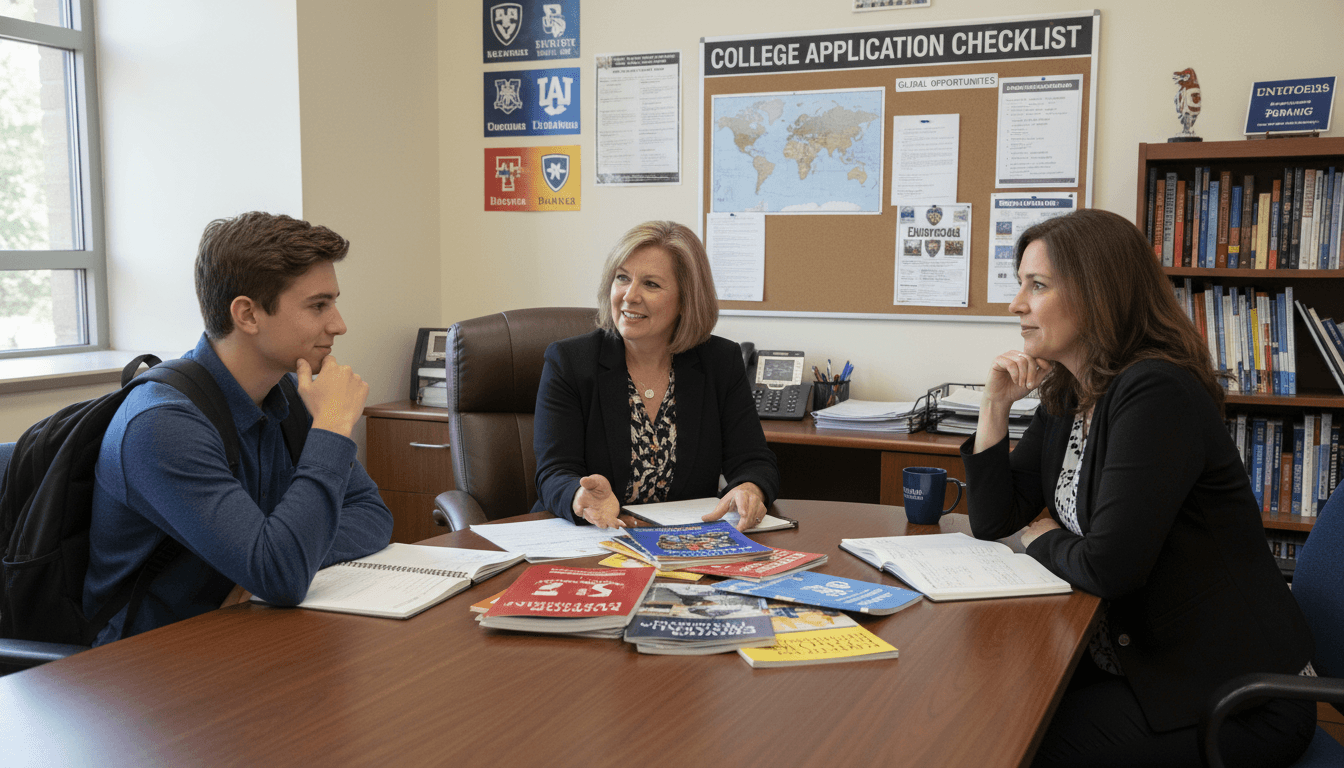
High School School Counselor Newsletter: College Prep Communication Guide

High school counselors carry the most complex college communication responsibility in any school building. Four grade levels with four different sets of deadlines and priorities, first-generation families who need more context, and experienced families who want fewer. The counselors who do this well build a newsletter rhythm that keeps every grade level informed without overwhelming anyone.
Freshman Year: Planting the Foundation
College prep newsletters for ninth graders should not be about college. They should be about high school success habits that will matter for college later. Academic engagement, course selection strategies, extracurricular involvement, and the four-year transcript picture.
A September freshman newsletter that says "here is how high school works and what your choices now will mean in four years" is more useful than one that lists college application steps that are three years away.
Sophomore Year: Beginning Awareness
Sophomore newsletters shift to awareness. Introduce the concept of the college search. Explain what the PSAT is and why sophomores should take it for practice. Mention that junior year is when the serious work begins and describe what serious work means.
This is also the year to introduce the conversation about college fit: academic, financial, geographic, and cultural. Families who have started thinking about what fit means for their student are much better prepared for the junior year work.
Junior Year: The Critical Communication Year
Junior year requires the most frequent and specific communication. Monthly newsletters covering: PSAT results and National Merit in October, SAT and ACT registration windows, college visit season, how to begin building a college list, financial aid concepts and the FAFSA preparation, and the summer before senior year planning.
These newsletters should have specific dates and action items. The families who act on them are the ones who receive specific guidance rather than general encouragement.
Senior Year: Deadline-Driven Communication
Senior year newsletter communication must be relentlessly deadline-specific. September covers application platform setup and early deadlines. October covers Early Decision and Early Action. November covers Regular Decision prep. December covers scholarship search and FAFSA completion. January covers the final push and waitlist strategy. February and March cover financial aid award letters and how to compare them.
The families who stay on track in senior year are the ones whose counselor communicated the right information at the right moment. The ones who miss deadlines are almost always the ones who received the information too late or not at all.
Get one newsletter idea every week.
Free. For teachers. No spam.
Frequently asked questions
When should a high school counselor send a college prep newsletter to families?
At the start of each grade year and at three critical moments: the beginning of junior year when the college search begins in earnest, October of senior year when Early Decision and Early Action deadlines arrive, and January of senior year during the Regular Decision push. Grade-specific newsletters keep families focused on what is relevant now rather than overwhelmed by everything at once.
What should a high school counselor cover in a college prep newsletter?
Grade-appropriate milestones, upcoming deadlines with specific dates, what students should be doing now versus what comes later, free resources available through the school, and the counselor's availability and how to schedule appointments. The deadline specificity is what makes these newsletters useful rather than generic.
How should a counselor communicate about college prep for first-generation students?
Explicitly. First-generation college families often do not know what they do not know. Your newsletter should assume no prior knowledge of the application process and define terms like 'CSS Profile,' 'demonstrated interest,' and 'binding Early Decision' that experienced college families take for granted.
What counselor newsletter mistakes are most common?
Sending generic college-prep content without tying it to what specific students at your school need to do this week. A newsletter that says 'start thinking about colleges' is ignored. A newsletter that says 'juniors: the PSAT is October 16, here is how to register' gets action.
How does Daystage help high school counselors manage a consistent communication calendar?
Daystage lets counselors send grade-specific newsletters on a planned schedule throughout the year without having to rebuild the format each time. Counselors use it to maintain four separate communication tracks (one per grade) without letting any grade's timeline communication lapse.

Adi Ackerman
Author
Adi Ackerman is a former classroom teacher and curriculum writer with 8 years in K-8 schools. She writes about school communication, parent engagement, and what actually works in real classrooms.
More for High School
High School Principal Weekly Newsletter: What to Include and How to Write It
High School · 6 min read
High School Transcript Newsletter: Helping Families Understand What Colleges Actually See
High School · 5 min read
High School Career Day Newsletter: How to Prepare Students and Families for a Meaningful Career Exploration Event
High School · 5 min read
Ready to send your first newsletter?
3 newsletters free. No credit card. First one ready in under 5 minutes.
Get started free