
High School New Student Newsletter: Orientation and Welcome Communication
Every new high school student faces the same first challenge: navigating an institution that everyone else seems to understand and they are still trying to decode. Which hallway leads to the science wing? Where do students eat lunch? Who do you go to when you need schedule help, and what is the difference between a counselor and an advisor? How does the tardy policy actually work?
These questions seem small. They are not small when you are fourteen and the answers determine whether you feel like you belong. A welcome newsletter, designed specifically for new students and their families, answers the practical questions before they become sources of anxiety and gives families a clear picture of how to support their student through the transition.
Who "New Students" Includes
New student newsletters most commonly target incoming freshmen. But new students arrive throughout the year and in every grade: transfers from other districts, students returning from extended absences, and international students arriving on non-September timelines.
A freshmen-focused newsletter makes sense for the August and September cohort. A separate version for mid-year enrollees, sent within the first week of enrollment, covers the school-specific practical information that every new student needs regardless of when they arrive: who their counselor is, where to get their ID, how the schedule works, and what to do if something is confusing. Maintain a template that is easy to personalize for mid-year use.
The First Issue: Practical Navigation
The first new student newsletter should solve logistics, not build community. Families and students in their first week need to know how the school works. Academic calendar key dates: the first grading period end, the start of course selection for next year, any mandatory freshmen events. Key staff contacts: the specific counselor assigned to their student, the main office number, the attendance line, the nurse or wellness office. Policies that parents are most often confused by early in the year: cell phone policy, tardy and absence procedures, and how to request early dismissal.
Include the school's student portal login instructions. Many families do not set this up until something goes wrong and they need to check a grade or attendance record. An early newsletter that walks through setup saves the counseling office a significant number of calls in October.
The Second Issue: Finding Community
The second newsletter, sent two to three weeks after the start of school, shifts from logistics to belonging. By this point, the student knows how to get to their classes. What they may not know is how to connect to the school's social and extracurricular life.
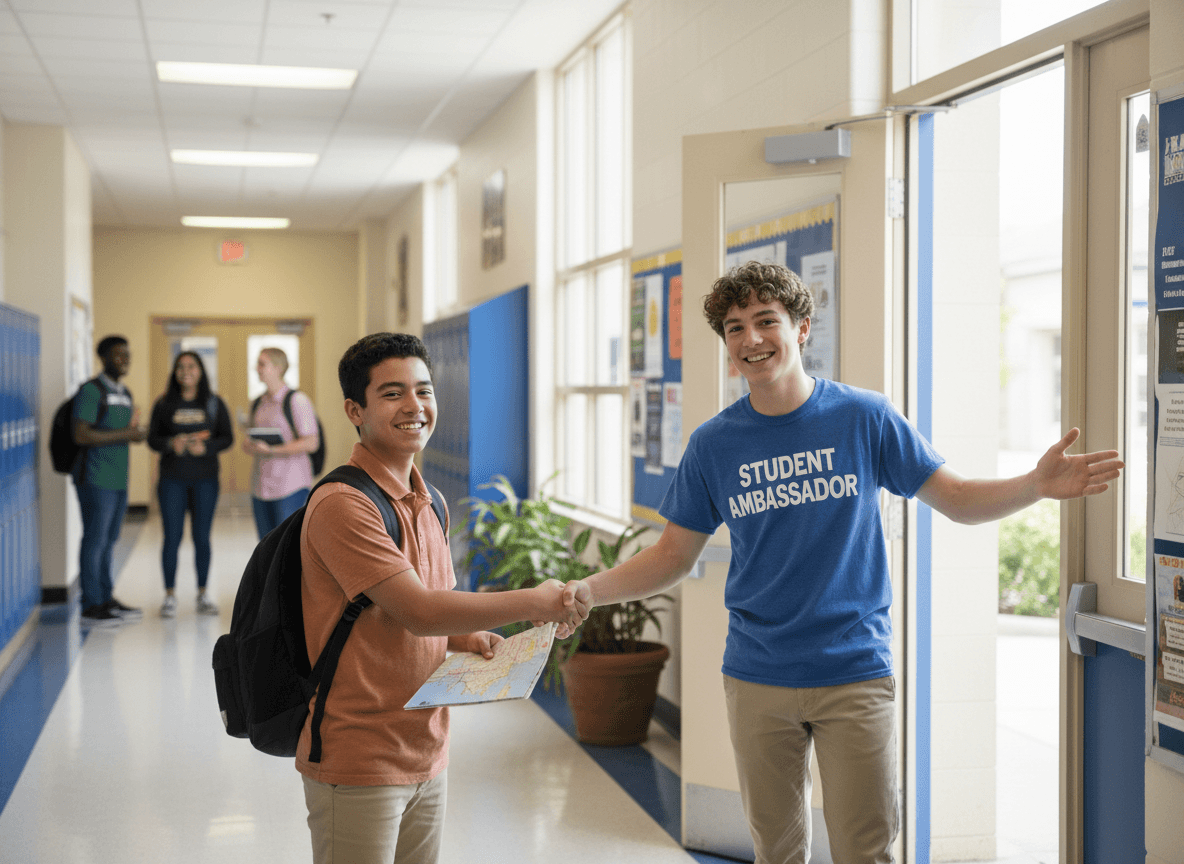
Include the complete activity list from the beginning of this year. Name the clubs and activities that are most welcoming to new members. If the school has a peer mentoring or ambassador program for freshmen, this is the issue to feature it: what the program is, who the mentors are, and how a new student connects with one.
A brief note from a student who was new to the school in a previous year, describing what helped them feel at home, is among the most effective content you can include. Peer experience reads as more credible than institutional encouragement, especially to teenagers.
Supporting Families, Not Just Students
Parents of freshmen are also navigating a transition. High school is different from middle school in ways that were not fully explained at orientation. Grading systems, credit tracking, the counselor's role, when to contact a teacher directly versus going through the counselor, how to access grades online: families need this information too.
Include a parent-specific section in the welcome newsletter: the one or two things parents of freshmen most commonly wish they had known at the start of the year. Pull this from your experience with current parents. If parents of sophomores consistently say "I wish I had known how course selection works," put that in the freshman newsletter.
When the Transition Is Hard
Some students do not adjust easily to high school. Social anxiety, learning differences, the social dynamics of a new peer group, academic expectations that feel suddenly much higher. A welcome newsletter that includes one honest paragraph about what to do if high school is harder than expected, naming the counselor, the wellness office, and the peer support resources available, gives families a path before a difficult situation becomes an entrenched one.
"If your student is struggling to adjust, please do not wait. The first month is when counseling support is most useful. Contact [counselor name] at [email] to schedule a check-in this week." Plain, specific, and communicated before the problem is visible rather than after.
Get one newsletter idea every week.
Free. For teachers. No spam.
Frequently asked questions
When should high schools send welcome newsletters to new students and their families?
Send the first issue one week before school starts covering practical navigation: how to find their schedule, locker assignment, who their counselor is, and what the first day looks like. A second issue in the third week of school should shift from logistics to community, introducing clubs, activities, and ways to get involved.
What should a high school new student newsletter include?
Campus navigation basics, how to read their schedule and find each classroom, counselor contact information, the club and activity directory, academic policies that differ from middle school, who to contact with common questions, and a clear message that it is normal for the transition to feel hard for the first few weeks.
How should high schools communicate differently for freshman versus mid-year transfer students?
Freshmen need orientation to high school systems that all 9th graders share, while mid-year transfers need school-specific navigation information that assumes no prior context. A transfer student arriving in November does not need a four-year college prep overview, but they do need to understand how credits they earned elsewhere count toward this school's graduation requirements.
What are common challenges with high school new student communication?
New students often feel invisible after the first week because communication stops being directed at them. The schools that do this well treat new students as a separate audience through at least the first semester, not just the first day.
How can Daystage help high schools support new student communication?
Daystage allows schools to build a new student onboarding sequence that delivers two or three newsletter issues automatically to new student families in the first month, so the communication continues past orientation week without requiring staff to track who is new each time.

Adi Ackerman
Author
Adi Ackerman is a former classroom teacher and curriculum writer with 8 years in K-8 schools. She writes about school communication, parent engagement, and what actually works in real classrooms.
More for High School
High School Sports Booster Newsletter: Keeping the Athletic Community Informed
High School · 7 min read
High School Academic Intervention Newsletter: Communicating Support Without Stigma
High School · 7 min read
High School Debate Team Newsletter: Communicating the Season, the Format, and the Skills
High School · 5 min read
Ready to send your first newsletter?
3 newsletters free. No credit card. First one ready in under 5 minutes.
Get started free