

High School CTE Newsletter: Career Technical Education Updates
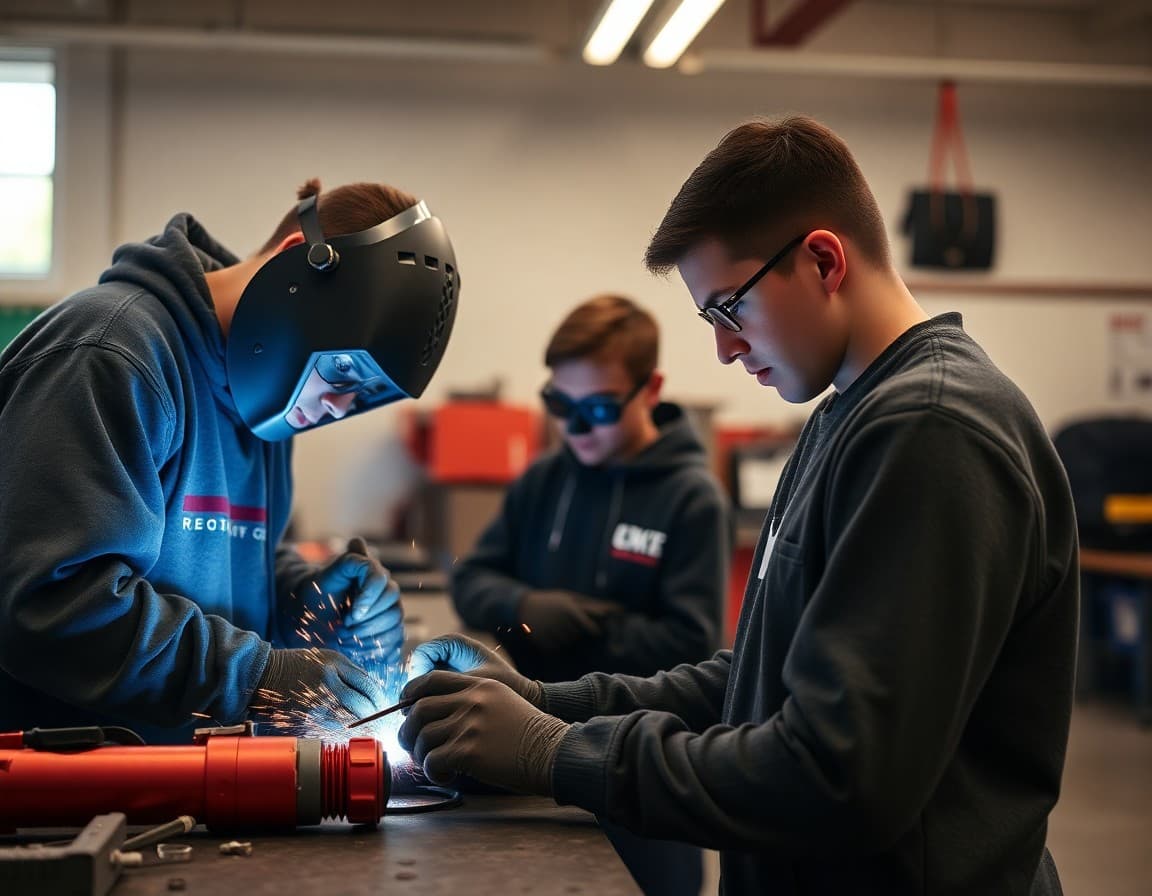
Career and Technical Education programs produce measurable outcomes that most school communication fails to make visible. A student with a welding certification, a ServSafe license, or a CompTIA credential earned in high school enters the labor market with documented, verified skills worth thousands of dollars in wage premium. These outcomes deserve the same communication investment that AP exam scores and college acceptance announcements receive. The CTE newsletter is where you build that visibility and the family pride that sustains strong program enrollment.
The Career Pathways: What Each One Prepares Students For
At the start of each year, send a pathways overview newsletter that explains each CTE pathway offered at your school. For each pathway: name the industry sector it prepares students for, list the specific courses in the pathway sequence, identify the industry certifications students can earn, explain the employment and further education options available to pathway completers, and provide one or two real examples of graduates who completed the pathway and where they are now. Families who see a clear connection between the pathway and a real career outcome enroll and support their students differently than families who see CTE as a schedule-filling option.
Industry Certifications: The Real Currency of CTE
The newsletter should treat industry certifications as seriously as academic grades. When a cohort of IT students passes the CompTIA IT Fundamentals exam, the newsletter should say: "Fifteen of our 17 information technology pathway students passed the CompTIA IT Fundamentals exam this week. This credential is recognized by employers across the IT industry and can be listed on any resume starting today. The three students who did not pass have retake options available in April." That reporting standard, named completers, named outcome, named next step, is the same standard your school applies to AP exam results. CTE certifications deserve the same.
Competition Season: SkillsUSA, DECA, and Beyond
CTE student organizations run some of the most rigorous skills competitions in secondary education. A SkillsUSA welding competition requires competitors to demonstrate multiple weld types under timed conditions, evaluated by industry professionals against industry standards. A DECA marketing series case study requires students to analyze a real business problem and present a solution to industry judges in 10 minutes with no preparation beyond 30 minutes of reading. Feature these competitions in the newsletter before and after they happen. The before-coverage builds awareness and student motivation. The after-coverage celebrates outcomes and demonstrates to families and community members what CTE students can actually do.
Industry Partners in the Classroom
Many CTE programs have relationships with local businesses and industry professionals who visit classrooms, participate in mock interviews, provide equipment donations, or offer job shadows. Feature these partnerships in the newsletter with the company name and what their participation involved. When a regional electrical contractor brings a master electrician to speak to the electrical trades class, name the contractor, name the electrician, and describe what students learned from the conversation. These features build community relationships that sustain program partnerships over time and signal to families that their child's CTE program is connected to the real industry, not just to textbooks.
Outcomes Data That Changes Perception
The most effective way to change the perception that CTE is a lower track is to present outcomes data that makes the comparison with the college-prep track look more complicated than it appears. Graduate follow-up data showing that pathway completers who entered the workforce directly earn median starting wages of $42,000 to $55,000 in healthcare support, construction trades, or information technology puts "career-ready" in terms that a college cost-of-attendance calculator can measure. Include this data in the annual CTE newsletter and update it when new graduate survey data arrives. Schools that publish outcomes data consistently see a shift in how families with academically capable students view CTE pathways as a deliberate choice rather than a consolation option.
Get one newsletter idea every week.
Free. For teachers. No spam.
Frequently asked questions
What should a high school CTE newsletter include?
Cover what students are learning in each pathway program, upcoming industry certification exams and how to prepare for them, student projects and competitions, industry partner activities including workplace visits and guest speakers, and employment and wage outcomes for recent graduates who completed the pathway. CTE families often feel disconnected from the academic prestige signaling that dominates most school communication. The newsletter should position CTE achievements, including certifications, competitions, and industry connections, with the same visibility as honors courses and SAT scores.
How do I communicate the value of CTE to families who see it as a lower track?
Lead with outcomes data. Students who complete a CTE pathway earn industry certifications that have real labor market value. A student with CompTIA IT Fundamentals certification earned in high school commands a higher starting wage than a peer with a general diploma. A student who completes the healthcare CTE pathway and takes the EMT certification exam graduates with a license to work. Present these specifics in the newsletter rather than generalized statements about career readiness. Concrete outcomes change perception more than any philosophy statement about the value of technical education.
What industry certifications do CTE students typically earn?
Common high school CTE certifications include CompTIA A+ and IT Fundamentals for computer technology, ServSafe Food Handler for culinary programs, OSHA 10 for construction and manufacturing, Adobe Certified Professional for digital media, Microsoft Office Specialist for business programs, EMT Basic for healthcare pathways, and various AWS welding certifications for welding programs. The newsletter should list which certifications are available in your program, what the exam preparation involves, and what each certification is worth in the labor market.
How do I highlight CTE student competitions in the newsletter?
SkillsUSA, DECA, FFA, FCCLA, HOSA, and TSA are the major CTE student organizations that run regional and national competitions. When students place in these competitions, feature it in the newsletter with the student's name, the competition category, the placing, and what skills the competition tested. A student who wins a regional DECA marketing case study competition has demonstrated analytical and communication skills that belong in the newsletter with the same prominence as a state championship in any sport.
Can Daystage help CTE coordinators send pathways-specific newsletters to enrolled families?
Yes. Daystage lets you send pathway-specific newsletters to families of students in each CTE pathway. Healthcare pathway families receive different content than information technology or construction pathway families. This specificity makes the newsletter immediately relevant to each reader rather than requiring everyone to sift through information about all pathways to find what applies to their student. Relevant newsletters get read. Generic newsletters get ignored.

Adi Ackerman
Author
Adi Ackerman is a former classroom teacher and curriculum writer with 8 years in K-8 schools. She writes about school communication, parent engagement, and what actually works in real classrooms.
More for High School
Ready to send your first newsletter?
3 newsletters free. No credit card. First one ready in under 5 minutes.
Get started free