
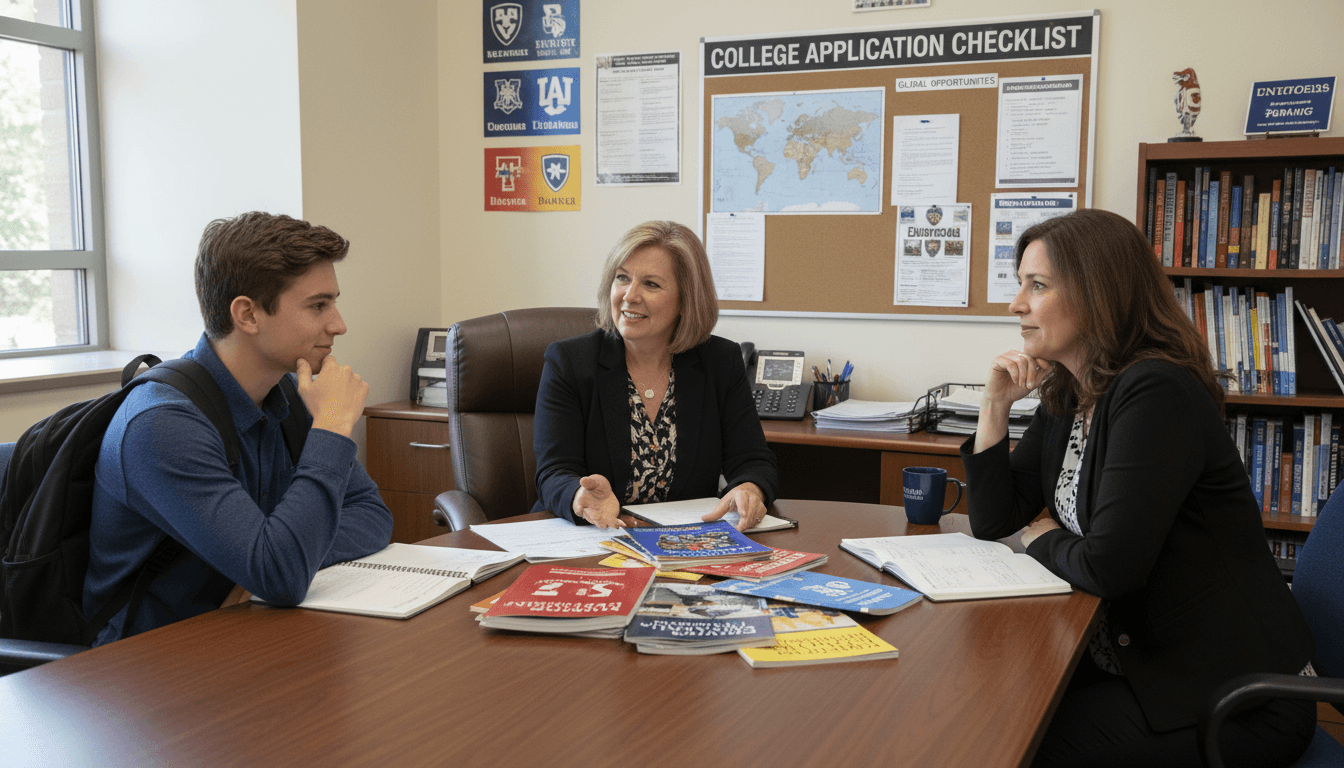
High School College Essay Workshop Newsletter: Helping Families Support the Writing Process

The college essay is the part of the application process that generates the most family anxiety, the most well-intentioned interference, and the most confusion about what admissions offices actually want to read. Your newsletter can address all of this directly and give families the guidance they need to be genuinely helpful without inadvertently making things worse.
What the Essay Is Actually For
Describe the essay's role in admissions clearly. It is the place in the application where the admissions reader hears the student's voice and perspective for the first time. Grades and test scores tell part of the story. The essay tells the rest. A well-written essay that shows genuine self-awareness, specific detail, and authentic voice can make a strong academic profile feel like a person worth meeting. A generic or polished-to-death essay makes the same profile feel flat.
The essay is not a make-or-break factor for most applicants at most schools. Framing it as such creates paralyzing pressure. Framing it as an important opportunity that rewards genuine reflection is accurate and useful.
When to Start and Why Summer Matters
The summer before senior year is the best time to start drafting. Students who begin in July have months to let drafts develop, get feedback, and revise before application deadlines. Students who start in October are writing their most important personal essay during the busiest academic month of their high school career.
Your late spring junior year newsletter should strongly encourage summer drafting. Give students a specific, low-pressure prompt to begin: not "write your college essay" but "make a list of ten specific moments from your life that changed how you see something." That list is the raw material for almost any strong college essay.
How Families Can Help Without Ghostwriting
The most useful family support for college essays is asking questions, not editing sentences. Families who ask their student to explain what they are trying to say help the student discover their own voice. Families who rewrite the essay in cleaner prose produce an essay that sounds like the parent rather than the applicant.
Give families specific questions they can ask: What one thing do you want the admissions reader to understand about you after reading this? Does the first line make someone want to keep reading? Is there a specific moment or detail that you could add to make this more concrete? These questions produce useful revision without replacing the student's work.
What Makes Essays Stand Out
The essays that admissions readers remember are specific, honest, and personal in a way that could only have been written by that particular student. They are not about dramatic events, though dramatic events can be the subject. They are about how the student thinks and what they notice about their own experience.
Communicating this to families helps them resist the impulse to encourage their student toward a topic that sounds impressive rather than a topic that is genuine. The impressive- sounding topic that is not authentically the student's own typically produces an essay that no one wants to read.
Workshop Resources and Counselor Support
Tell families what resources your school provides: essay workshops, individual counselor feedback appointments, peer review sessions, or writing center availability. A family who knows these resources exist can encourage their student to use them at the right moment rather than relying on family feedback alone.
Get one newsletter idea every week.
Free. For teachers. No spam.
Frequently asked questions
What role does the college essay play in admissions and how should schools communicate about this to families?
For most students at most schools, the essay is the only place in the application where the admissions reader hears the student's voice directly. It is not the most important factor in most applications, but it is the factor that can distinguish two students with similar academic profiles. Families who understand this help their student invest appropriately in the essay without treating it as either trivial or existentially critical.
How should families support the college essay process without taking over the writing?
By asking questions that help the student find their own story, not by editing every sentence. 'What do you want the reader to know about you that is not visible anywhere else in your application' is a useful question. 'This paragraph doesn't sound like you' is a useful observation. Rewriting the essay in the family's voice is not support; it is a replacement that admissions readers will often notice.
When should seniors start working on college essays and how should counselors communicate about timing?
The summer before senior year is the ideal window to start drafting. Students who arrive at school in September with a working draft of their main essay are in a fundamentally different position than those who start from scratch in October during the most demanding academic term of high school. Your late spring junior year and summer newsletters should actively encourage this early start.
What essay topics should students avoid and how should counselors communicate about this?
Topics that lack the student's genuine reflection, including sports injury resilience, mission trip transformation, and immigration family pride without a specific personal angle, are overused and often produce generic essays. Your newsletter can share this guidance directly without making students feel their experiences are invalid, by emphasizing the specificity of perspective rather than the topic itself.
How does Daystage help high schools communicate with families about the college application process?
Daystage lets counselors schedule a complete sequence of college application communications from junior year through senior year, so families receive timely guidance on each stage of the process without having to seek it out. Schools that communicate proactively about essay writing see earlier student starts and better essay outcomes.

Adi Ackerman
Author
Adi Ackerman is a former classroom teacher and curriculum writer with 8 years in K-8 schools. She writes about school communication, parent engagement, and what actually works in real classrooms.
More for High School
High School Senior Capstone Project Newsletter: How to Keep Families Engaged
High School · 5 min read
IB and AP Program Newsletter: How to Communicate Advanced Coursework to Families
High School · 7 min read
High School College Fair Newsletter: How to Prepare Families and Students for College Fairs
High School · 5 min read
Ready to send your first newsletter?
3 newsletters free. No credit card. First one ready in under 5 minutes.
Get started free