
CTE Newsletter: Communicating Career and Technical Education Programs to Families

Career and Technical Education programs are among the most misunderstood offerings in American high schools. Decades of the implicit message that college is the only path worth taking have left CTE programs with an image problem that makes families skeptical, even when the programs themselves lead to high-demand careers, industry certifications, and post-secondary options that include both college and direct employment.
A CTE newsletter does not just announce courses and events. It does the harder work of reframing what CTE is, who it is for, and what outcomes it produces, so that families can make informed decisions rather than defaulting to assumptions that may be thirty years out of date.
Leading With Outcomes, Not Programs
Families respond to outcome information more than program descriptions. "Introduction to Healthcare Careers" means less than "Students who complete this two-year sequence can sit for the Certified Nursing Assistant exam before graduation and are eligible for starting wages of $18 to $22 per hour in our region."
For each CTE pathway, lead with what students can achieve by completing it: the certifications they earn, the industries that recognize those certifications, the wage range for entry-level roles, and the post-secondary pathways (both degree programs and direct employment) that graduates have pursued. This is the information families actually need to evaluate whether a program serves their student's goals.
Countering the "Non-Academic" Perception
One of the most persistent obstacles CTE programs face is the assumption that participation signals lower academic expectations or that CTE and college preparation are mutually exclusive.
Address this directly. Include data on what percentage of CTE completers at your school attend four-year colleges. Highlight students who are in both AP coursework and a CTE program. Show the academic rigor of advanced CTE courses, many of which carry college credit. The newsletter that names the assumption and contradicts it with evidence is more effective than one that ignores the assumption and hopes families come around on their own.
Industry Certifications: Explaining Their Value
High school students can earn industry-recognized certifications through CTE programs that have real market value: CompTIA A+ for IT technicians, ServSafe for food service, AutoCAD certifications for design and manufacturing, OSHA safety credentials for construction trades, and many others depending on the program.
Families often do not know these certifications exist or what they are worth. A newsletter that lists the certifications available through each pathway, with a brief explanation of what the certification means to an employer and what the testing process looks like, gives families a concrete picture of what CTE participation produces.
Showcasing Student Work and Projects
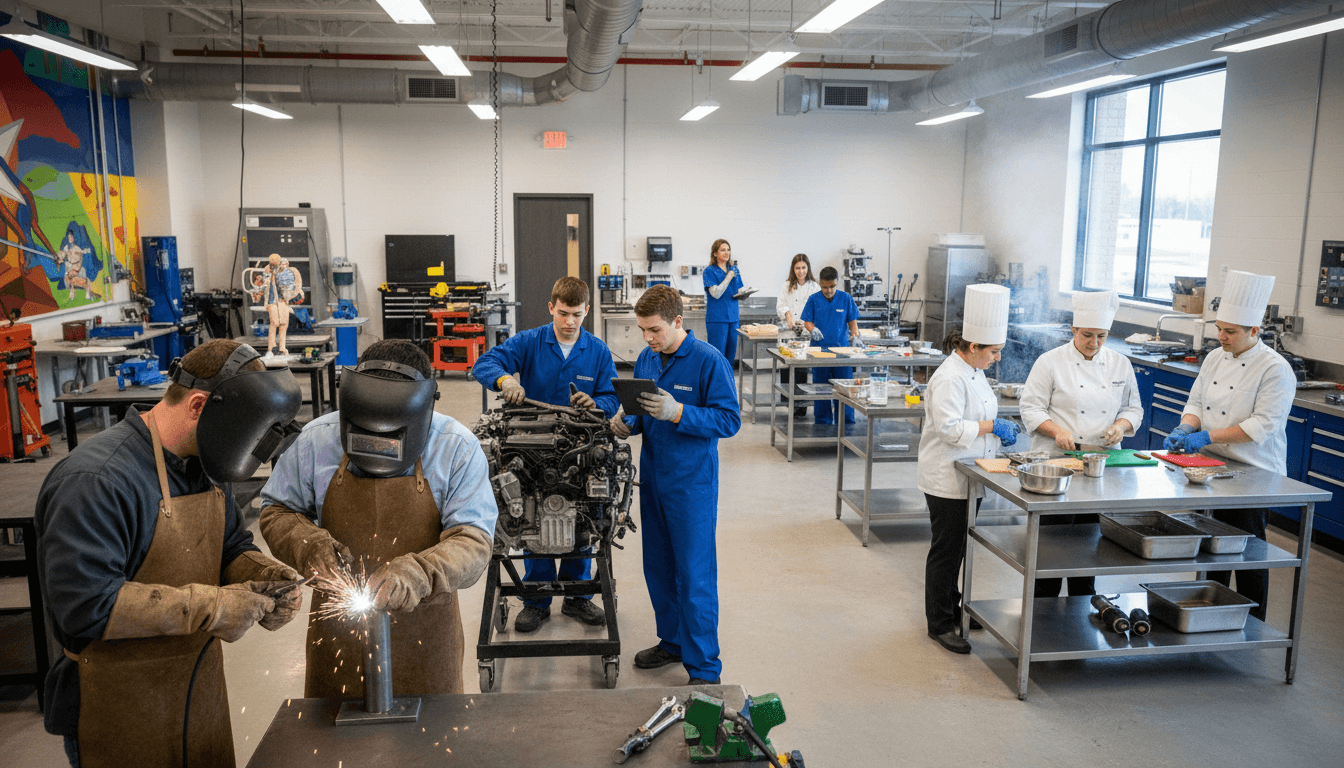
CTE students build things, create things, and complete real projects in ways that are often more tangible than academic coursework. A student in the construction trades program helped build a community garden structure. A student in the culinary program catered the staff appreciation breakfast. A student in the IT program configured the school's network lab.
These accomplishments belong in the newsletter, with specific details and photos when possible. Not because they are unusual, but because most families of CTE students never learn what their student actually did. And families of non-CTE students who read these stories begin to understand what the programs produce, which matters for enrollment and for program support.
Enrollment Windows and Course Selection Timing
CTE programs often have structured sequences that require entering at the right point. A student who does not enroll in the foundational course freshman year may not be able to complete the full pathway before graduation. A junior who discovers a program in April cannot benefit from it the same way a freshman who enrolls in October can.
Use the newsletter, especially in the fall and winter before course selection season, to communicate the full sequence for each pathway, the optimal entry points, and what students at each grade level can still realistically accomplish. Give families a realistic picture of the pathway options that remain open for their student's current grade level and a clear understanding of how to enroll.
Get one newsletter idea every week.
Free. For teachers. No spam.
Frequently asked questions
When should high school CTE programs send newsletters to families?
Send a program overview in September that explains available pathways and enrollment windows for the following year. A second issue in November or December, timed to spring course selection, is when CTE newsletters do the most work, because that is when students in grades 9 and 10 are deciding which direction to go.
What should a high school CTE newsletter include?
Career pathways available and what they lead to, industry certifications students can earn, any work-based learning or internship components, enrollment deadlines, and profiles of current students or alumni in each pathway. Families of 9th and 10th graders especially need context on how CTE courses count toward graduation and college readiness requirements.
How should high schools communicate CTE programs to counter the non-academic perception?
Lead with outcomes: specific job titles, salary ranges, and post-secondary options that CTE pathways open. A 10th grader who completes a healthcare pathway can sit for a CNA certification exam as a junior, which is a more compelling message than describing the program's curriculum.
What are common challenges with high school CTE communication?
Many families still associate CTE with lower expectations, so newsletters that emphasize the rigor of industry certifications and the college credit options available address the biggest barrier to enrollment. A second challenge is reaching families early enough to influence sophomore course selection before academic tracks solidify.
How can Daystage support CTE newsletter communication for high schools?
Daystage makes it easy to build CTE-specific newsletters with program pathway information and schedule them to reach families during the course selection window, so CTE departments can compete for student enrollment with the same communication presence as AP and honors programs.

Adi Ackerman
Author
Adi Ackerman is a former classroom teacher and curriculum writer with 8 years in K-8 schools. She writes about school communication, parent engagement, and what actually works in real classrooms.
More for High School
High School School Counselor Newsletter: College Prep Communication Guide
High School · 6 min read
High School Community Service Newsletter: Communicating Graduation Requirements and Opportunities
High School · 6 min read
High School College Application Season Newsletter: A Month-by-Month Guide
High School · 6 min read
Ready to send your first newsletter?
3 newsletters free. No credit card. First one ready in under 5 minutes.
Get started free