

Creative Writing Test Prep Newsletter: High School Guide
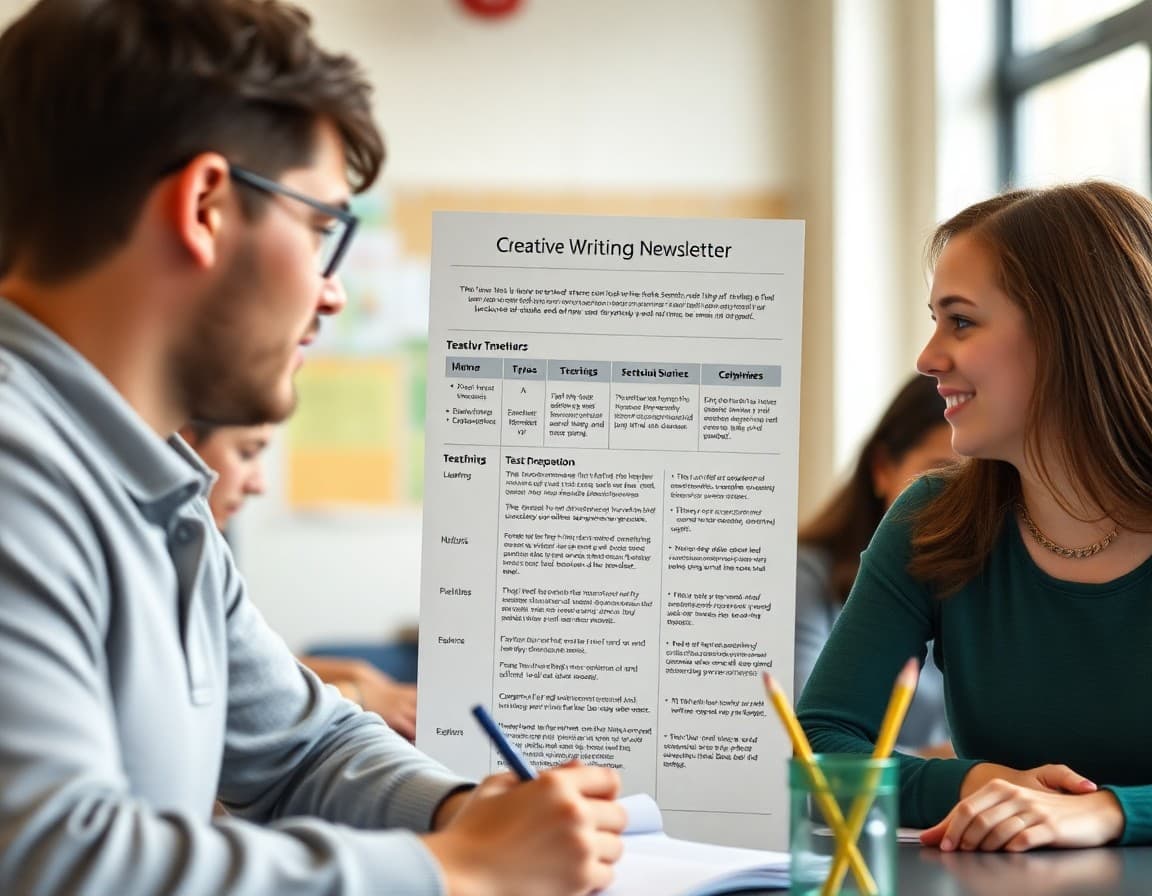
High school students can face creative writing assessments in multiple forms: statewide performance tasks with narrative components, end-of-course exams, AP Language prompts, and class-level final projects. A focused test prep newsletter two to three weeks out gives families specific preparation strategies rather than vague encouragement to "review."
Identifying the Right Assessment to Prepare For
Be specific in your newsletter about which assessment students are preparing for and what it looks like. If it is a district performance task, say so. If it is the state ELA assessment with a narrative writing section, describe the format. If it is your class's timed final piece, explain the conditions. Specificity is what separates a useful newsletter from a generic reminder that families skim and forget.
Explaining What the Assessment Measures
High school parents often assume standardized assessments only test grammar and mechanics. Let them know what creative writing sections actually assess. Most measure narrative structure, control of detail and description, sentence variety, and the writer's ability to make intentional craft decisions. If there is a scoring rubric students will see before the test, describe the categories in plain language. Knowing what the rubric prioritizes helps students make smarter choices under time pressure.
Timed Writing Practice at Home
The most effective home preparation for any timed creative writing assessment is writing under timed conditions. Give families a specific protocol: find a quiet space, set a timer for 35 minutes, write a story or personal narrative response to a provided prompt without stopping to edit. Practicing this three times in the two weeks before the assessment builds both fluency and confidence. Students who have written under time pressure before the test are less likely to freeze during it.
Sample Template Excerpt
Here is text you can adapt for your newsletter:
"Our district narrative writing performance task is scheduled for May 2nd. Students will have 50 minutes to read a short stimulus text and write an original story or personal narrative in response. The task is scored on four criteria: narrative development, organization, precise language, and sentence variety. The best way to prepare at home is to do a timed write on a similar prompt this week and next week. I have posted three practice prompts on Google Classroom. Print one, set a timer, and write. It does not need to be good. It just needs to be done under realistic conditions."
What to Do the Night Before
Give families practical advice for the night before the assessment. Reading something well-written, even a short essay or story, is more useful than reviewing notes. Getting adequate sleep matters more than any last-minute preparation. Eating breakfast on the morning of the test is worth mentioning because high school students often skip it. These details feel obvious but they make a real difference in performance.
Common High School Writing Assessment Mistakes
High school students in creative writing assessments tend to over-plan and under-write. They spend 15 of 40 minutes outlining a story and then rush the actual writing. Warn families about this pattern. The fix is to limit planning time to five minutes maximum. Students should also watch for mechanical repetition, starting every sentence the same way, and for ending a story abruptly because they ran out of time. Knowing these pitfalls in advance lets students self-monitor during the test.
What Families Should Not Do
Some parents try to help by giving detailed feedback on practice pieces. That well-intentioned habit can backfire in the week before a test if it makes students feel their writing is not good enough. Encourage parents to respond to what their student wrote with interest rather than critique. "Tell me more about what happens next in that story" builds momentum. "This paragraph needs more detail" right before a test does not.
After the Assessment
Close the newsletter by telling families what comes next. Will students see their scored results? How will the assessment feed into the final grade? When will you share results if the scoring is external? Answering these questions in advance prevents the anxious emails that often arrive the day after a major assessment.
Get one newsletter idea every week.
Free. For teachers. No spam.
Frequently asked questions
What writing assessments do high schoolers typically face in a creative writing class?
High school creative writing assessments vary widely. They may include timed writing to an unseen prompt, portfolio submissions with revision commentary, statewide ELA performance tasks with a narrative component, or class-specific final projects. Your newsletter should specify which type students are preparing for.
How early should I send a creative writing test prep newsletter?
Two to three weeks before the assessment is the right window. Earlier than that and families forget. Closer than a week and parents feel like they cannot help. A follow-up reminder at the one-week mark keeps preparation on track.
What home practice strategies actually help with timed creative writing tests?
Timed freewrites on unfamiliar prompts are the most direct preparation. Students should practice writing for 30 to 40 minutes without stopping to edit. Reading a published short story or personal essay the week before also activates the pattern recognition students need when they see a new prompt.
How do I communicate the assessment format without sharing the actual prompts?
Describe the type of prompt, the time limit, any materials allowed, and what the scoring criteria prioritize. Sample prompts from previous years or from the same type of task work well for practice without compromising the actual assessment.
Can Daystage help me send test prep newsletters at the right time?
Yes. Daystage lets you schedule newsletters in advance so you can draft the test prep communication early and have it go out at exactly the right time. Families receive it by email, and you can track who opened it.

Adi Ackerman
Author
Adi Ackerman is a former classroom teacher and curriculum writer with 8 years in K-8 schools. She writes about school communication, parent engagement, and what actually works in real classrooms.
More for High School
Ready to send your first newsletter?
3 newsletters free. No credit card. First one ready in under 5 minutes.
Get started free