

Arizona High School Parent Communication Guide for Teachers
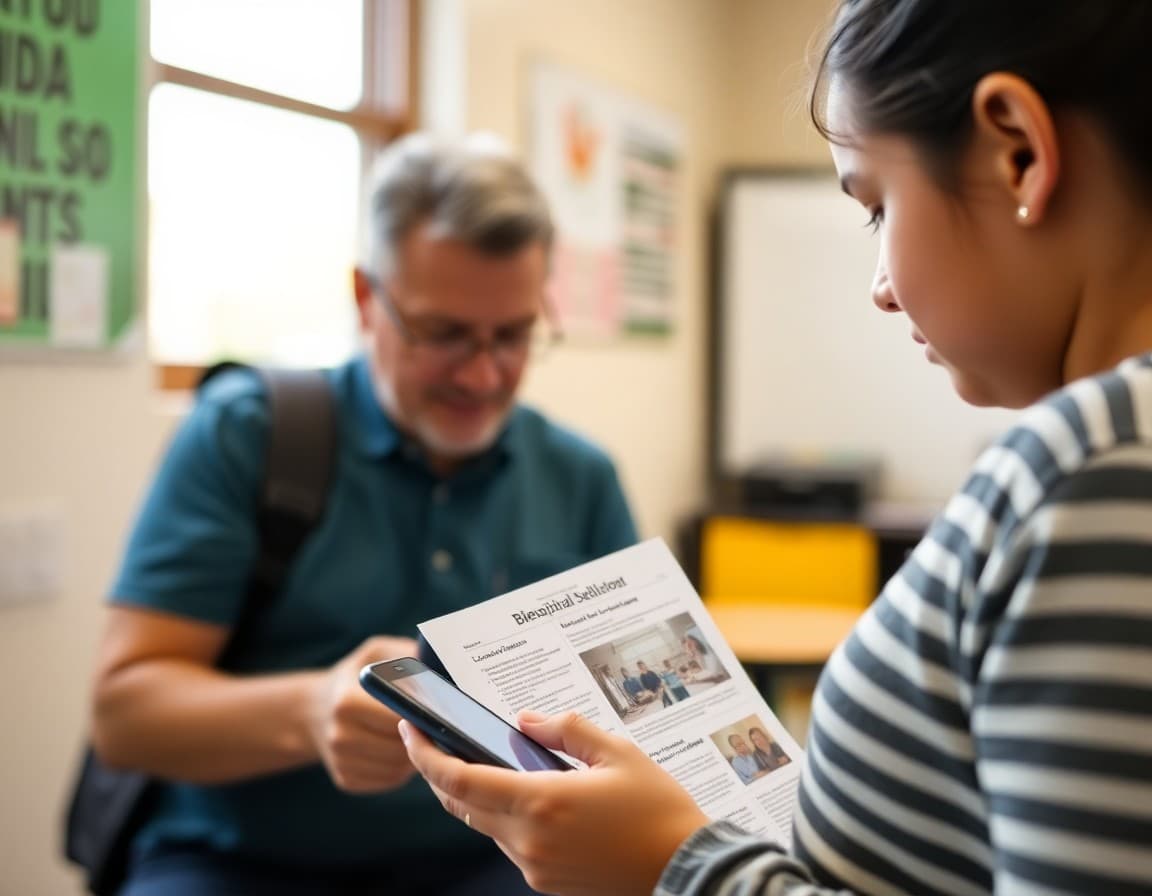
Arizona's high school parent population is one of the most diverse in the country. You might be teaching in a Phoenix area district with thousands of students or in a small rural school near the Navajo Nation. You might have parents who are highly engaged professionals and parents who are working multiple jobs and relying entirely on you to tell them what their student needs. Building a communication system that works across those differences is the job.
Reach Spanish-Speaking Parents Intentionally
In many Arizona high schools, a significant percentage of parents speak Spanish as a primary language. If you are not communicating in Spanish, you are not reaching those families. You do not need to be bilingual yourself. A translated summary at the bottom of your newsletter, even if it is machine-translated and clearly labeled as such, signals that you are trying to reach every family. Most Arizona districts have translation resources available, and investing ten minutes in a Spanish summary can double your effective reach in some classrooms.
Align Your Communication With Arizona's School Choice Context
Arizona has one of the most expansive school choice environments in the country, with charter schools, district schools, and Education Savings Account (ESA) options. Parents in Arizona often make active choices about where their student attends. That context means parent communication matters for enrollment and retention as much as it does for student support. A teacher who communicates clearly and consistently is part of why families stay at a school rather than exploring alternatives.
Communicate the ACT Early and Often
Arizona administers the ACT with Writing to all 11th graders at no cost to families. For students whose families cannot afford private test prep, the school-day ACT is often their primary opportunity. Tell parents in your fall newsletter that the ACT is coming in the spring, what subjects it covers, and how you are incorporating ACT-relevant skills into your course. That early communication helps families with students who need additional support to plan ahead rather than react in March.
Address the Dual Enrollment and CTE Landscape
Arizona has strong dual enrollment partnerships with community colleges, and the Arizona Career and Technical Education (CTE) system offers industry certifications in high school. For students who are not on a four-year university track, these pathways can be transformative. Tell parents about dual enrollment options, how courses transfer to Arizona community colleges and universities, and what CTE certifications are available in your school. This information is valuable for every family, not just families of students who are struggling.
Be Transparent About Grading and Grade Recovery
Arizona high school grading policies vary by district and school, but parents consistently want to know what options exist when their student falls behind. Mention grade recovery programs, retake policies, and tutoring resources in your newsletter before a failing grade appears on a progress report. Parents who know the options exist in October are far more able to support their student than parents who find out in January that their student is in danger of not graduating.
A Sample Arizona High School Newsletter Opening
Here is what a clear, context-aware opening looks like:
"Welcome to AP Biology. This semester we will complete two major lab investigations, finish our genetics and evolution units, and prepare for the AP exam on May 6. Arizona students who score a 3 or higher may qualify for college credit at ASU, U of A, and NAU. I will send a review schedule in February so we have plenty of time to prepare together."
That opening names the course, the timeline, the exam date, and the specific Arizona college benefit in 65 words.
Use the Arizona Context to Make Content Feel Local
Arizona offers natural opportunities to ground content in local context. History teachers can connect to Arizona's statehood in 1912 and its complex border history. Science teachers can reference the Sonoran Desert, water scarcity, and solar energy systems. Economics teachers can use the housing boom and bust in Phoenix as a case study. When your newsletter mentions that the content connects to something Arizona-specific, parents and students see the relevance more clearly.
Send Consistently With Daystage
Consistent communication in Arizona's competitive school environment builds the parent relationships that support student success and school retention. Daystage gives you a fast, clean way to write and send a professional newsletter to every family. You build your content once, deliver it to all parents at once, and move on. For Arizona teachers juggling large class sizes and demanding curricula, that efficiency is worth protecting.
Get one newsletter idea every week.
Free. For teachers. No spam.
Frequently asked questions
What should Arizona high school teachers know about parent communication requirements?
Arizona does not mandate a specific communication format at the state level, but the Arizona Department of Education's professional standards for teachers include maintaining regular communication with families as a component of professional responsibility. Individual districts set their own expectations, and many Arizona high schools require teachers to contact parents when students are at risk of failing or missing more than a specified number of days.
How do Arizona teachers communicate with Spanish-speaking families?
Arizona has a large Spanish-speaking parent population, particularly in communities like Phoenix, Tucson, Yuma, and along the US-Mexico border. Teachers who send bilingual newsletters or who communicate key information in both English and Spanish see significantly higher parent engagement from those families. Many Arizona districts provide translation support, and some teachers use basic translation tools to create bilingual summaries of their key newsletter points.
How should Arizona teachers communicate about the AzSCI and state testing?
Arizona administers the AzM2 for math and ELA at various grade levels, and the AzSCI for science. High school teachers should communicate test dates, what the tests cover, and how scores affect graduation requirements and accountability metrics. The ACT with Writing is administered by the state to 11th graders, and parents should know this score has direct implications for college admissions and scholarship eligibility in Arizona.
What are Arizona's high school graduation requirements that parents most need to know?
Arizona requires 22 credits for graduation, including four years of English, four of math (including Algebra 2 or equivalent), three of lab science, three of social studies, one of fine arts or career and technical education, and additional electives. Parents should understand which courses fulfill which requirements and that the Arizona Seals of Biliteracy and the Grand Canyon Diploma are available for students who meet higher standards.
What platform helps Arizona high school teachers send newsletters to diverse parent populations?
Daystage is designed for teacher communication and makes it easy to write, format, and send a polished newsletter to all families at once. For Arizona teachers who need to reach English-speaking and Spanish-speaking families, the ability to write a clear, organized newsletter quickly and deliver it reliably is the biggest time saver.

Adi Ackerman
Author
Adi Ackerman is a former classroom teacher and curriculum writer with 8 years in K-8 schools. She writes about school communication, parent engagement, and what actually works in real classrooms.
More for High School
Ready to send your first newsletter?
3 newsletters free. No credit card. First one ready in under 5 minutes.
Get started free