
April Newsletter Ideas for 9th Grade Teachers: What to Send This Month

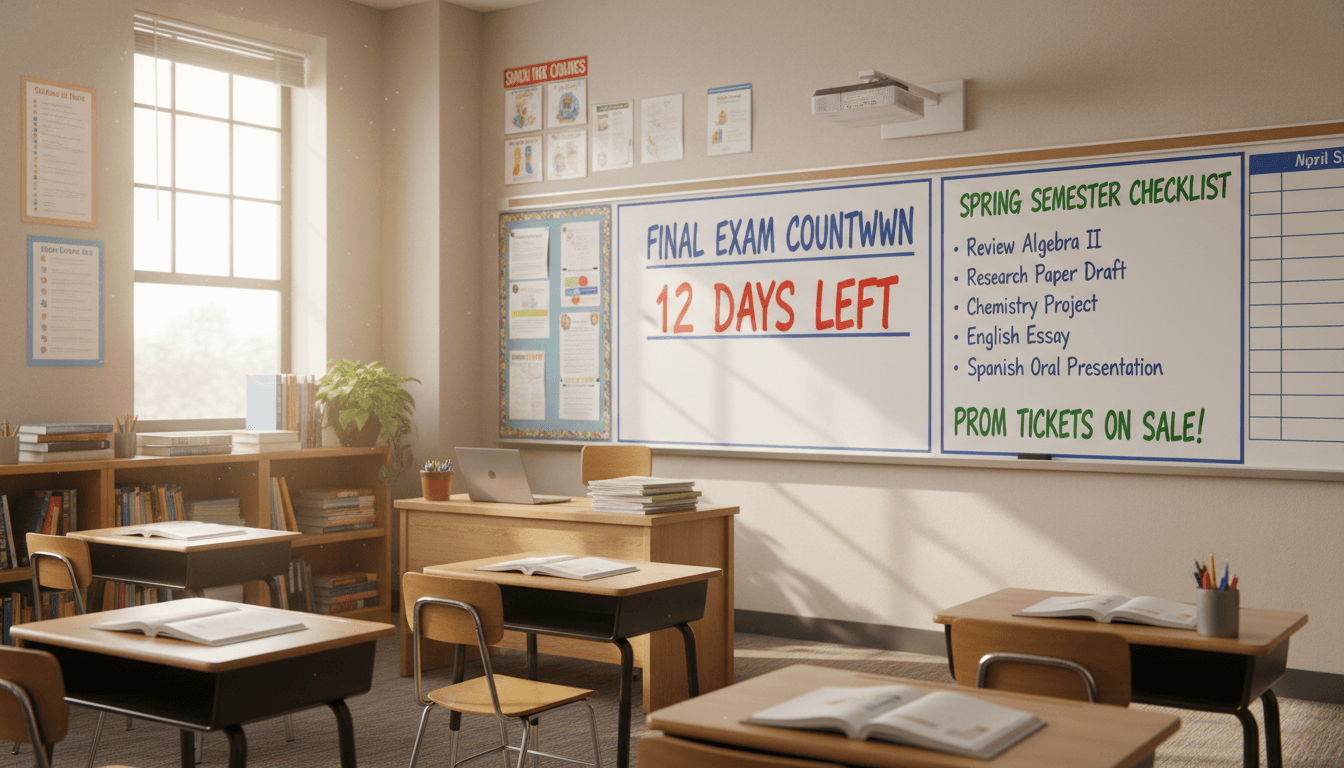
April feels like the finish line is close, but freshman year is not over. Six weeks of class remain, final exams are coming, and the school is buzzing with prom energy that has nothing to do with 9th graders. Your April newsletter is a chance to keep freshman families anchored to what actually matters right now.
Name the distractions directly
Freshmen are not immune to spring fever. Upperclassmen are talking about prom, senioritis is visible in the hallways, and every student feels the pull of summer before the year is actually done. Tell parents plainly that this stretch is when grades shift the most. A student who coasts through April and May can drop a full letter grade after a strong start. Parents need to hear that from you before it happens, not after.
Give them the final exam calendar now
If your school has set final exam dates, put them in the newsletter. If they have not been finalized yet, give the expected window and commit to sharing the confirmed schedule as soon as it is available. Families plan around exam weeks, and the earlier they have dates, the less chaos you deal with in May. Include the subject, date, and any materials students are allowed to bring.
Share a current grade snapshot
April is a good moment to remind parents how to check grades in the school portal, and to flag that now is the right time to check, not at the end of May. If your gradebook has a missing-assignment report or a below-passing alert, point families toward it. Students who are borderline on credits need to know that in April, when there is still time to course-correct, not during finals week.
Introduce sophomore course options
Most schools open 10th grade course registration in April or early May. Freshmen and their families are often unprepared for this conversation because it happens fast. Use your April newsletter to name which honors or AP options are available next year for your subject area, what the prerequisite requirements are, and who families should contact if they have questions. A one-paragraph preview now prevents panicked emails in two weeks.
Acknowledge prom without making it the focus
Freshmen know prom is happening. Some are going as guest invites, some are watching from the sidelines, and all of them are picking up on the energy shift in school. You do not need to pretend it is not there. One sentence acknowledging that spring is a busy social season, followed by a clear reminder that your class has real assessments coming, is more effective than ignoring the elephant in the room entirely.
Tell families what support looks like right now
List your office hours or tutoring availability. If the school has a study hall or homework help program, mention it. Parents of freshmen often do not know what resources exist, especially if they are navigating their first experience with high school. Make the support options concrete: day, time, location, and whether a student needs to sign up in advance.
Close with what a strong finish looks like
End with something specific. What does a 9th grader who finishes strong in your class actually do differently in April? Maybe they review notes twice a week. Maybe they come in for one tutoring session before the final. Give parents a picture they can share with their student. The last six weeks of freshman year set habits that carry into every year that follows.
Format and timing
Send this newsletter in the first week of April, before spring break if your school has one. That gives families context before any disruption. Keep it under 450 words, use a clear header for the exam schedule section, and link to the course registration page if one exists. One newsletter with the right information at the right time is worth more than three vague check-in emails.
Get one newsletter idea every week.
Free. For teachers. No spam.
Frequently asked questions
What should I include in an April 9th grade newsletter?
Focus on final exam timelines, current grade standing, and what the last six weeks look like before summer. April is also a good time to introduce freshmen and their parents to AP course options for sophomore year. Keep it forward-looking and give families one or two clear action items.
How do I help freshman families stay focused in April?
Name the specific distractions: spring break recovery, prom energy in the school hallways, and the false sense that the year is basically over. Tell parents directly that the last six weeks count for final grades, and give them a concrete calendar. Families respond to specifics, not general encouragement.
Should I mention AP courses in a 9th grade April newsletter?
Yes, briefly. April is when 10th grade course registration opens at most schools, and families need lead time to make good decisions. A short paragraph naming which AP or honors options are available next year, and who to contact with questions, is genuinely useful and prevents rushed choices in May.
How should I address prom culture in a freshman newsletter?
You do not need to ignore it. Freshmen are aware that prom is happening, even if they are not attending. A sentence acknowledging that the school has a lot of spring energy right now, paired with a reminder that final exams still carry real weight, is honest and effective. Parents appreciate teachers who engage with reality.
What newsletter tool works best for high school teachers?
Daystage is built for school communication and works well for high school teachers who need to send polished newsletters without spending hours on formatting. You can drop in an exam schedule, add a course registration reminder, and send to all freshman families in a few minutes. Teachers who use Daystage typically send more consistently because the process is fast enough to fit into a prep period.

Adi Ackerman
Author
Adi Ackerman is a former classroom teacher and curriculum writer with 8 years in K-8 schools. She writes about school communication, parent engagement, and what actually works in real classrooms.
More for High School
Ready to send your first newsletter?
3 newsletters free. No credit card. First one ready in under 5 minutes.
Get started free