
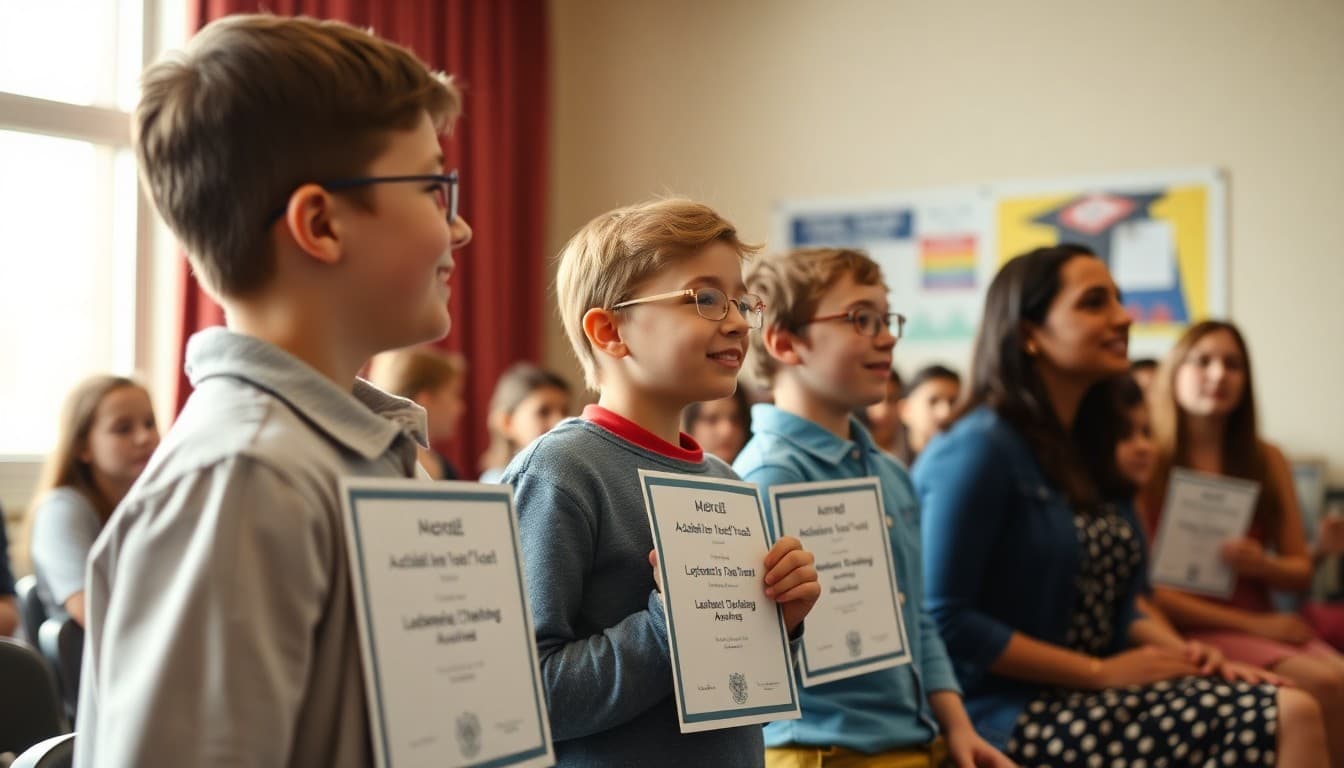
Student Achievement Newsletter Template
Student achievement newsletters are powerful when they make families feel that their child's school genuinely sees and values student growth. They fall flat when they default to lists of names attached to generic superlatives. The difference between recognition that motivates continued effort and recognition that families barely notice is in the specificity of the language. This template and guide show you how to write the version that matters.
What Makes Student Achievement Recognition Meaningful
Research on motivation is consistent: recognition that describes specific behavior or accomplishment is more motivating than recognition that uses evaluative labels. "Marcus solved a multi-step fraction problem that stumped the whole class, then explained his method to three other students who needed it" is recognition that tells Marcus exactly what the school values. "Marcus shows excellent mathematical thinking" tells him he has been labeled but does not tell him what to keep doing. When you write student achievement sections, write the specific kind.
Categories of Achievement Worth Recognizing
A student achievement newsletter section that only recognizes academic performance misses a significant portion of what students actually accomplish at school. Build recognition across categories:
Academic: Reading growth, math mastery, writing development, science project success
Artistic: Musical performance, visual arts accomplishment, creative writing, drama
Athletic: Physical fitness progress, team sportsmanship, personal bests, leadership on a team
Character: Kindness shown to a peer, leadership in a difficult situation, perseverance through a challenge, community service
Growth: Progress from a starting point, improvement in a specific skill area, overcoming a specific barrier
Rotating across these categories ensures that a student's achievements in any area can receive recognition at some point in the school year.
Template: Student Achievement Newsletter Section
Here is a ready-to-adapt student achievement section for a school newsletter:
"Students We Are Proud Of This Month
[First name, last initial], Grade [X]: [Specific achievement described in 2-3 concrete sentences. What did the student do? Why does it matter?]
[First name, last initial], Grade [X]: [Specific achievement.]
[First name, last initial], Grade [X]: [Specific achievement.]
Want to nominate a student for next month's achievement spotlight? Teachers, staff, and families can submit nominations at [link] or by speaking with the front office. We aim to feature students from different grade levels and for different types of accomplishments each month."
How to Gather Achievement Nominations From Teachers
The hardest part of a student achievement newsletter section is getting nominations before the newsletter deadline. Set up a simple monthly nomination process: email teachers the first week of every month with a single question: "Which student in your class showed remarkable growth, effort, or accomplishment in the last four weeks? 2-3 sentences describing what they did." Set a submission deadline of the 10th of each month. Teachers who know they have a simple, specific question to answer are more likely to respond than teachers who receive a vague "please nominate students" request.
Family-Submitted Achievement Nominations
Allowing families to nominate students for achievement recognition serves two purposes. First, it surfaces accomplishments that happen outside school visibility: a student who finished writing their first story, a student who overcame a fear, a student who won a community competition. Second, it gives families a direct way to celebrate their child through the school community, which deepens their connection to the school. Include a simple submission form or email address in the achievement section so families know nominations are welcome.
When a Student Does Not Want Public Recognition
Some students, particularly older elementary and middle school students, are uncomfortable with public recognition in the school newsletter. Always check with the teacher or with the student directly before publishing their name. A student who finds out they are being recognized and feels embarrassed by it will not be motivated by the recognition; they will feel exposed. For students who prefer private recognition, the school can acknowledge their accomplishment directly with the student and family through a letter or a personal conversation rather than through the newsletter.
Connecting Achievement Recognition to School Culture
An achievement recognition section that appears consistently across all 10 months of the school year does something beyond recognizing individual students: it signals to the entire school community what the school values. When students see that growth is recognized alongside winning, that character achievements sit alongside academic ones, and that the recognition rotates through all grades and all kinds of students, they internalize a set of values about what it means to succeed at their school. The student achievement newsletter section is one of the most direct culture-building tools a school newsletter has.
Get one newsletter idea every week.
Free. For teachers. No spam.
Frequently asked questions
How should schools decide which student achievements to feature in the newsletter?
Feature achievements that represent genuine effort and growth rather than only those that result from innate ability. A student who went from reading below grade level to on-grade level deserves as prominent a feature as a student who won a state competition. Including a range of achievement types, including academic, artistic, athletic, and character-based, ensures that every family can see themselves reflected in the recognition section at some point during the year. Rotate who is featured so the spotlight reaches different students throughout the year.
What information does a student achievement section need to include?
A student achievement section needs: the student's first name and last initial (for FERPA compliance, avoid full last names unless there is parent consent), the grade level, a description of the specific achievement in concrete terms, and one sentence on why this achievement is worth recognizing beyond the obvious. The 'why' is what distinguishes meaningful recognition from a list of names. 'Amara completed a 50-page independent research project on water conservation and presented it to the school board' gives readers a picture. 'Amara showed excellence in science' does not.
Should student achievement newsletters require parental consent?
For general school newsletter publication of student names in recognition contexts, most school systems allow this under the directory information provision of FERPA, provided families were notified and given an opt-out opportunity at enrollment. Any family that has opted out of directory information use should not have their child's name published in the newsletter. Your district's FERPA officer can clarify the specific requirements for your state and district. If in doubt, get parent consent in writing before publishing any student-specific information.
How do you write about student achievement without creating a competitive atmosphere?
Focus on each student's individual accomplishment in the context of their own journey rather than comparing students to each other. Avoid ranking language ('top student,' 'best in class') in favor of accomplishment-specific language ('completed the independent reading challenge,' 'achieved a personal best in the spelling bee'). When recognition is framed as celebrating individual growth rather than sorting students by performance, it creates a culture of effort rather than a culture of comparison.
How can Daystage help schools publish student achievement newsletters efficiently?
Daystage's newsletter builder lets schools create a recurring student achievement section template that appears in every issue. Teachers and staff can submit student achievement submissions through a standardized form, and the newsletter editor assembles them into a consistent-looking achievement block. The visual consistency of the recognition section across all newsletters makes it feel like an established, valued part of the newsletter rather than an afterthought.

Adi Ackerman
Author
Adi Ackerman is a former classroom teacher and curriculum writer with 8 years in K-8 schools. She writes about school communication, parent engagement, and what actually works in real classrooms.
More for Guides
Ready to send your first newsletter?
3 newsletters free. No credit card. First one ready in under 5 minutes.
Get started free