
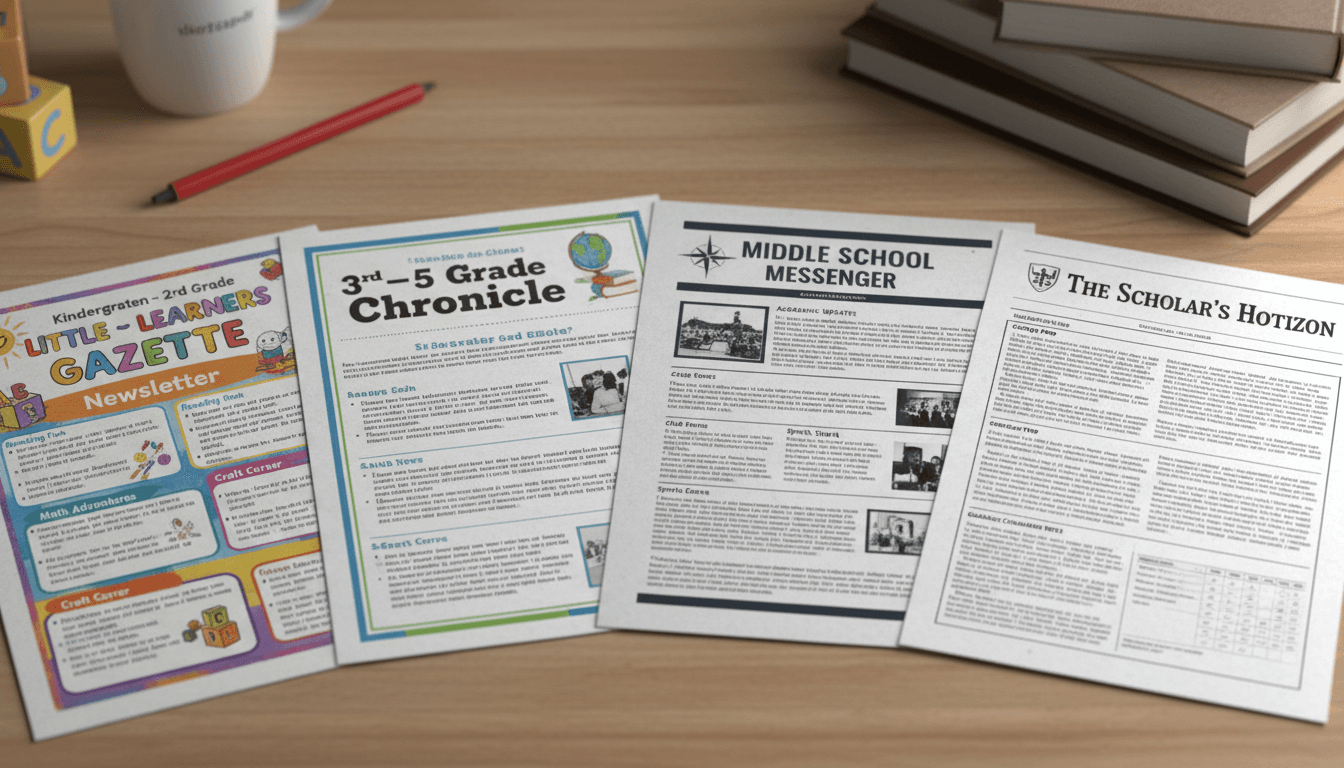
School Newsletter Templates by Grade Level: What to Include in K-12 Communication
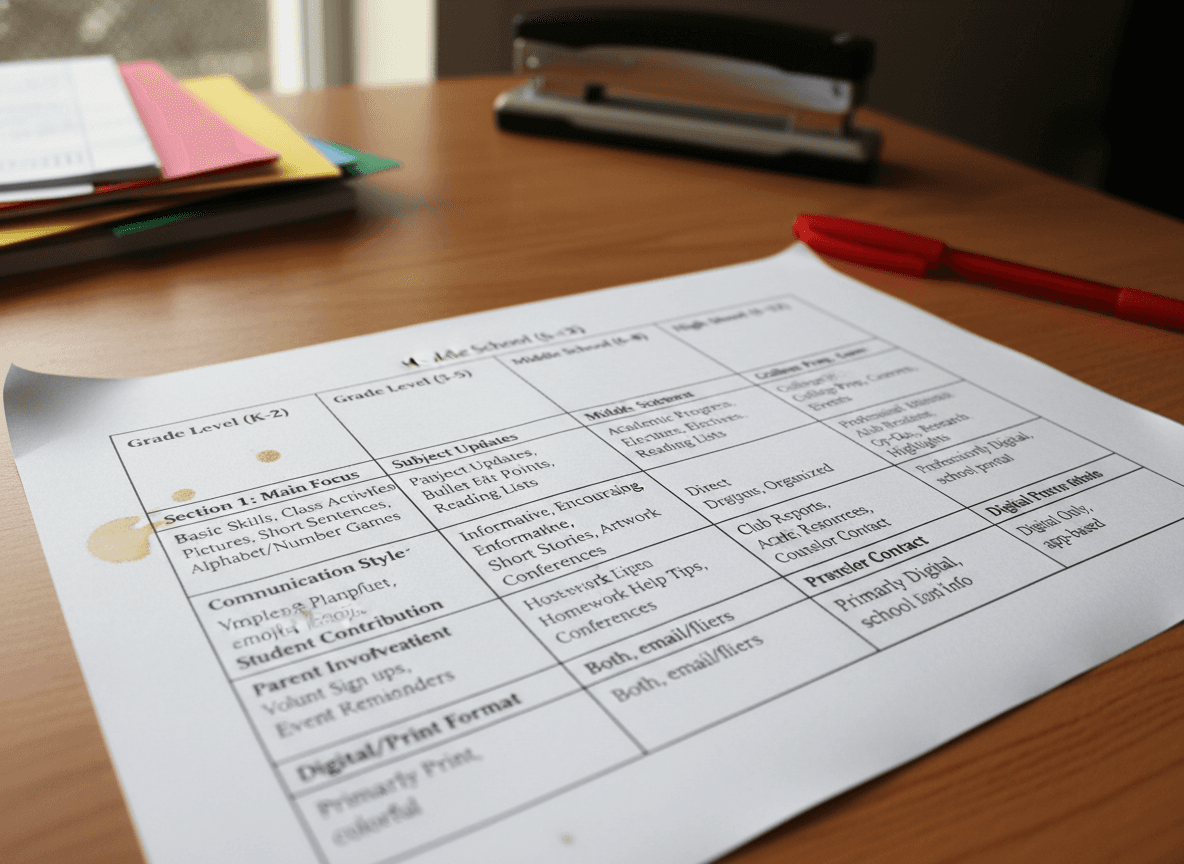
A newsletter template that works perfectly for a Kindergarten classroom will feel condescending sent from a high school department. A newsletter structured for a 10th grade AP class will leave PreK parents with no context for what their child is doing.
The structure of a school newsletter should match the grade level because parent expectations, the kind of information that matters, and the appropriate tone all shift significantly across K-12.
K-2: warm, detailed, and parent-directed
For Kindergarten through 2nd grade, parents are actively involved in reinforcing classroom learning at home. They want to know what their child did that day, what words to use at homework time, and what emotional or social milestones the class is working on. The newsletter is a direct bridge between classroom and home.
Sections to include:
- What We're Learning: Brief description of the current academic focus in reading, math, and any special units. Written in plain language parents can use to extend learning at home.
- At Home This Week: One or two specific activities or conversations parents can try. ("Ask your child to count objects in the kitchen" or "Read together for 10 minutes and ask what happened first, next, and last.")
- Social-Emotional Update: What the class is practicing in terms of feelings vocabulary, classroom community, or conflict resolution. Parents of young children want this context.
- Important Dates: Two to four specific events with dates and any parent action required.
- Supplies Needed: Short list if applicable.
- Classroom Moment: One short anecdote or photo from the week. This is the section parents forward to grandparents.
Tone: warm, conversational, and specific. Write the way you would talk to a parent at pickup. These families are often first-time school parents and need more orientation than veterans.
Frequency: weekly. Length: 350-450 words.
Grades 3-5: structured and action-focused
By 3rd grade, students are more independent and parents are slightly less involved in daily learning details. The newsletter shifts toward keeping parents informed and tracking key events rather than bridging every lesson to home practice.
Sections to include:
- Highlights This Week: A brief summary of what the class accomplished, focused on projects, discussions, or milestones rather than daily routine.
- Upcoming Events and Deadlines: The most important section for this age group. Permission slips, project due dates, testing dates, field trips. Put this near the top.
- What We're Working On: One to two paragraphs on the current academic unit. Enough context for parents to ask good questions at home, not a lesson plan summary.
- Reminders: Supplies, dress code for an event, library books, anything the student needs to bring or return.
- Optional: Student Spotlight: Brief mention of a student achievement or classroom event, without identifying individual students unless consent is on file.
Tone: professional but approachable. Parents of 3rd-5th graders expect efficient communication. Cut the narrative and get to the information.
Frequency: weekly. Length: 400-500 words.
Middle school (grades 6-8): practical and direct
Middle school parents are receiving newsletters from multiple teachers, the counseling office, athletic departments, and the principal. Attention is split. The newsletter competes with a crowded inbox.
For middle school, keep the newsletter focused on what parents cannot get from the parent portal or a quick conversation with their child. This means context, not just facts.
Sections to include:
- What's Happening This Month: A calendar or bullet list of major events, assessments, and deadlines. Skip the narrative summary of what was taught.
- Current Unit Overview: One short paragraph for each subject area if this is a subject-area newsletter, or the most important update if it is a homeroom/advisory newsletter.
- Parent Action Items: Anything that requires a parent response: forms, appointments, volunteer opportunities, permission slips. Specific and dated.
- Support Resources: Study tips, online resources, or tutoring options relevant to current curriculum. Middle school parents are actively looking for ways to support homework and test prep.
Tone: efficient and respectful. Middle school parents do not need hand-holding, but they do need specific information. Skip the introductory pleasantries and get to content in the first sentence.
Frequency: biweekly or monthly. Length: 350-500 words.
High school (grades 9-12): event-driven and autonomous
High school families have largely transferred responsibility for academic tracking to the student. The parent newsletter serves a different function: major announcements, deadline alerts, and context that students are unlikely to share at home.
Sections to include:
- Key Dates: The most critical section. College application deadlines, AP exam registration, testing dates, graduation requirements checkpoints. Make this a clean, scannable list.
- Program Updates: Major curriculum changes, new electives, dual enrollment opportunities, or departmental news. Information the student may not know to communicate.
- Resources and Opportunities: Scholarship deadlines, internship programs, summer opportunities, college visits. High school parents want this category and will act on it.
- Contact Information: Counselor contacts, academic support office hours, and how to reach teachers directly. High school parents need to know who to call when something goes wrong.
Tone: professional and informational. High school parents are not looking for warmth or community feel. They want accurate information delivered efficiently.
Frequency: monthly or event-driven. Length: 300-450 words.
Common mistakes across all grade levels
A few patterns that hurt newsletters at every grade level:
- Using the same template structure for Kindergarten and 10th grade without adjusting tone or sections
- Leading with a long personal message before getting to actionable information
- Including information that is already available in the parent portal without adding context
- Writing at a higher reading level than necessary for your parent community
- Changing the newsletter structure every issue so parents cannot find information quickly
Daystage's block-based editor lets teachers lock in a grade-appropriate structure in the first issue of the year and reuse it every week. Sections stay in place. Content updates. Parents find what they need without relearning the layout each time.
Get one newsletter idea every week.
Free. For teachers. No spam.
Frequently asked questions
When should teachers change their newsletter template to match a new grade level or school level?
Update your template when you change grade levels or when your student population's needs change significantly, like moving from K-2 to grades 3-5. A K-2 template is parent-directed with detailed information because young children are not independently managing their own school responsibilities. A middle school template is more concise and student-facing because students are taking more ownership.
What should a K-2 elementary newsletter include that differs from a high school newsletter?
K-2 newsletters should include what parents can do at home to support learning, specific homework instructions, behavior and routine reminders, and detailed event logistics. High school newsletters can be shorter, focus on deadlines and upcoming events, and assume students will relay basic classroom information themselves. The parent role in K-2 is more active and the newsletter should reflect that.
How often should teachers adjust their newsletter template structure throughout the school year?
Adjust structure once per semester at most. Frequent template changes disrupt the reading habit parents develop when they know your layout. If a section is not working, remove it at the next semester start rather than mid-year. Consistency in structure matters more than optimization.
What are common template mistakes teachers make when creating newsletters for different grade levels?
Using the same template for K-2 and middle school is the most common mistake. The information parents need and the way they use it differs significantly across grade levels. A high school newsletter with detailed daily homework explanations is unnecessary because students manage their own work. A K-2 newsletter without specific home support instructions misses the primary reason parents read it.
What is the best tool for teachers who want newsletter templates organized by grade level?
Daystage uses a block-based editor where you build the sections appropriate to your grade level and save them as your template. The template duplicates each week so you are not starting from scratch. For new teachers, the section structure can be set up based on grade-level guidance and then adjusted after the first month based on what parents actually engage with.

Adi Ackerman
Author
Adi Ackerman is a former classroom teacher and curriculum writer with 8 years in K-8 schools. She writes about school communication, parent engagement, and what actually works in real classrooms.
More for Guides
Ready to send your first newsletter?
3 newsletters free. No credit card. First one ready in under 5 minutes.
Get started free