

School Newsletter Reading Level: Writing for All Parents
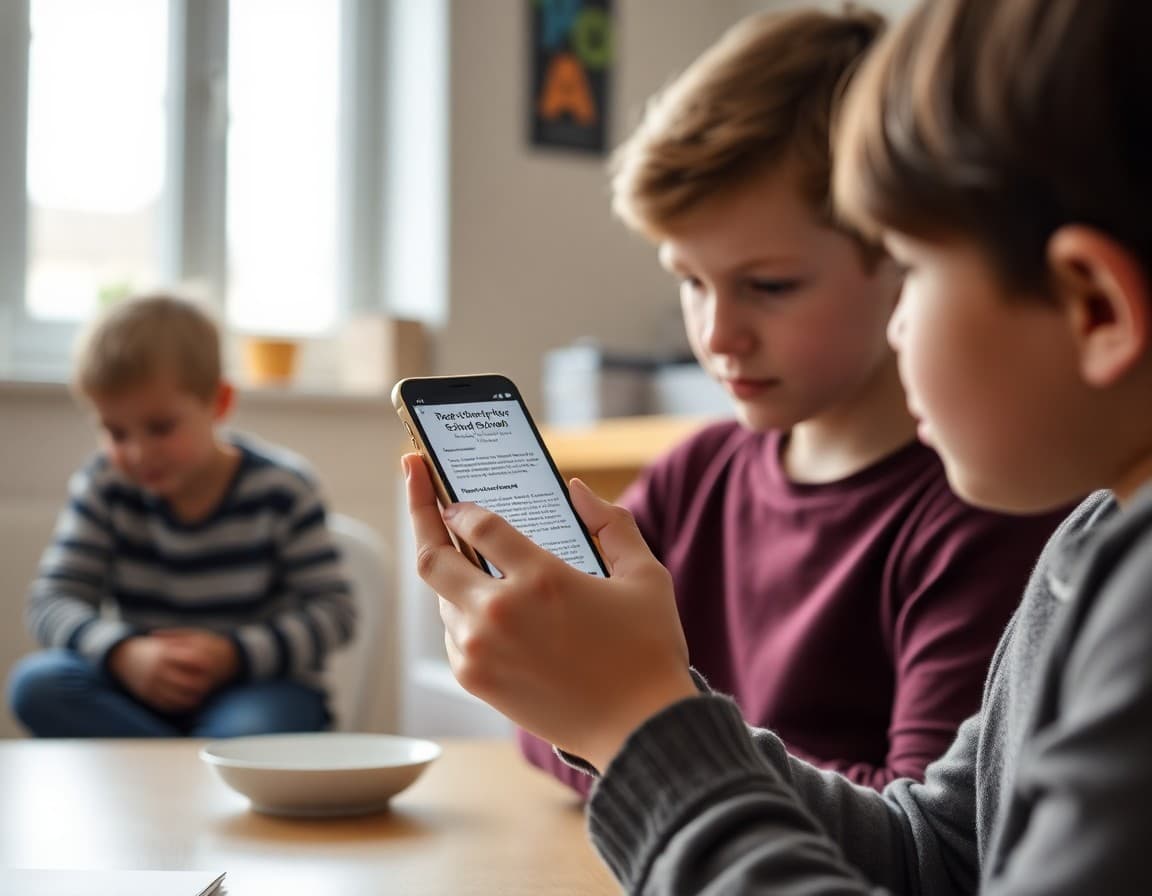
The most beautifully designed newsletter in your district is worthless if a significant share of parents cannot read it. Reading level is one of the most overlooked quality metrics in school communication. Getting it right is not about lowering standards; it is about removing the vocabulary and sentence structure barriers that prevent engaged parents from accessing the information their children depend on them to act on.
Why School Newsletter Reading Levels Are Too High
Educators write at the level they read, which is typically graduate-school level for trained teachers and administrators. When school staff write newsletter content in their natural voice without editing for a general audience, they produce text that is inaccessible to the 40 to 50 percent of American adults who read at or below an 8th grade level. This is not a critique of those parents; it is a recognition that the US adult literacy distribution is not uniform and that school communications routinely ignore the right half of it.
Measuring Your Newsletter's Reading Level
Open your most recent newsletter in Microsoft Word or Google Docs. In Word, go to File - Options - Proofing and check "Show readability statistics." After running spell check, Word displays your document's Flesch-Kincaid Grade Level score. A score of 8.0 means the text is readable by a typical 8th grader. Most school newsletters score between 10 and 14. Target 7 to 8 for parent-facing newsletters. Google Docs does not have a built-in readability tool, but the free web tool Hemingway Editor (hemingwayapp.com) accepts pasted text and scores reading level instantly.
The Vocabulary Swap List
Maintain a simple two-column list of education jargon and their plain-language replacements. Use it every time you publish. Examples:
Formative assessment - Check-in quiz or classroom check
Summative assessment - End-of-unit test or final exam
Differentiated instruction - Teaching at different levels
Scaffolding - Step-by-step support
Standards-based grading - Grading based on specific skills
Benchmark assessment - Grade-level skills test
Parent engagement - Parent participation
Stakeholders - Parents, teachers, and community members
Leverage - Use
Facilitate - Lead or help
This list is a 30-second quality check before any newsletter goes out. If you find any jargon terms in the issue, replace them before publishing.
Sentence and Paragraph Length Rules
Two practical rules cover most reading level improvements: keep average sentence length under 20 words, and keep paragraphs to a maximum of four sentences. Both rules are mechanical and easy to check. Count words in any sentence that feels long. If it exceeds 20 words, break it into two sentences. If a paragraph runs more than four sentences, find the natural break point and split it. These two changes reduce cognitive load significantly for readers who struggle with complex text, without altering the information content of the newsletter.
Active Voice in School Newsletters
Active voice puts the actor first in the sentence. "The school will send report cards on Friday" is active. "Report cards will be sent on Friday" is passive. Passive voice is gramatically correct but reads as more complex and is harder to process quickly. School bureaucratic writing defaults to passive voice almost reflexively. Read each sentence in your newsletter and ask: who is doing the action? If the answer is not at the beginning of the sentence, rewrite it so it is. Active voice also tends to produce shorter sentences, giving you two reading level improvements for one edit.
Writing Numbers and Dates Clearly
Spell out dates in full rather than using numeric shorthand. "March 15" is clearer than "3/15" for readers who may interpret date formats differently (in some countries, 3/15 reads as the 3rd of the 15th month). For times, write "3:00 PM" rather than "3 p.m." or "15:00." For phone numbers, use the full 10-digit format with dashes. For dollar amounts, use the dollar sign and numerals ($35, not "thirty-five dollars" which is harder to scan). These small formatting choices consistently reduce parent questions about basic logistics information.
Accessibility for English Language Learners
Shorter sentences, concrete vocabulary, and explicit action items benefit English language learners specifically. Avoid idioms that do not translate literally. "Drop the ball" means nothing to a new English speaker. "Make a mistake" means the same thing and is universally understandable. Avoid humor that depends on cultural context; what is amusing in one cultural frame is confusing in another. A newsletter that communicates clearly in plain English is the best preparation you can do before translation, because simpler English produces better translations in every language.
Testing Readability with Real Parents
Once per year, ask three to five parents with varying educational backgrounds to read a newsletter and tell you what confused them or what they did not understand. This informal usability test reveals reading level issues faster than any tool. Parents are often reluctant to say they found something confusing, so frame the test as "we are improving our newsletter and want to make sure it is clear" rather than "can you read this." Direct feedback from real readers is more valuable than a readability score because it tells you specifically which words and sentences caused comprehension problems.
Get one newsletter idea every week.
Free. For teachers. No spam.
Frequently asked questions
What reading level should school newsletters target?
The US Department of Education recommends writing public communications at a 6th to 8th grade reading level for maximum comprehension across diverse adult populations. Most school newsletters are written at a 10th to 12th grade level, which excludes a significant portion of parents who may have limited formal education, limited English proficiency, or learning differences. The Flesch-Kincaid Grade Level score is built into Microsoft Word and is a free, fast way to check your newsletter's reading level before publishing.
How do you lower a newsletter's reading level without losing important information?
Use shorter sentences (aim for under 20 words per sentence on average), choose common words over technical vocabulary (use 'check' instead of 'verify,' 'show' instead of 'demonstrate,' 'tell' instead of 'inform'), write in active voice (the subject of the sentence does the action, not receives it), break long paragraphs into bullet points, and cut words that do not add meaning. Lowering reading level is almost always an editing process, not a writing process. Write first, then simplify. The information density remains the same; the language becomes more accessible.
What vocabulary is most problematic in school newsletters?
Education jargon is the biggest problem. Parents outside the education field do not understand terms like 'formative assessment,' 'differentiated instruction,' 'scaffolding,' 'standards-based grading,' 'benchmark assessment,' 'positive behavior supports,' or 'multi-tiered system of support.' Replace each jargon term with its plain-language equivalent when it appears in parent-facing communications. 'Formative assessment' becomes 'check-in quiz.' 'Differentiated instruction' becomes 'teaching the same lesson at different levels for different students.' Plain language is not dumbed down; it is respectful.
Should schools translate newsletters into other languages?
Schools with more than 5 percent of enrolled families speaking a language other than English at home are generally required by Title VI of the Civil Rights Act and the Equal Educational Opportunities Act to provide translated materials for essential communications. Newsletters fall into this category for most districts. Machine translation (Google Translate) is a starting point but requires review by a fluent human speaker before distribution because errors in translated school communications can create significant misunderstandings. Many districts maintain language access coordinators or contracts with translation services for this purpose.
Does Daystage support translated school newsletters?
Daystage newsletters can be duplicated and translated into a separate version for families who prefer to read in their home language. You create the English version, duplicate it, replace the text with the translated version, and send each language version to the corresponding family segment on your subscriber list. This workflow requires a translation step that your district's language access coordinator or translation vendor handles. Daystage's subscriber management system lets you tag families by preferred language to ensure each family receives the right version automatically.

Adi Ackerman
Author
Adi Ackerman is a former classroom teacher and curriculum writer with 8 years in K-8 schools. She writes about school communication, parent engagement, and what actually works in real classrooms.
More for Guides
Ready to send your first newsletter?
3 newsletters free. No credit card. First one ready in under 5 minutes.
Get started free